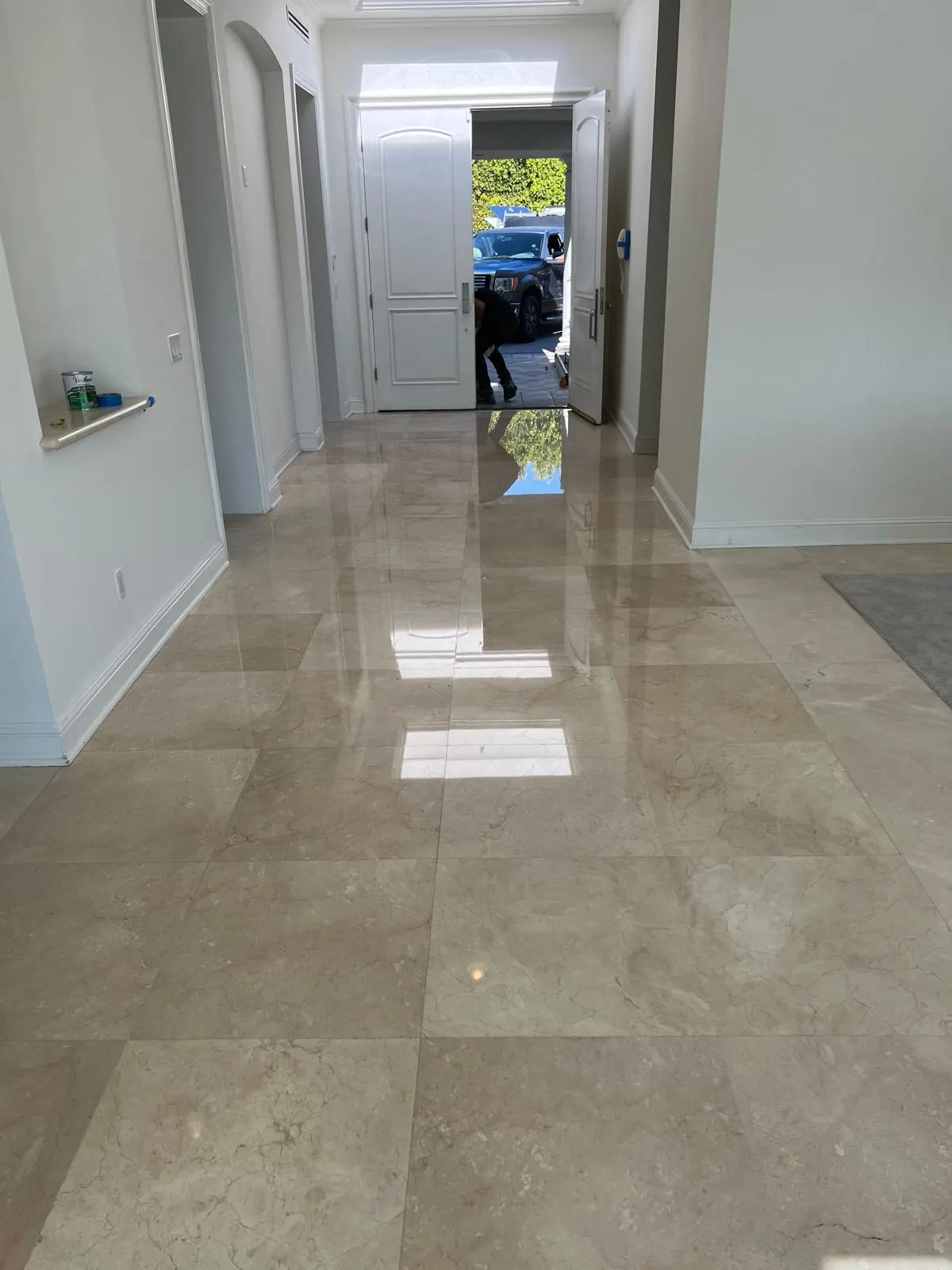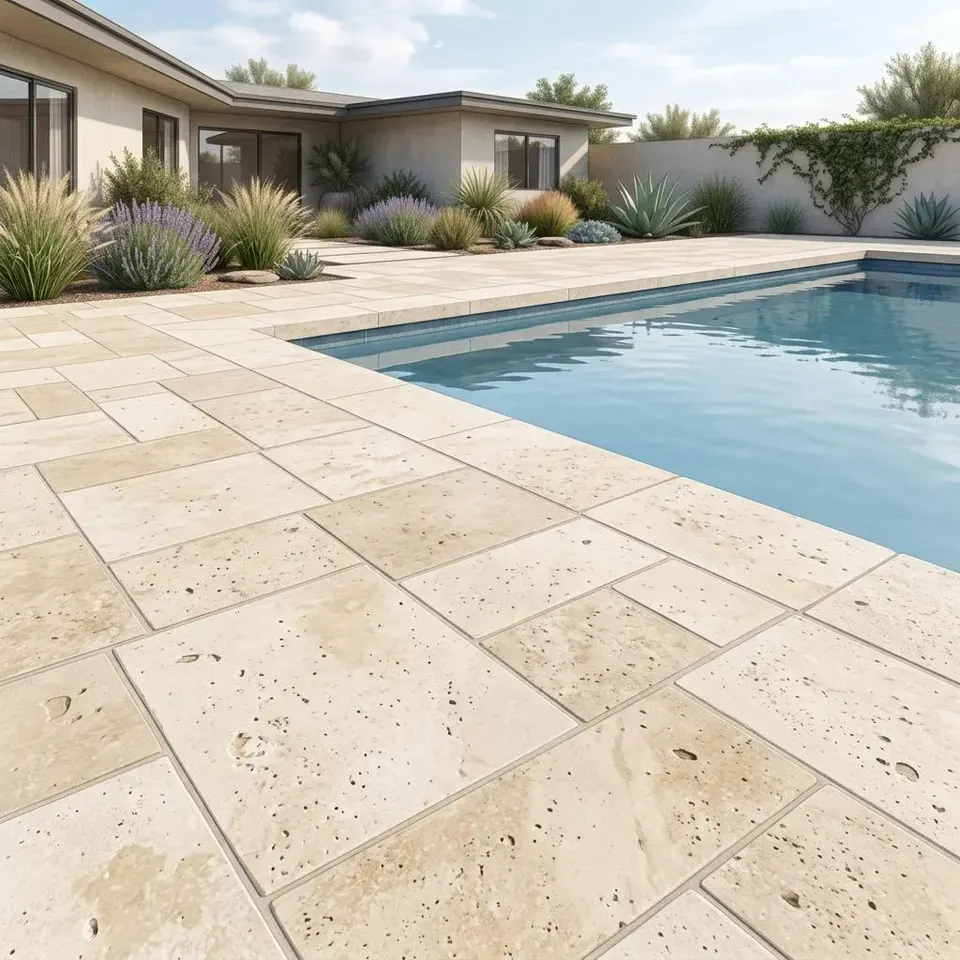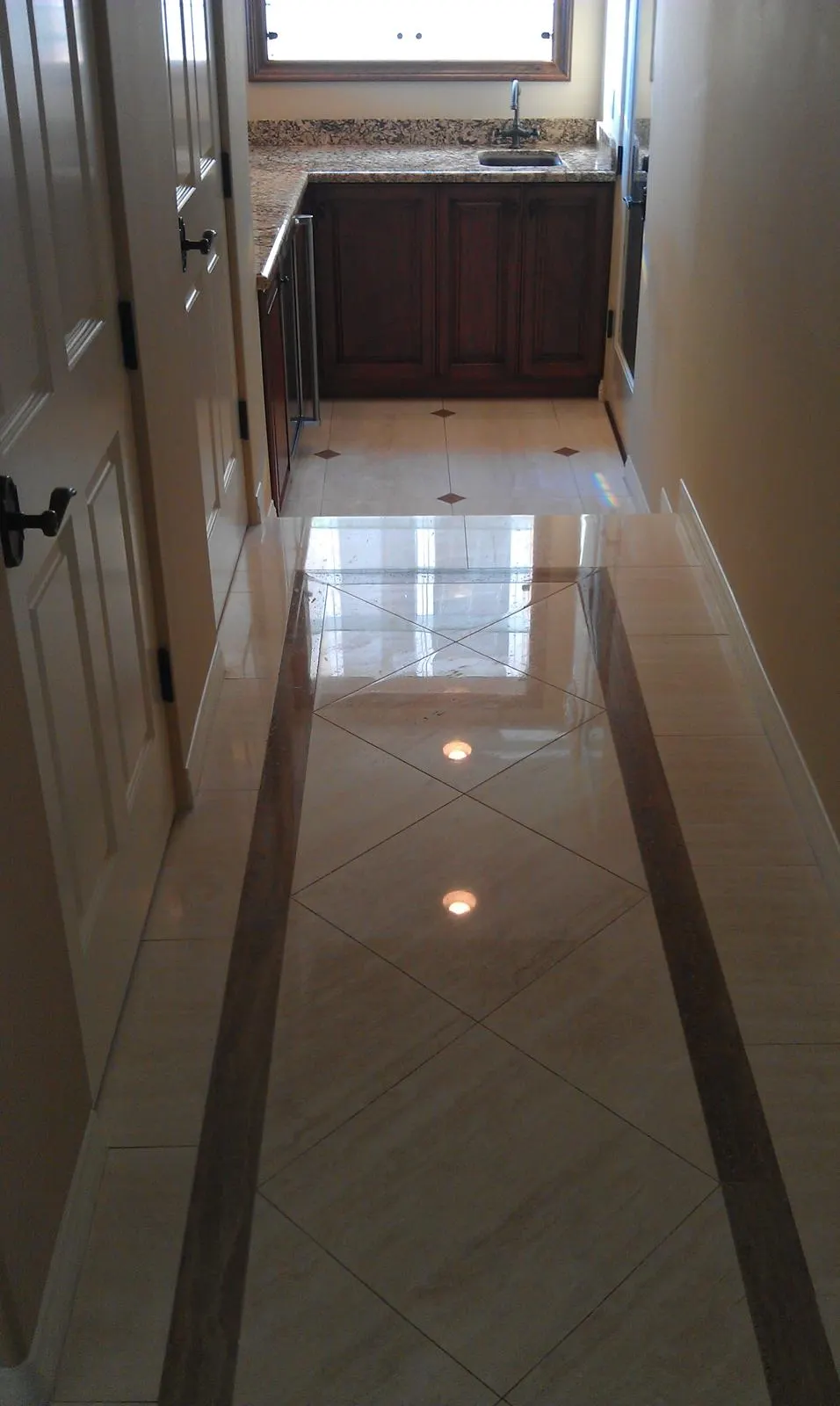
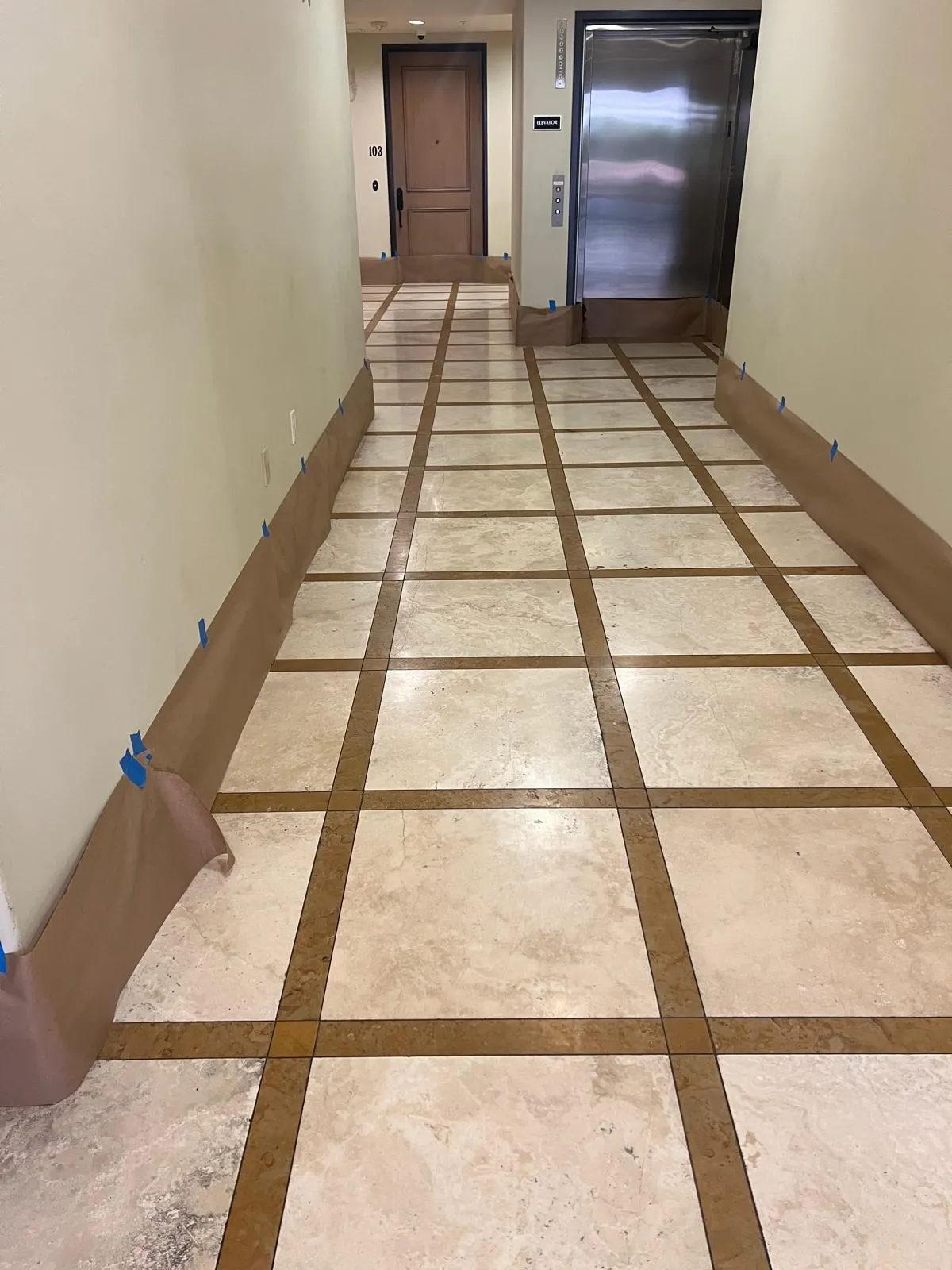
What should you know about a practical starting point?
Many residential travertine floors need to be checked every one to three years. Countertops, showers, and heavily used entryways may need attention sooner because they see more water, oils, and abrasion.
The calendar is only a starting point. A water-drop test, visible darkening, and changes in how spills behave are better clues than a fixed date.
What should you know about before resealing?
The stone must be clean, residue-free, and completely dry. If old wax, embedded grime, or uneven finish remains, the sealer may not absorb consistently and the surface can look patchy.
Professional sealing is most effective after the stone has been cleaned or restored as needed. Continue using pH-neutral products after the appointment so the protection lasts.
Why does travertine absorb differently across a floor?
Travertine has natural cavities and variations that may be filled during fabrication or later maintenance. Filled and unfilled material can behave differently, and the condition of filler influences what the surface looks like after cleaning. High traffic may also wear one route more than a protected corner. Instead of treating every tile as identical, compare representative areas and record where darkening or residue occurs. A water screening test is only appropriate when the stone, existing treatment and surrounding construction allow it. Inconsistent results warrant an assessment rather than repeated applications intended to make the whole floor behave like the least absorbent tile.
Can sealer close holes or hold failing filler together?
No. A penetrating sealer is not a cavity filler, structural adhesive or substitute for repairing loose material. If holes are opening, document their size, location and whether they are changing. Discuss filling and finish matching as distinct work before selecting protection. Some cavities may be part of the intended appearance, while a new opening in a walking route raises a different concern. Avoid pushing an unknown household filler into the stone and then covering it with a treatment. That can complicate later repair and cleaning. An assessment should establish which areas need cleaning, filling, refinishing or other investigation instead of describing every symptom as a sealing problem.
How do patios and showers change the maintenance decision?
Outdoor and wet-area installations face different exposure from a dry interior living room. A patio may collect soil, plant debris and standing water; a shower may retain soap film and moisture around joints or drainage points. These conditions do not justify a fixed resealing interval for all travertine. Persistent darkening can involve drying or construction issues, not just a worn surface treatment. Ask whether the proposed product is intended for the actual installation and whether it changes appearance or vapor behavior. Surface maintenance should not be presented as waterproofing. When moisture keeps returning, investigate its source rather than assuming another coat will solve it.
What preparation helps a travertine treatment work properly?
The stone must be assessed for residue, incompatible earlier coatings and moisture before a new treatment is selected. Preparation may include appropriate cleaning, removal of old material where necessary, repair and sufficient drying under the product instructions. Applying more product over soil does not make the underlying floor easier to maintain. Excess product also needs attention according to its label so that it does not leave an unwanted film. A sample area can clarify darkening or color change before larger work proceeds. Request a written explanation of the preparation and final appearance, particularly if you are comparing a clear penetrating product with a color-enhancing option.
How can you maintain travertine between assessments?
Remove abrasive grit, use suitable mats and clean with a product compatible with calcareous natural stone. Travertine can be acid sensitive, so vinegar and routine acidic limescale products are not safe default choices. Rinse away cleaner residue and avoid leaving wet items against the stone. Note any areas that repeatedly darken, become rough or lose filler, and share those observations when requesting service. The Natural Stone Institute advises that sealing improves stain resistance rather than making stone stain-proof. Elite Marble Care can evaluate the material and exposure before recommending cleaning, restoration or sealing; an inspection-based recommendation is more honest than an invented timetable.
Should a color change be discussed before treatment?
Yes. A clear penetrating treatment and a color-enhancing treatment are different choices, and neither should be selected from its name alone. Ask for a sample on the actual travertine because natural variation and existing repairs can influence the appearance. View the sample after the relevant drying or curing instructions have been followed, not only while the surface is wet. Decide whether the desired result is a subtle protection step or a deliberate change in color depth. Keep that decision separate from the sheen created by honing or polishing. A written appearance expectation helps avoid treating an unwanted darkening effect as a routine maintenance outcome.
Quick checklist
- Identify filled or unfilled travertine and its current finish.
- Compare traffic routes with protected areas before deciding on treatment.
- Report open holes, loose filler and persistent damp patches separately.
- Request cleaning, drying and product-specific aftercare instructions.
Clear answers
Frequently asked questions
What should you know about a practical starting point?
Many residential travertine floors need to be checked every one to three years. Countertops, showers, and heavily used entryways may need attention sooner because they see more water, oils, and abrasion.
What should you know about before resealing?
The stone must be clean, residue-free, and completely dry. If old wax, embedded grime, or uneven finish remains, the sealer may not absorb consistently and the surface can look patchy.
What should I include when requesting an assessment for sealing?
Describe the stone, where it is installed, the finish you want to keep or change, and what happened before the problem appeared. Share any previous treatments or cleaner labels. Photographs help explain the concern, but an on-site assessment may still be needed to establish the appropriate scope and limitations.
Sources
Not sure which service your stone needs?
Elite Marble Care can assess the surface in person, explain the restoration sequence, and provide a free on-site estimate across Greater Los Angeles.