Back to Services

Terrazzo Restoration & Repair Assessment

Quick answerTerrazzo restoration in Los Angeles addresses worn sheen, scratches, stains, coatings, holes, and chips after the binder and installation are identified. Cement-based and epoxy terrazzo need different assessment; neither should be treated as marble by default. A site visit checks aggregate, cracks, patches, movement, and desired finish before cleaning or mechanical refinement is proposed.
  • Licensed & Insured
  • 25+ years in business
  • 4.9 rating · Yelp and Google
  • Dust-free wet process

What to expect from terrazzo restoration & repair assessment

Best forCement-based or epoxy terrazzo floors with dullness, scratches, stains, or coating buildup; Terrazzo that may need grinding, honing, polishing, sealing, or a repairability assessment; Owners who need realistic expectations for crack, hole, color, and aggregate matching
Stone typesCement-based or epoxy terrazzo after binder identification
Typical time on siteConfirmed during the on-site assessment
Dry / cure timeDepends on the material and selected process
How long results lastVaries with finish, use, and maintenance

A considered approach

Our process

  1. 1

    Identify binder and aggregate

    The technician checks whether the terrazzo appears cement-based or epoxy, observes aggregate size and distribution, and looks for coatings, prior patches, cracks, and holes.

  2. 2

    Separate surface wear from movement

    You review dullness, scratches, stains, missing fill, recurring cracks, and loose areas. A crack pattern or damp condition is documented before cosmetic repair is considered.

  3. 3

    Agree on a test and finish

    Cleaning, coating removal, grinding, honing, polishing, or sealing is scoped for the identified binder. Any repair discussion includes realistic limits for aggregate and color matching.

  4. 4

    Inspect consistency and maintenance

    The finished area is reviewed under the available light for sheen and aggregate presentation. Care guidance reflects the binder, selected finish, traffic, and any repair areas.

Binder identification comes first

Terrazzo is an aggregate-and-binder surface, not one uniform stone. Cement terrazzo and epoxy terrazzo differ in composition and response to abrasives, moisture, and treatment. Existing coatings may further disguise the original finish. A test and inspection of an exposed edge or inconspicuous location can help identify what the floor is before a sequence is chosen.

The visible chips, stone fragments, and colors contribute to the floor's character. Grinding or polishing should account for the binder and aggregate rather than follow a marble recipe automatically. Ask what the proposed step removes, how it affects exposed aggregate, and whether a sample section will show the expected level of clarity and reflectivity before the full area is addressed.

Cracks and holes need context

A small stable chip or hole may be assessed for filling, but a crack that crosses a room, reopens, or aligns with a joint can indicate movement below the surface. Cosmetic fill does not stabilize the slab or correct moisture. The assessor should consider crack pattern, prior patches, floor transitions, and history of renovations before proposing a repair.

Aggregate size, color, age, and available materials affect the appearance of a fill. Repairs can be planned to coordinate with existing terrazzo, but exact or invisible matching is not promised. Agree on the patch location, finish, and expected visibility in advance. If the substrate is moving or wet, another qualified trade may need to address that condition first.

Choose a sequence for the installed finish

Cleaning may remove soil or residue, while coating removal strips a topical layer that obscures the terrazzo. Grinding changes the plane and removes material; honing and polishing refine it to a different sheen. These are separate decisions. Lippage, thin areas, edge details, joints, and door transitions should be reviewed before more substantial material removal is approved.

Sealing depends on the terrazzo binder, porosity, and any existing treatment. Some surfaces may accept a penetrating sealer; others require a different care approach. A surface coating can change slip, gloss, and maintenance. The estimate should specify what is included and avoid treating sealing as a cure for scratches, cracks, stains, or movement.

Keep aggregate and sheen in view

The final appearance depends on aggregate exposure, binder, age, lighting, and the selected finish. A highly reflective polish can reveal unevenness and patches that a lower sheen hides differently; no finish eliminates all variation. Discuss how the floor looks under daylight, overhead fixtures, and at the entry before choosing a target sheen.

Use a pH-neutral cleaner and remove abrasive grit, particularly in commercial entries where particles are tracked over a broad floor. Avoid wax buildup unless a compatible maintenance program is specified. Keep notes about new cracks, recurring stains, or dampness; those changes deserve diagnosis rather than repeated polishing or cosmetic filling.

Service overview

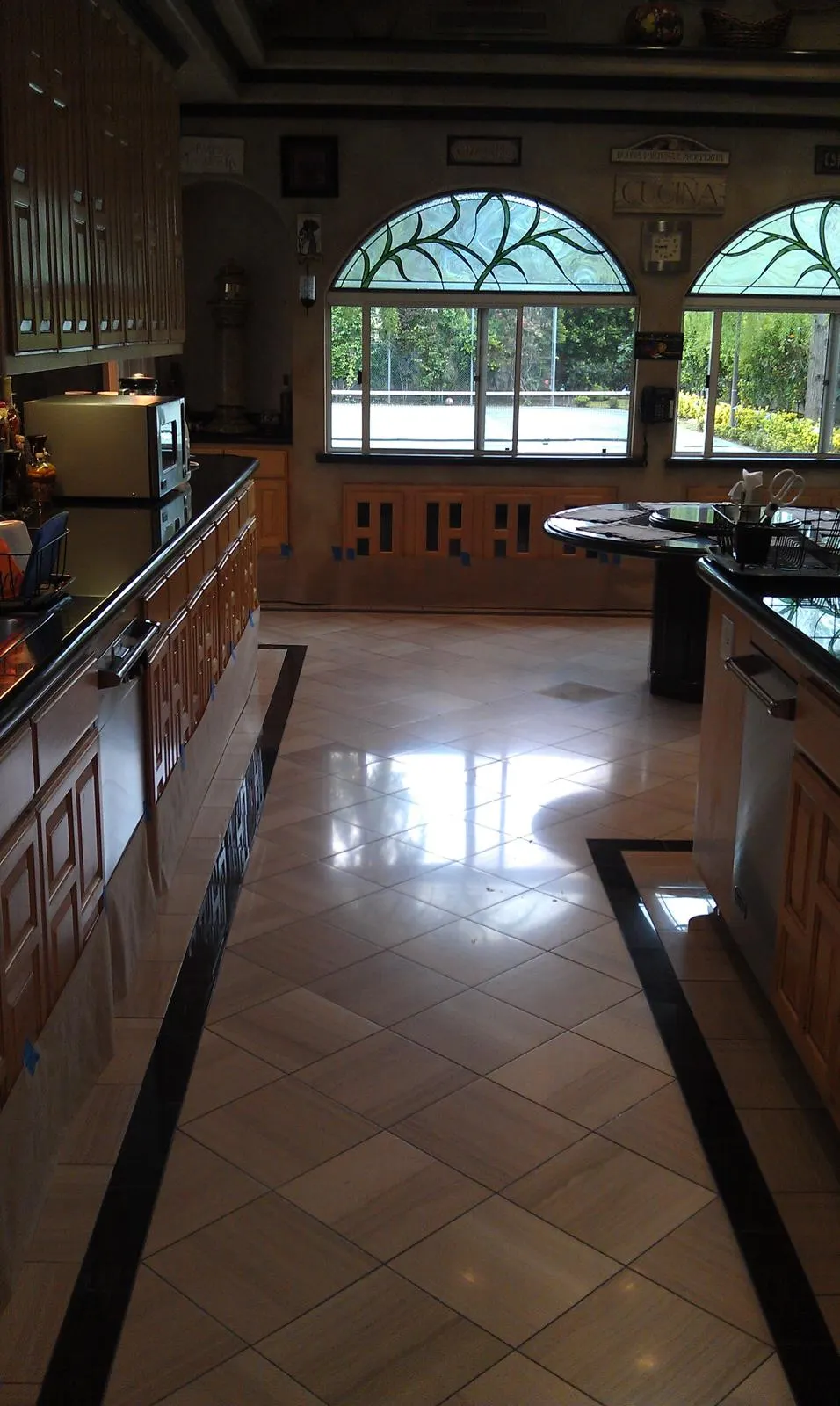
Terrazzo restoration addresses wear, scratches, stains, coatings, holes, chips, and cracks after identifying the binder, aggregate, previous treatments, and any underlying movement.

Before the Appointment

Clear the work area and identify cracks, holes, loose areas, prior patches, coatings, moisture, and any known movement. Repair materials and finish expectations should be discussed before work because an invisible color or aggregate match cannot be guaranteed.

Aftercare and Maintenance

Remove abrasive grit, use a pH-neutral cleaner, and avoid wax buildup unless a compatible maintenance system has been selected. Monitor repaired cracks for renewed movement and address underlying structural or moisture conditions before repeating cosmetic work.

Chips, cracks, loose pieces, and movement need a separate natural stone repair assessment before surface refinishing. Natural stone repair assessment

Frequently Asked Questions

Can dull terrazzo be polished again?

Many sound terrazzo floors can be cleaned and mechanically refined through grinding, honing, and polishing. The appropriate sequence depends on whether the terrazzo is cement-based or epoxy and on its coatings, damage, and desired finish.

Can terrazzo cracks and holes be repaired?

Some chips, holes, and stable cosmetic cracks can be assessed for repair. Recurring cracks, loose areas, or movement may require the underlying condition to be corrected before surface restoration.

Will a terrazzo repair match exactly?

Not always. Aggregate size, binder color, age, wear, and available materials affect the match. A repair can be planned to coordinate with the surrounding floor, but an invisible result should not be assumed.

Is terrazzo restoration the same as marble polishing?

No. Terrazzo combines aggregate with a cement or epoxy binder, and the binder must be identified before choosing abrasives or protection. Marble methods should not be assumed to transfer.

Can terrazzo cracks be made to disappear?

A stable crack may be assessed for a cosmetic repair, but movement and binder or aggregate differences can remain visible. Recurring or structural cracks need the cause evaluated before a surface repair.

Why does the terrazzo binder need identification?

The binder influences which refinishing and protection methods are suitable. Cement-based and epoxy terrazzo should not automatically receive the same treatment, and the aggregate also matters. Provide installation information if available and point out previous repairs or coatings. Identification helps establish a material-appropriate approach before promising a finish, a repair match, or a result based on another floor.

Ready to Restore Your Stone?

Planning protection after restoration? Explore RAKU marble protection and ask whether an anti-etch coating suits your stone and finish.

Every project begins with a free, on-site assessment. We will identify the condition of the stone, explain the appropriate process, and provide a clear estimate before work begins. Request your free estimate or call (818) 903-0970.

See our stone care tips for practical maintenance advice.

Read more stone restoration guides or browse our service areas.

Related Services

Restoration by Material and Property

Serving Greater Los Angeles

Last updated