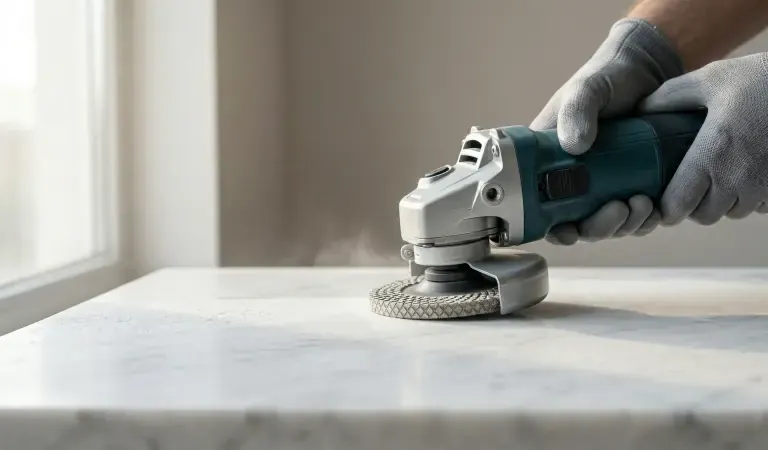
Illustration of a natural-stone test area, not a project photo
Back to Services

Stone Color Enhancer Sealer

Quick answerStone color enhancer sealer in Los Angeles can deepen the appearance of suitable absorbent stone. Elite Marble Care checks compatibility, existing treatment and a representative sample before application. Enhancement does not repair scratches or moisture problems, and it may be difficult to reverse. Confirm the actual product's protective properties and approve the tested appearance first.
Material illustration · not a project photo
  • Licensed & Insured
  • 25+ years in business
  • 4.9 rating · Yelp and Google
  • Dust-free wet process

What to expect from stone color enhancer sealer

Best forAbsorbent stone whose owner wants a deeper natural color rather than additional gloss.; Slate or travertine with an identified finish and compatible previous treatment.; A uniform, clean installation that can be evaluated with a representative sample.
Materials and surfacesSuitable absorbent natural stone, including assessed slate, travertine and selected limestone
Typical time on siteConfirmed during the on-site assessment
Dry / cure timeDepends on the material and selected process
How long results lastVaries with finish, use, and maintenance

A considered approach

Our process

  1. 1

    Assess stone, previous treatment and preparation

    We examine the surface, finish, absorption and available product history. A polished stone, a dense tile and an absorbent cleft slate may respond differently. Existing coatings can prevent penetration or create patchiness. The assessment separates a request for deeper color from a request for gloss or repair. Soil, cleaner residue and unsuitable coating are considered before enhancement. Unexplained dampness or recurring deposits can signal something beyond routine maintenance. Preparation is selected for the material rather than a universal stripping recipe, with boundaries and adjacent surfaces considered before work.

  2. 2

    Evaluate a representative sample

    A test area should include representative stone tones and the finish variation that exists across the installation. Assess its appearance after the product has developed as instructed, not only while it is freshly wet. Normal room lighting and adjoining untreated material provide useful comparisons. The sample helps define an achievable result without promising identical response from every piece.

  3. 3

    Apply the agreed compatible treatment

    Application follows the selected product's requirements and the approved boundaries. Absorption, residue management and treatment of edges are addressed as part of the work. More product is not automatically better: unsuitable buildup can change texture or leave marks. The goal is an agreed appearance and appropriate protection, not a thick surface layer presented as enhanced stone.

  4. 4

    Review appearance and care

    The final review considers the treated installation in its usual lighting and records the product used. Access and cleaning restrictions depend on the selected treatment and site conditions; a fixed cure time is not invented in advance. We explain how to maintain the surface and which future changes should prompt reassessment instead of repeated application.

Color depth and gloss are separate decisions

A deeper-looking stone can remain matte or naturally cleft. If your goal is a reflective marble floor, enhancement may not be the treatment you actually need. Conversely, a polished surface may already reveal substantial color without an additional enhancer. Describe the appearance in ordinary terms and show the technician which features you want to retain. Product labels such as wet look are not enough to define the finished installation.

Consider the whole room rather than one attractive tile. A darkened border may contrast differently with grout, cabinets, walls and adjoining flooring. Existing variations can become more noticeable when natural tones deepen. A proposed treatment should respect those differences instead of promising that all pieces will become one uniform color. A sample on the actual stone is more informative than an online swatch.

Compatibility matters indoors and outdoors

An exterior patio can have different exposure and moisture conditions from an indoor entry. Product suitability, existing finish, drainage and cleaning history need to be considered together. An appearance treatment does not correct failed waterproofing or trapped moisture. Show locations that stay damp and explain how the surface is used. The assessment should not assume every outdoor mark is caused by salt air or every indoor patch is a stain.

Surface texture and safe use also deserve attention. A treatment intended to penetrate is not automatically appropriate for every textured stone, walking surface or wet setting. Its product requirements and the installation's use must be reviewed. Do not infer slip performance from a glossy photograph or the word sealer. Where another trade needs to evaluate drainage, installation or movement, that concern should be resolved separately.

Service overview

A stone color enhancer changes how a compatible stone reflects light so its natural tones can appear deeper. Some enhancing formulations also provide penetrating protection, while others require a separate protection strategy. The intended appearance, product suitability and absorption must be checked together. Enhancement is not a surface repair, paint, structural treatment or guaranteed remedy for discoloration. It can be difficult to reverse, so an agreed test area is important before treating a larger installation.

Before the Appointment

Tell us what was used on the stone, including cleaners, topical finishes and previous sealers. Bring any available product labels and identify areas that already look darker. Clear access to representative light and dark pieces, grout lines, corners and adjoining materials. Explain whether the floor becomes wet from irrigation, cleaning or a leak. Do not apply an enhancer to make an unexplained patch disappear; the patch should be investigated before its appearance is permanently changed.

Aftercare and Maintenance

Use maintenance products appropriate for both the stone and the applied treatment, following the confirmed care instructions. Remove grit and clean spills rather than relying on darkened color to hide residue. Avoid experimenting with acids or stronger cleaners when the finish looks uneven. Keep the product record so later maintenance can be assessed accurately. A change in water behavior, color or sheen is a reason to review the surface, not proof that it simply needs another coat.

Loose tiles, moving cracks and slab concerns need installation or structural assessment before cosmetic surface work. Discuss installation concerns

Frequently Asked Questions

Is a stone color enhancer the same as a regular penetrating sealer?

Not necessarily. A non-enhancing penetrating sealer is selected primarily for its protective function without intentionally deepening the stone's color. An enhancer is selected partly for a deliberate appearance change, and its protective properties depend on the formulation. We assess the actual product and installation rather than assume the words enhancer and sealer describe identical performance. Neither makes natural stone immune to every stain or chemical.

Can an enhancer remove scratches, etching or white mineral deposits?

No. Those conditions need their own diagnosis. A scratch is physical damage; etching changes a susceptible stone's surface; a mineral deposit sits on or within the installation. Deepening the color may change the contrast around a defect without resolving its cause. Restoration or appropriate cleaning may need to come first. An enhancer should not be used as a shortcut around a problem that will remain beneath the treatment.

Can the original stone color be restored if I dislike the result?

Reversal cannot be promised. A product that penetrates the stone can be difficult to remove consistently, and different pieces may respond differently to removal attempts. This is why appearance approval belongs before broad application. The test should represent the stone, finish and lighting that matter to you. Do not approve an entire floor solely from a wet photograph or a demonstration on a different stone.

Will every slate or travertine tile darken by the same amount?

No. Natural variation, fill, density and previous treatment can affect absorption and appearance. Representative pieces should be included in the assessment, especially when an installation combines different batches or repaired sections. A test establishes expectations for the actual floor rather than guaranteeing an identical response across all tiles. The goal is to understand and accept the material's variation before broad treatment.

Should an already enhanced floor receive another application?

Only after its condition and product history are reviewed. Uneven color can result from residue, wear, moisture or incompatible maintenance products, not simply insufficient enhancer. Reapplication may intensify a mismatch or create unwanted buildup. Provide the previous product name if known and show both protected and exposed areas. The next step may be cleaning or another assessment rather than more treatment.

What should I send with a color-enhancing estimate request?

Send overall and close-up photographs, the stone type if known, approximate area, indoor or outdoor use and any previous treatment details. Explain whether you want deeper color, less patchiness or a different sheen, because those are different objectives. Identify a discreet but representative place for a proposed sample. Photos help plan the visit, but product compatibility and final appearance need assessment on the installation itself.


Ready to Restore Your Stone?

Every project begins with a free, on-site assessment. We will identify the condition of the stone, explain the appropriate process, and provide a clear estimate before work begins. Request your free estimate or call (818) 903-0970.

See our stone care tips for practical maintenance advice.

Read more stone restoration guides or browse our service areas.

Related Services

Restoration by Material and Property

Serving Greater Los Angeles

Last updated

Call (818) 903-0970