Back to Services

    Stripping

    Quick answerStone stripping removes suitable old topical coatings, waxes, or films so the underlying material can be assessed and refinished. Los Angeles owners may need it when a floor has peeling gloss, trapped dirt, or uneven coating buildup. Elite Marble Care identifies both the coating and stone before recommending removal, cleaning, or the next restoration step.
    • Licensed & Insured
    • 18+ years in business
    • 4.9 rating · Yelp and Google
    • Dust-free wet process

    What to expect from stripping

    Best forYellowed, peeling, cloudy, or slippery wax and acrylic buildup; Floors where a topical coating is trapping soil or moisture; Stone that needs a clean surface before honing, polishing, or penetrating sealing
    Stone typesCoated stone and suitable terrazzo; coating and substrate must be identified
    Typical time on siteConfirmed during the on-site assessment
    Dry / cure timeDepends on the material and selected process
    How long results lastVaries with finish, use, and maintenance

    A considered approach

    Our process

    1. 1

      Assess the coating rather than guess from the shine

      You explain the history of waxes, sealers, floor finishes, or cleaning products used on the surface. The technician examines peeling areas, glossy layers, residue, and the stone underneath where visible. A topical film is different from a penetrating sealer, and not every shine is a coating. Product information, if available, is useful. The assessment establishes whether removal is suitable and what uncertainty remains before treating the entire accessible area.

    2. 2

      Consider surrounding materials and removal limits

      You review the work boundaries, edges, grout, nearby finishes, and areas where a product may have accumulated. A coating-removal approach must suit the underlying stone as well as the film; a strong remover is not automatically an appropriate one. A suitable assessment area can show how the finish responds and whether layers differ. Detailed transitions and vulnerable materials may affect access. The scope should explain these conditions rather than promise that any coating can be removed identically everywhere.

    3. 3

      Address suitable film and manage the residue

      Where removal is appropriate, you see the coating treated and the loosened material collected as part of the cleaning sequence. Old finish can conceal scratches, etching, stains, or wear that only become clear after it is removed. Those exposed conditions need assessment before deciding on refinishing. Stripping is therefore a preparation step, not a guarantee that the uncovered stone will already have the desired appearance. The next treatment should follow the actual condition, not another automatic layer of gloss.

    4. 4

      Review the exposed stone and protection options

      You inspect the accessible surface after coating removal and discuss any remaining film, underlying damage, or finish variation. The technician explains whether further cleaning, honing, polishing, or suitable penetrating sealing is recommended. Return-to-use instructions depend on the actual removal treatment and any later products. Avoid reinstalling the same coating without understanding why it was removed. A clear maintenance plan should distinguish a natural stone finish from a film that can peel, wear unevenly, or trap residue again.

    Old gloss can hide the true condition

    A waxed floor may look brighter in protected corners while the coating wears thin along a traffic path. Another floor may have layered products that hold dirt or make the color look uneven. These are reasons to assess the coating, not evidence that the stone itself needs replacement. Tell the technician whether gloss was added intentionally and how often it was reapplied. Previous product labels or maintenance records can be more useful than guessing what the film contains from appearance alone.

    The exposed stone may need additional work after stripping. A coating can conceal etching, scratches, surface wear, or staining, and removing it does not automatically repair those conditions. Discuss the possible next stages during the estimate so preparation is not confused with a complete restoration result. A suitable test helps inform the recommendation but does not reveal every hidden condition across a large installation. The written scope should make clear which removal and finishing work is actually included.

    Choose the next finish deliberately

    In a Los Angeles home or commercial entry, the desired appearance and use of the floor should guide the next step after coating removal. A matte stone finish and a polished one are different choices, while a penetrating sealer serves a different purpose from either. Explain whether you want to preserve the natural texture, reduce an uneven glossy film, or restore a previously polished surface. The recommendation should account for the stone rather than assume all installations benefit from a new topical coating.

    Persistent white deposits, flaking, or dark areas can also involve moisture or the installation below the stone. Removing a film does not repair drainage, stop a leak, or establish that the substrate is sound. If the same problem returns after previous stripping, describe that history and seek assessment of the cause. Use material-appropriate cleaning after the work, and avoid adding an unverified product to cover a remaining mark. A stable, suitable surface is the basis for choosing any finish treatment.

    Service overview

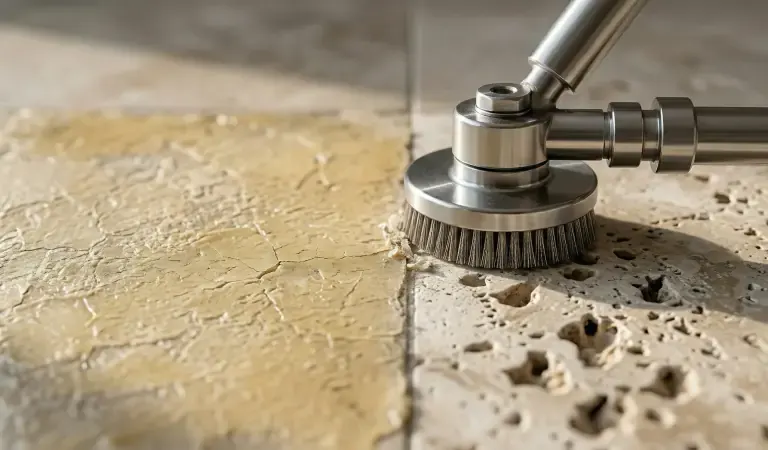
    Stone stripping removes waxes, acrylics, crystallization products, and other topical coatings so the surface can be cleaned and restored without working over an old finish.

    Before the Appointment

    Remove loose furnishings from the work area and tell us about any coating or maintenance product previously used. We test the surface first so the removal method matches the coating and the underlying stone.

    Aftercare and Maintenance

    Do not apply new wax or acrylic over an old finish. Once the stone is restored, use a pH-neutral cleaner and follow the recommended penetrating-sealer schedule rather than adding a topical coating that can build up again.

    Chips, cracks, loose pieces, and movement need a separate natural stone repair assessment before surface refinishing. Natural stone repair assessment

    Frequently Asked Questions

    What is stone stripping?

    Stone stripping is the controlled removal of topical waxes, acrylics, crystallization products, and similar coatings from the surface of a floor or other stone installation.

    Why remove wax before restoring stone?

    Old coatings can yellow, collect soil, and hide the condition of the stone underneath. Removing them gives cleaning, honing, polishing, or penetrating sealing a clean surface to work with.

    Can I apply new wax after a stone floor is stripped?

    We generally recommend maintaining natural stone with the appropriate cleaning and penetrating sealer rather than layering wax back onto it. The right maintenance plan depends on the material and setting.

    Will removing wax restore the original stone shine by itself?

    Not necessarily; coating removal can expose a worn or damaged underlying finish. The stone may need cleaning, honing, or polishing after the film is removed. A brighter coating is not proof that the surface below it is intact. Ask the technician to distinguish preparation from refinishing in the estimate and explain any uncertain conditions concealed by the existing product. The desired natural finish should be agreed separately from the coating-removal decision.

    Is a penetrating sealer the same as a removable floor coating?

    No; a penetrating sealer and a topical coating have different purposes and behavior. A surface film may add gloss or conceal wear, while a suitable penetrating product addresses absorption within the stone. The actual products must be identified before choosing a removal or protection treatment. Tell the technician what has been applied, if known, and avoid assuming that every glossy area is wax or that every dark patch indicates a missing coating.

    Do you need to know which coating was used?

    Product information is helpful when available, but the surface still needs assessment. Keep labels or maintenance records for waxes, acrylic finishes, sealers, and other treatments. Different layers may respond differently to removal, and the underlying stone must be protected. If the product is unknown, explain when the gloss was added rather than guessing its chemical composition.

    Ready to Restore Your Stone?

    Old wax or coating dragging down your floors? Call (818) 903-0970 for a free estimate, or request one online. We work throughout Beverly Hills, Santa Monica, Malibu, Calabasas, Encino, Sherman Oaks, Studio City, Burbank, Glendale, Pasadena, Manhattan Beach, Culver City, and more than 30 other Greater Los Angeles cities.

    See our stone care tips for practical maintenance advice.

    Read more stone restoration guides or browse our service areas.

    Related Services

    Restoration by Material and Property

    Serving Greater Los Angeles

    Call (818) 903-0970