Back to Services

    Sealing

    Quick answerStone sealing applies a suitable penetrating product to reduce absorption in porous stone. Los Angeles owners may need it when assessed marble, travertine, limestone, or other stone absorbs liquids readily. Elite Marble Care checks the material and condition first; sealing does not repair scratches, stop leaks, create shine, or make acid-sensitive stone immune to etching.
    • Licensed & Insured
    • 18+ years in business
    • 4.9 rating · Yelp and Google
    • Dust-free wet process

    What to expect from sealing

    Best forPorous marble, travertine, limestone, and other stone that absorbs liquids; Floors, countertops, showers, and outdoor stone exposed to spills or moisture; Newly cleaned or restored stone that is ready for protection
    Stone typesAbsorbent marble, travertine, limestone, granite, slate, and other suitable stone
    Typical time on siteConfirmed during the on-site assessment
    Dry / cure timeDepends on the material and selected process
    How long results lastVaries with finish, use, and maintenance

    A considered approach

    Our process

    1. 1

      Assess absorption and the condition of the stone

      You explain where spills, darkening, or previous protection have caused concern. The technician checks the material, finish, existing treatment, and suitability for a penetrating product. Not every slab absorbs in the same way, and a surface that needs cleaning or refinishing may need that work first. Tell us about any ongoing moisture problem or recent treatment. Sealing is considered for suitable absorption concerns rather than prescribed automatically for every surface that looks dull.

    2. 2

      Prepare a suitable surface for the selected product

      You review what cleaning, coating removal, or drying must occur before a sealing treatment can be considered. A penetrating product should not be used to conceal soil, damage, or a persistent wet area. Surrounding fixtures, edges, and adjacent finishes are included in the practical preparation discussion. The product and material determine the suitable conditions; there is no universal wait time that applies to every countertop, shower, and floor. Any limits are explained before application.

    3. 3

      Apply the appropriate penetrating protection

      When the stone and conditions are suitable, the selected product is applied according to its requirements. You can ask whether the intended appearance is natural-looking or whether an enhancing treatment has been discussed. Those are choices to assess, not interchangeable results promised for every stone. Sealing is separate from the abrasive work that produces a honed or polished finish. It is not a topical repair of chips or cracks, and it does not replace sound grout, waterproofing, or support.

    4. 4

      Confirm use instructions and realistic protection limits

      Before the area returns to service, you receive the drying or cure instructions relevant to the actual product and conditions. These should not be replaced with a schedule taken from another property's project. You review how to clean spills and maintain the stone without aggressive products. Suitable sealing can reduce absorption, but prompt care is still needed. Future protection is assessed from the material and use rather than guaranteed for a universal number of years.

    Absorption and acid etching are not the same problem

    A liquid stain can involve a substance entering porous stone. An etch is a change to the surface caused by a reaction with an acid on a susceptible material such as marble. A penetrating sealer addresses suitable absorption concerns; it does not turn calcium-based stone into an acid-proof countertop. If your main concern is a dull ring from lemon juice or a cleaner, explain that specifically. Otherwise a sealing request may be aimed at the wrong cause of the visible mark.

    Polishing, honing, cleaning, and sealing also solve different problems. Sealing does not create the reflective finish of a polished marble floor or remove a deep scratch from an island. The surface may need appropriate preparation before protection is considered. Ask which treatments are included and why. Existing coatings and prior sealers can influence the recommendation, so provide product information when available. Avoid testing a random protection product over a mark before the underlying stone and condition have been identified.

    Protection depends on the real surface and its use

    Los Angeles kitchens, entries, showers, and outdoor stone have different exposure patterns. A sink surround with persistent darkening may require a moisture assessment, while an entry may mainly collect grit and spills. Sealing cannot stop a leak, replace failed waterproofing, or stabilize a cracked installation. Point out the locations where a problem returns and whether the stone stays dark even when it is not being used. These details help distinguish an absorption-related recommendation from a building or repair concern.

    After sealing, use suitable cleaning and remove spills promptly. Do not infer that an earlier application makes all future stains impossible or eliminates maintenance. How the surface performs depends on the stone, product, cleaning habits, exposure, and wear. A future assessment can help determine whether protection remains suitable without assigning a fixed resealing interval to every property. If appearance changes after a treatment, describe the timing and products used rather than applying another layer to cover the condition.

    Service overview

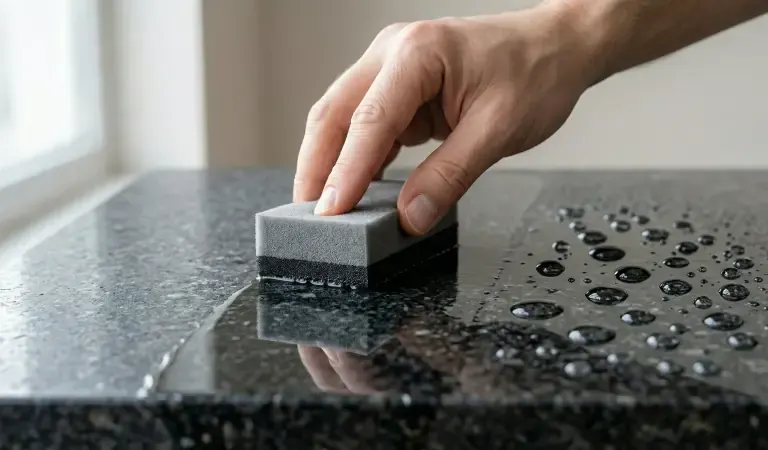
    Natural stone sealing applies a penetrating impregnator that enters the pores of suitable stone to help reduce liquid absorption and staining without adding a surface coating or shine.

    Before the Appointment

    The stone must be clean, dry, and free of old topical coatings before sealing. Clear the area and mention recent cleaning, repairs, or moisture problems so we can confirm that the surface is ready to accept a penetrating sealer.

    Aftercare and Maintenance

    Wipe spills promptly, clean with a pH-neutral stone product, and check absorption periodically with a few drops of water in an inconspicuous area. Resealing is based on the stone, traffic, and water absorption rather than a one-size-fits-all date.

    Chips, cracks, loose pieces, and movement need a separate natural stone repair assessment before surface refinishing. Natural stone repair assessment

    Frequently Asked Questions

    What does a penetrating stone sealer do?

    A penetrating sealer enters suitable stone pores and helps reduce absorption of liquids and staining. It is not a topical coating and does not create a polished shine or make stone completely stain-proof.

    Which stone surfaces may need sealing?

    Porous marble, travertine, limestone, and similar natural stone may benefit from sealing on floors, countertops, showers, and outdoor surfaces. We check the material and its absorption before recommending it.

    How do I know when stone needs resealing?

    Put a few drops of water in an inconspicuous spot and watch whether the stone absorbs and darkens. That check is only a guide; a professional can assess the stone, its use, and its current sealer before recommending maintenance.

    Will sealing stop lemon juice from etching my marble?

    A penetrating sealer does not make marble immune to acid etching. Sealing and etch protection address different concerns, so a dull ring from an acidic spill should not automatically be treated as missing sealer. Prompt spill care remains important. Discuss your material, current finish, and the kind of marks you see during assessment. Separate Raku No-Etch and Raku Sealer information is available for understanding the protection options without assuming they perform the same function.

    How long must I keep a sealed surface out of use?

    The suitable drying and cure instructions depend on the product, material, and site conditions. No single return-to-use period is published for every sealing project. Ask for the actual instructions before placing items on a countertop, walking on a floor, or using a shower. The need for prior cleaning, drying, or refinishing can also affect the project sequence. Do not substitute an online timeline for directions supplied for the treatment used on your stone.

    Can a dark area mean more than worn sealer?

    Yes; persistent darkening can involve absorbed liquid or an ongoing moisture source, not just worn protection. Explain whether the stone changes appearance after use and whether the area remains dark when dry. Sealing cannot fix a leak or failed waterproofing. The assessment should distinguish an appropriate absorption treatment from a moisture condition that needs another trade.

    Ready to Restore Your Stone?

    Ready to protect your stone? Call (818) 903-0970 for a free estimate, or fill out our online form. Elite Marble Care serves Beverly Hills, Santa Monica, Malibu, Calabasas, Encino, Sherman Oaks, Studio City, Burbank, Glendale, Pasadena, Manhattan Beach, Culver City, and more than 30 other cities across Greater Los Angeles.

    See our stone care tips for practical maintenance advice. For additional protection against acid etching, see Raku No-Etch and learn about Raku Sealer.

    Read more stone restoration guides or browse our service areas.

    Related Services

    Restoration by Material and Property

    Serving Greater Los Angeles

    Call (818) 903-0970