Confirm what the surface is
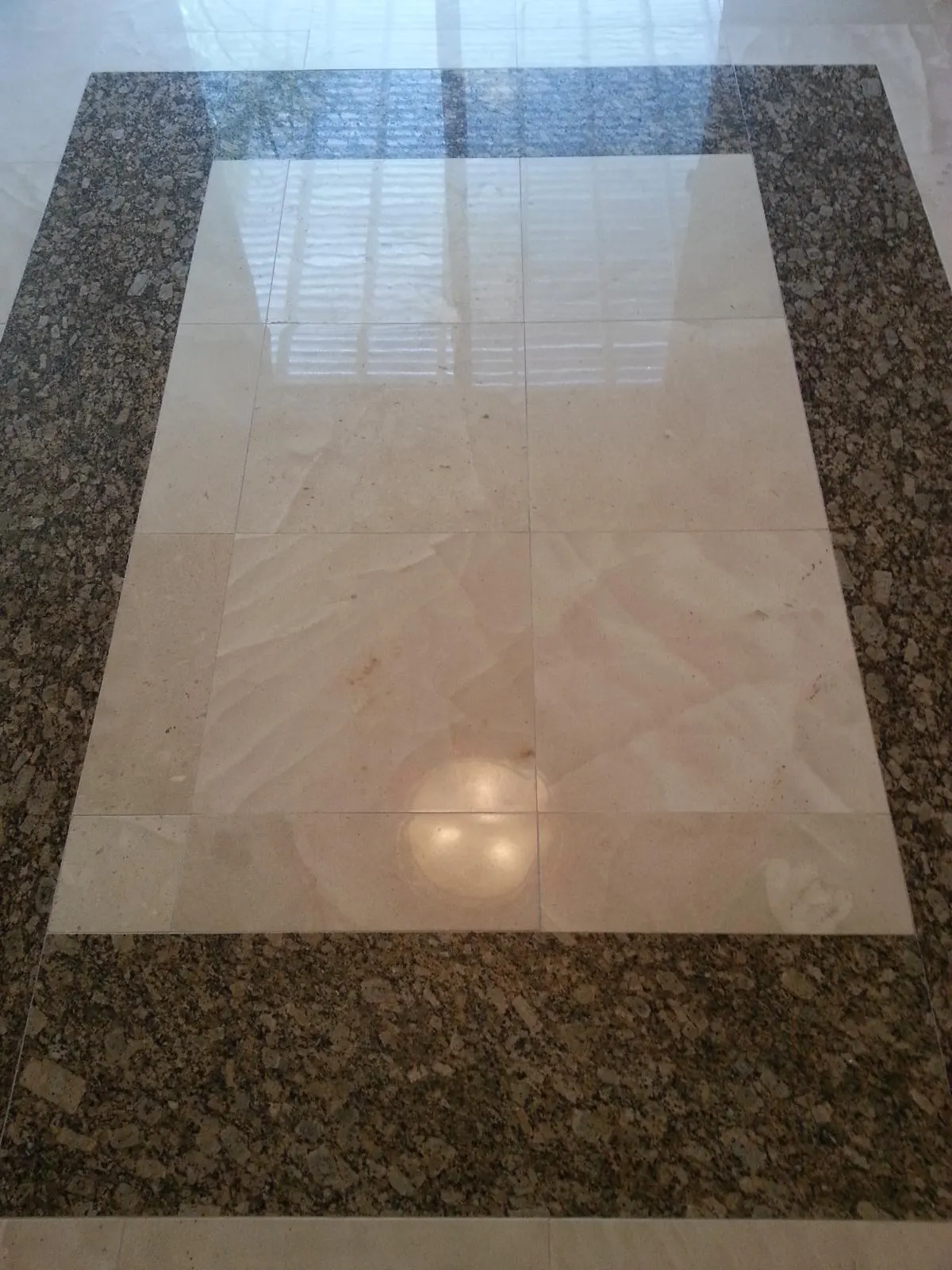
A dark, speckled counter may be granite, engineered material, or another stone with a factory finish. Color alone does not identify composition or indicate which abrasive and polishing approach is safe. Edges, visible mineral pattern, installed context, and response to a discreet test help inform the assessment; a homeowner should not test with acids or aggressive cleaners.
Granite is often more resistant to everyday acids than marble, but it is not immune to scratches, impact, stains, or a failed seam. A counter can be dull from residue, a worn factory treatment, surface abrasion, or a mix of conditions. Naming the observed issue precisely keeps a proposed restoration from promising that polishing will solve a structural or fabrication problem.
Countertops need edge-aware work
The broad plane is only part of a kitchen surface. The technician should look at the edge profile, sink and cooktop openings, backsplash, seams, corners, and the transitions between an island and surrounding counters. Refining only a ring around a sink may leave a halo if the surrounding sheen differs, so the blend area should be discussed before work begins.
Chips at a cutout, a crack that crosses the slab, a seam that opens, or an edge without adequate support raises a different question from dullness. Cosmetic fill or color blending may be assessed, but structural support and fabrication lie outside ordinary surface polishing. Share any history of impact, cabinet movement, plumbing leaks, or earlier repair so the correct trade can be identified.
Understand what polishing can change
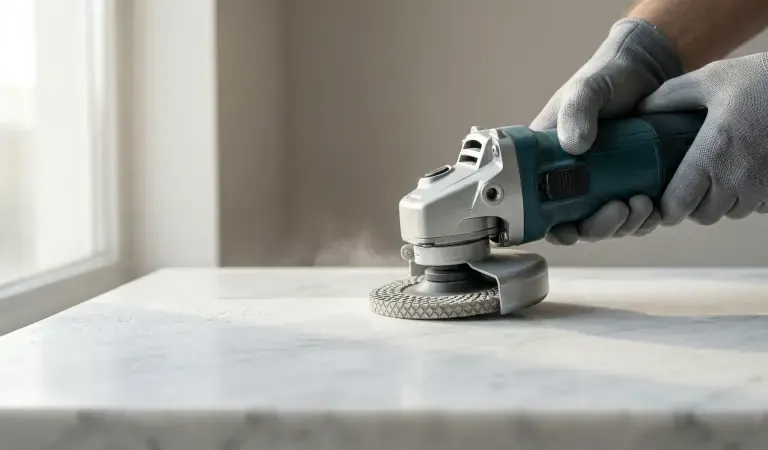
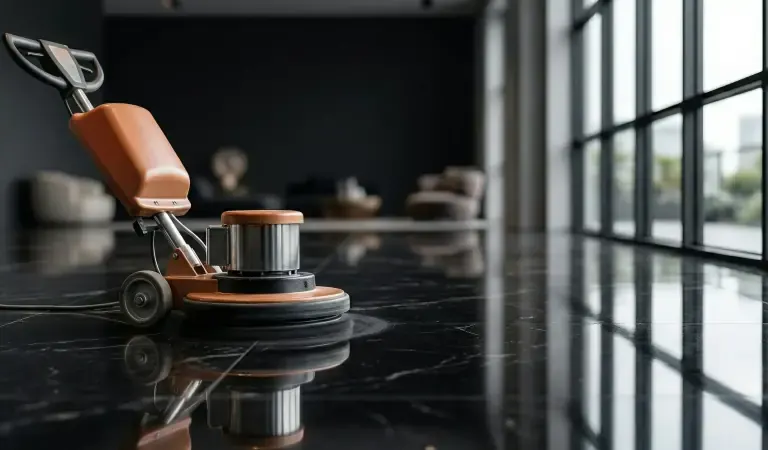
Cleaning removes material sitting on the surface; honing and polishing refine the stone itself. A light scratch may respond differently from a deep gouge, and localized abrasives can alter reflection beyond the visible line. The assessment should describe likely treatment boundaries, expected appearance, and whether a test patch is appropriate rather than promising an invisible correction.
Sealer does not make granite glossy. A penetrating product may be considered when the specific stone absorbs liquid, but it cannot fill a crack, restore a worn polish, or guarantee stain prevention. Existing topical products or residue must be identified first because their removal can change the apparent color and sheen of the counter.
Maintain a usable kitchen surface
Use a soft cloth with a cleaner intended for natural stone and remove cooking oils and spills promptly. A cutting board and trivet reduce avoidable abrasion and heat exposure, while a clean cloth prevents grit from being moved around. Avoid abrasive powders and pads until the exact material and finish have been confirmed.
Protection should follow observed absorption and the manufacturer's or technician's product guidance, not a guessed calendar. If water darkens an inconspicuous spot, note the observation and ask whether the stone would benefit from sealing; the check is not a substitute for identifying the material. Keep care products and past treatment details for a future assessment.