How can you tell genuine Saltillo tile from a ceramic imitation?
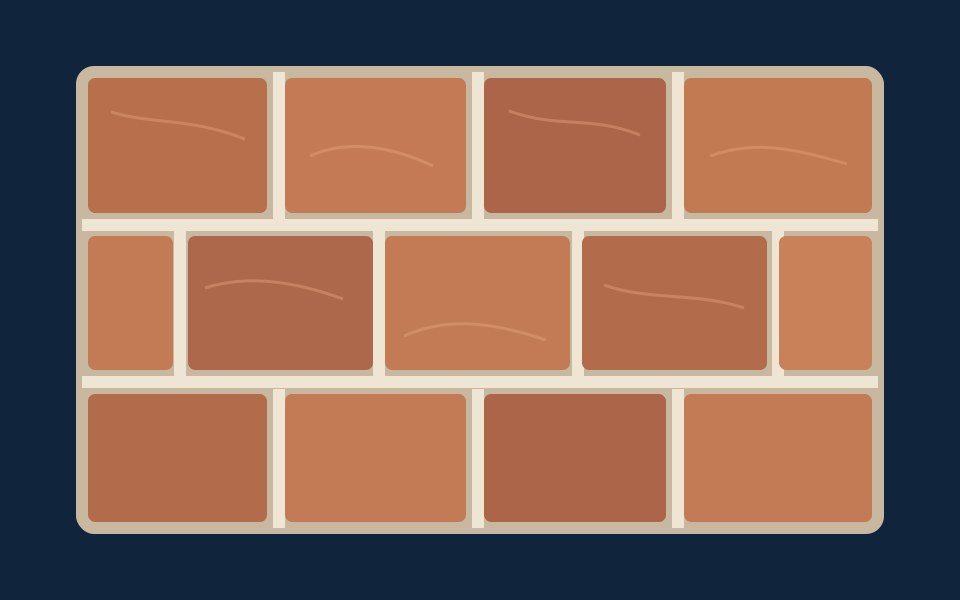
Appearance alone is not always sufficient. Surface texture, tile edges, porosity, product records and existing treatment help identify the material. A ceramic tile made to resemble terracotta can need a very different cleaning approach from absorbent fired clay. We assess the installation rather than select a process from color alone. When the material remains uncertain, that uncertainty should be resolved before aggressive coating removal or sealing.
Will restoration make handmade terracotta tiles look identical?
No. Variation in color, shape, texture and firing is part of many clay floors. Restoration aims to address avoidable soil and treatment problems while respecting that character. A sample can clarify the intended appearance, but it cannot guarantee uniformity across tiles with different histories or absorption. Missing pieces and later replacements may remain visually distinct even after a consistent finishing approach.
Can refinishing stop recurring white deposits or damp patches?
Not by itself. Recurring deposits or dampness can have an underlying moisture or installation cause. Their pattern and history must be considered before new protection is applied. Covering a recurring problem with a finish may leave its cause unresolved. Waterproofing, drainage or substrate concerns may require another qualified trade; a cosmetic tile-restoration proposal should not be presented as a structural or moisture-control guarantee.
Can only the worn walkway be restored?
A local area can be assessed, but matching may require considering a broader boundary. Old coating thickness, tile variation and wear can make a narrow repaired strip stand out. Show the complete room and explain which adjoining areas should remain consistent. The proposed scope should balance practical access with an achievable appearance rather than guarantee an invisible match between newly treated clay and untouched flooring.
Should I reseal a cloudy Saltillo floor before calling?
Avoid adding treatment until the cause of cloudiness is understood. It may involve residue, an unsuitable cleaner, old coating, moisture or wear. Another application can make buildup harder to remove and obscure useful evidence. Provide previous product information and photographs in normal light. The floor may need cleaning or preparation before protection, rather than a new layer applied to the existing problem.
What information helps assess a Saltillo or terracotta floor?
Provide overall photos, close-ups of worn and protected areas, approximate size and indoor or outdoor use. Identify grout problems, loose tiles, earlier repairs and any recurring moisture. Product labels or treatment records are useful if available. Describe the appearance you want to retain as well as what you want changed. These details guide an on-site assessment without pretending that a photograph establishes the floor's exact material or condition.