Back to Services

    Honing

    Quick answerHoning refines stone with diamond abrasives to create a smooth matte or satin finish rather than a mirror shine. Los Angeles homeowners often consider it for etching, light scratches, or an uneven worn appearance. Elite Marble Care assesses the material and existing finish before recommending honing and explaining how the treated area can blend.
    • Licensed & Insured
    • 18+ years in business
    • 4.9 rating · Yelp and Google
    • Dust-free wet process

    What to expect from honing

    Best forDull spots, light scratches, and acid etching on marble or limestone; Floors, countertops, and vanities where a low-sheen finish is preferred; Surfaces that need smoothing without the reflectivity of a polished finish
    Stone typesSuitable marble, limestone, travertine, granite, and terrazzo after assessment
    Typical time on siteConfirmed during the on-site assessment
    Dry / cure timeDepends on the material and selected process
    How long results lastVaries with finish, use, and maintenance

    A considered approach

    Our process

    1. 1

      Identify the finish you want to live with

      You compare the current appearance with your preference for a quieter matte or satin surface. The technician checks whether dull marks are etching, dirt, scratches, or a previous coating. Describe whether you want to retain a factory-honed finish or change a polished one. Different stones can respond differently to the same refinement, so a finish discussion is more useful than requesting a universal abrasive number or assuming that every honed surface looks identical.

    2. 2

      Evaluate blending and prepare the accessible area

      You see the boundaries of the proposed work considered alongside nearby stone, edges, and fixtures. A small countertop mark may require work over a broader area so the sheen does not become a visible island. The suitable treatment approach is explained before refinement starts. Wet work and surrounding finishes need protection, and details such as sink edges or floor borders can affect access. These conditions are part of the scope, not reasons to promise an invisible spot repair.

    3. 3

      Refine the affected surface with controlled abrasives

      Where the stone is suitable, the technician uses diamond refinement to work toward the agreed lower-sheen finish. You may notice that damaged areas and their surroundings need to be treated together rather than only at the center of an etch mark. Scratch depth and the original surface condition determine what refinement is appropriate. Honing is not simply applying a product that hides damage; it changes the surface finish and must be matched to the material.

    4. 4

      Check the sheen and explain ongoing care

      You review the surface from more than one viewing angle and discuss any remaining variation, deeper marks, or exposed fill. The technician explains suitable cleaning and whether an absorption assessment supports sealing. A matte finish still needs spill care and can still etch when the material is acid-sensitive. Obtain the return-to-use and drying instructions for the work actually performed. Honing should give you a clear finish plan without a made-up lifetime for the result.

    A honed finish is a finish choice, not hidden damage

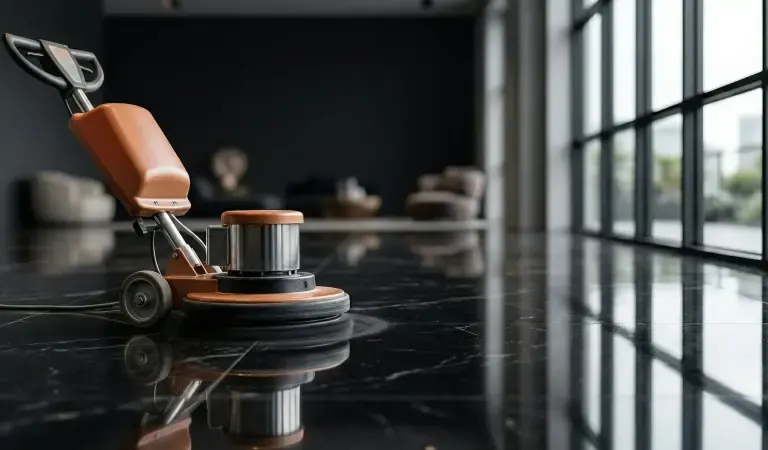
    A naturally honed floor can look intentionally soft rather than neglected. The important distinction is whether its appearance is consistent with the desired finish or interrupted by scratches, etch rings, and traffic wear. Changing a highly polished island to a honed finish affects the entire visual character of the stone. Discuss the surrounding backsplash, edges, and any adjoining slabs before deciding on the scope. A picture can communicate a preference, but the actual stone determines what an appropriate honed result will look like.

    Honing and polishing are related stages of surface refinement, not interchangeable names for cleaning. Honing usually leaves less reflection; polishing aims for more. Deep damage can require an earlier stage of work, while residue may be addressed without abrasive refinement at all. If a cleaner has created cloudy areas on marble, describe the product and how it was used. That information helps distinguish a chemically etched surface from a film sitting above it, which leads to a different treatment decision.
    Consider the whole surface before fixing one mark

    On a Los Angeles kitchen island, daylight can reveal a different sheen around a spot repair even when the center of the original mark has improved. An assessment should address blending, not only whether the mark can be worked on. The counter's edge shape, sink opening, cooktop, and existing finish influence what is accessible. On floors, traffic lanes and protected corners may have different wear. Discuss how broad the work needs to be to achieve an understandable, consistent finish.

    Lower sheen does not turn marble or limestone into an acid-proof material. Prompt spill cleanup and appropriate stone-safe maintenance remain important after honing. Avoid using a glossy floor coating to compensate for a matte finish you deliberately selected. If the surface develops recurring marks, identify their source before asking for repeated touch-ups. The value of a finish consultation is knowing what the stone can look like and how to care for it, not being promised a permanently mark-free surface.

    Service overview

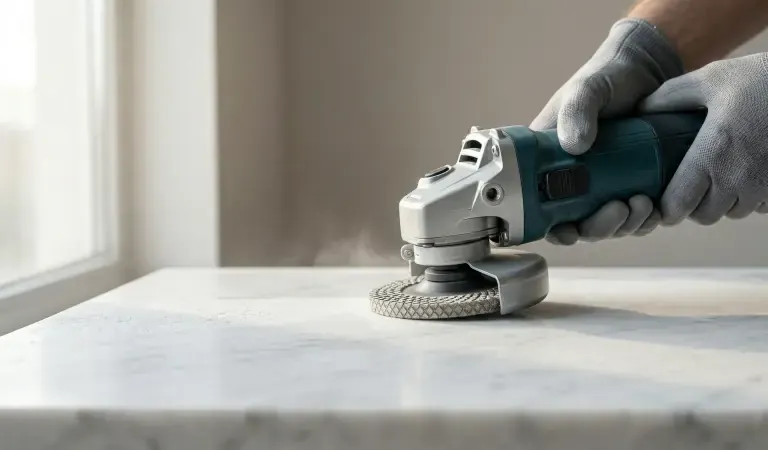
    Marble and stone honing uses diamond abrasives to remove etching and everyday wear while leaving a smooth matte or satin finish instead of a mirror shine.

    Before the Appointment

    Clear personal items from counters, vanities, or floor areas and identify stains, chips, and prior coatings during the assessment. Any wax or topical coating may need to be removed before honing can produce an even result.

    Aftercare and Maintenance

    Use a pH-neutral cleaner and a soft microfiber cloth or mop. Wipe acidic spills quickly, avoid abrasive pads, and test the stone periodically for sealing needs because honing changes the surface but does not replace a penetrating sealer.

    Chips, cracks, loose pieces, and movement need a separate natural stone repair assessment before surface refinishing. Natural stone repair assessment

    Frequently Asked Questions

    What is marble honing?

    Marble honing is a diamond-abrasive process that smooths the stone and leaves a matte or satin finish. It reduces etching and everyday wear without creating the reflective shine of polishing.

    When is honing better than polishing?

    Honing is a good fit when the surface has etching or light wear and a soft, low-sheen appearance is preferred. The finish is selected after checking the stone and the condition of the surface.

    How do I maintain a honed stone surface?

    Clean it with a pH-neutral stone cleaner, wipe spills promptly, and avoid vinegar, lemon, abrasive powders, and rough scrub pads. A penetrating sealer may still be appropriate for porous stone.

    Can I change a polished marble countertop to a honed finish?

    A change to a honed finish may be suitable after assessment of the marble and the whole countertop. Edges, seams, fixtures, access, and the desired appearance need to be included in the discussion. The work is a finish change, not a temporary dulling product. Ask how the surface and surrounding details can be treated together, and review the proposed sheen before committing to an expectation based only on another property's photograph.

    Does a matte finish mean my stone cannot etch anymore?

    No; acid-sensitive stone can still etch after honing. A lower-sheen surface may show a mark differently, but it does not change marble's underlying response to lemon juice or other acids. Cleaning and spill habits still matter. Sealing addresses suitable absorption concerns and is not equivalent to preventing acid etching. If etching is your main concern, discuss the material, finish preference, and the conditions where the marks occur before choosing a treatment.

    How do I explain the honed finish I want?

    Describe the sheen you prefer and show how the existing surface looks in normal light. Identify adjacent stone that should remain consistent, including edges and backsplashes. A reference photograph can communicate a preference, but the technician must assess your actual material. A matte finish from another property is not a guaranteed match for your countertop or floor.

    Ready to Restore Your Stone?

    Every project begins with a free, on-site assessment. We will identify the condition of the stone, explain the appropriate process, and provide a clear estimate before work begins. Request your free estimate or call (818) 903-0970.

    See our stone care tips for practical maintenance advice.

    Read more stone restoration guides or browse our service areas.

    Related Services

      Restoration by Material and Property

      Serving Greater Los Angeles

      Call (818) 903-0970