Back to Services

    Polishing

    Quick answerStone polishing refines a prepared surface to restore a more reflective, consistent finish. Los Angeles owners may need it when marble or other suitable stone looks worn or uneven after cleaning, but polishing alone is not a solution for every scratch or raised tile. Elite Marble Care assesses preparation, material, and sheen expectations first.
    • Licensed & Insured
    • 18+ years in business
    • 4.9 rating · Yelp and Google
    • Dust-free wet process

    What to expect from polishing

    Best forDull marble, granite, or travertine floors and countertops; Water rings, light etching, and surface wear that have reduced the shine; Stone surfaces where a reflective finish is wanted after cleaning or honing
    Stone typesSuitable marble, granite, travertine, limestone, and terrazzo after assessment
    Typical time on siteConfirmed during the on-site assessment
    Dry / cure timeDepends on the material and selected process
    How long results lastVaries with finish, use, and maintenance

    A considered approach

    Our process

    1. 1

      Separate loss of shine from the cause of damage

      You point out dull traffic paths, cloudy areas, scratches, or countertop rings during assessment. The technician considers whether the problem is residue, etching, abrasion, an old coating, or a finish that was never intended to be highly polished. This discussion establishes whether polishing is the suitable final treatment or whether earlier cleaning, stripping, or honing is needed. A shiny spot is not the goal if it leaves the rest of the surface visibly mismatched.

    2. 2

      Discuss the target sheen and prepare the surface

      You review the desired appearance in relation to the stone, nearby surfaces, and the light that falls across the work area. Preparation is explained before the finish is refined. Fixtures, edges, borders, and existing repairs may affect the scope and access. If material-specific testing is appropriate, it informs the recommendation rather than creating a guarantee that all stone reaches the same shine. The plan should distinguish the natural finish from a topical coating that merely adds gloss.

    3. 3

      Refine suitable stone to the agreed finish

      Where polishing is appropriate, you see controlled refinement of the prepared surface using the suitable diamond and polishing sequence. Elite Marble Care's existing process does not rely on wax coatings or crystallization to disguise the stone. The finish is considered across the work area, including boundaries that can be reached safely. Deeper damage or unstable edges cannot be solved by insisting on more polishing; those conditions need a separate decision about preparation or repair assessment.

    4. 4

      Review reflection and maintain the finished stone

      You inspect the treated surface under practical viewing conditions and discuss any remaining variation or visible repairs. Suitable sealing, if recommended, is a separate absorption-related treatment rather than the source of the polished shine. The technician explains cleaning and use instructions for the actual work. Avoid immediately applying a consumer floor polish that changes the intended finish. How long the appearance remains satisfactory depends on the material, use, grit, spills, and maintenance, so no unsupported durability period is quoted.

    Polishing begins with a suitable surface

    Gloss can draw attention to uneven preparation. A floor with deep scratches may need earlier refinement before polishing makes sense, while a counter with cleaner residue may need cleaning instead of abrasion. Tell the technician what changed and whether the surface was previously coated, repaired, or treated with a store-bought shine product. The correct sequence depends on the cause of the appearance problem. A polishing recommendation should explain what will be addressed before the final finish is judged, rather than treating gloss as a cure for every condition.

    Not every material is naturally suited to the same reflective appearance. Marble, granite, travertine, limestone, and terrazzo have different characteristics, and variations within a category also matter. A naturally cleft slate floor should not automatically be approached like smooth marble. Existing edges and surrounding finishes can limit a change in sheen. Ask whether the requested finish is appropriate for the specific installation, and discuss any test or example as guidance about that stone rather than a promise copied from another project.

    Judge consistency as well as brightness

    In a Los Angeles living room, windows can expose worn lanes and halos that overhead lighting does not show. On a kitchen island, an isolated bright patch can look different from the surrounding slab even when the original mark is less noticeable. Consider how the surface looks across the whole treated area. Explain which rooms or sections need to match, and whether protected corners retain a different factory finish. Defining that expectation helps determine the practical boundaries of the polishing work.

    A polished surface is still real stone, not an indestructible protective film. Acid-sensitive materials can etch, grit can scratch the finish, and absorption concerns may need a separate sealing assessment. Choose a maintenance routine that suits the material and the agreed appearance. If gloss fades in a particular pathway or work zone, identify the wear source rather than adding a coating to conceal it. The appropriate follow-up depends on the condition, not an assumed calendar interval or a promised number of years.

    Service overview

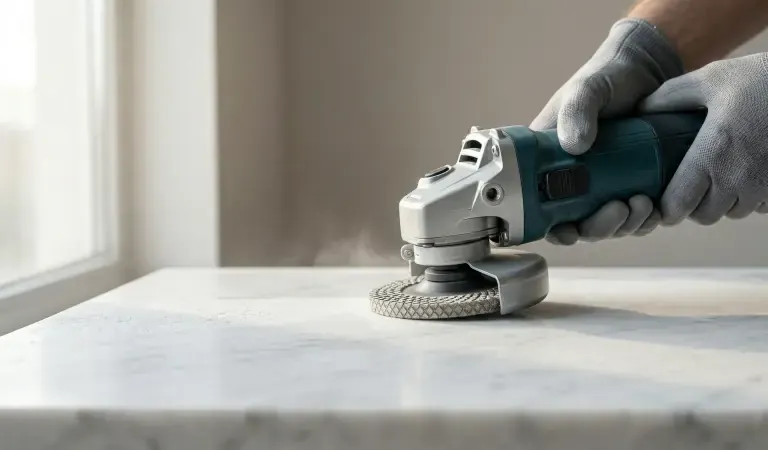
    Marble and stone polishing refines a clean surface with progressively finer abrasives and compounds to restore a brighter, reflective finish and bring out natural veining.

    Before the Appointment

    Clear the work area and share any concerns about etching, stains, chips, or previous waxes. Polishing works best after the stone is clean and free of topical coatings; deeper scratches or lippage may need grinding or honing first.

    Aftercare and Maintenance

    Dust and mop with a pH-neutral stone cleaner, use coasters or mats where appropriate, and wipe acidic spills as soon as possible. Polishing does not make marble acid-proof, and porous stone may still need periodic resealing.

    Chips, cracks, loose pieces, and movement need a separate natural stone repair assessment before surface refinishing. Natural stone repair assessment

    Frequently Asked Questions

    What does professional marble polishing do?

    Professional polishing uses progressively finer diamond abrasives and stone-fabrication compounds to refine the surface and restore reflectivity. It can improve dullness and light surface wear after the stone is properly cleaned.

    Can you polish countertops and vanities?

    Yes. Marble, granite, and other suitable stone countertops, islands, vanities, and fireplace surrounds can be polished after an assessment of the material and its condition.

    How should polished marble be maintained?

    Use a pH-neutral stone cleaner, wipe spills promptly, and protect high-use areas from grit. Avoid vinegar, lemon, abrasive cleaners, and rough pads because polished marble can still etch or scratch.

    Is the shine created by wax or a coating?

    The intended polished stone finish is not a wax coating. Elite Marble Care's existing restoration approach uses controlled refinement and polishing rather than crystallization or a glossy film to conceal wear. Old topical products may need assessment before refinishing. Ask whether your surface already has a coating and what preparation is included, particularly if previous products have left an uneven reflection, residue, or a finish that changes when cleaned.

    Can polishing alone remove a deep scratch or raised tile edge?

    Polishing alone is not the appropriate solution for every deep scratch or raised tile edge. Those conditions can require an earlier grinding or honing assessment, and some uneven installations need work outside surface restoration. A finish can be made brighter without resolving the original defect, so describe what you want corrected as well as the sheen you prefer. The estimate should explain the proposed sequence and any limits before work begins.

    Can you assess only the worn traffic lane?

    A worn lane can be assessed, but blending may require considering a broader area. Protected corners and exposed walkways can have different sheen. Show the technician the surface in its normal lighting and explain which rooms should look consistent. The proposed boundaries should address the surrounding finish rather than promise an isolated polished strip that necessarily matches.

    Ready to Restore Your Stone?

    Ready for a mirror shine? Call (818) 903-0970 or request a free estimate online. Elite Marble Care covers Beverly Hills, Santa Monica, Malibu, Calabasas, Encino, Sherman Oaks, Studio City, Burbank, Glendale, Pasadena, Manhattan Beach, Culver City, and 30-plus more cities across Greater LA.

    See our stone care tips for practical maintenance advice.

    Read more stone restoration guides or browse our service areas.

    Related Services

    Restoration by Material and Property

    Serving Greater Los Angeles

    Call (818) 903-0970