Making a surface-by-surface plan for Santa Monica stone
In Santa Monica, a surface near an Ocean Park doorway may receive outdoor grit while a North of Montana vanity remains sheltered. Explain where the stone sits and how it is used. Coastal location is part of the context, not an automatic explanation for every dull spot. Show a nearby comparison area so the assessment can distinguish exposure-related residue from everyday finish wear or an isolated spill reaction.
Apartment and shared-building requests should include any rules affecting access or preparation. A kitchen counter may be a small work area, but its surrounding cabinets and adjoining surfaces still matter. A lobby or connected floor has different circulation requirements. We discuss those practical conditions alongside the material rather than assume the building will accept a standard sequence of work.
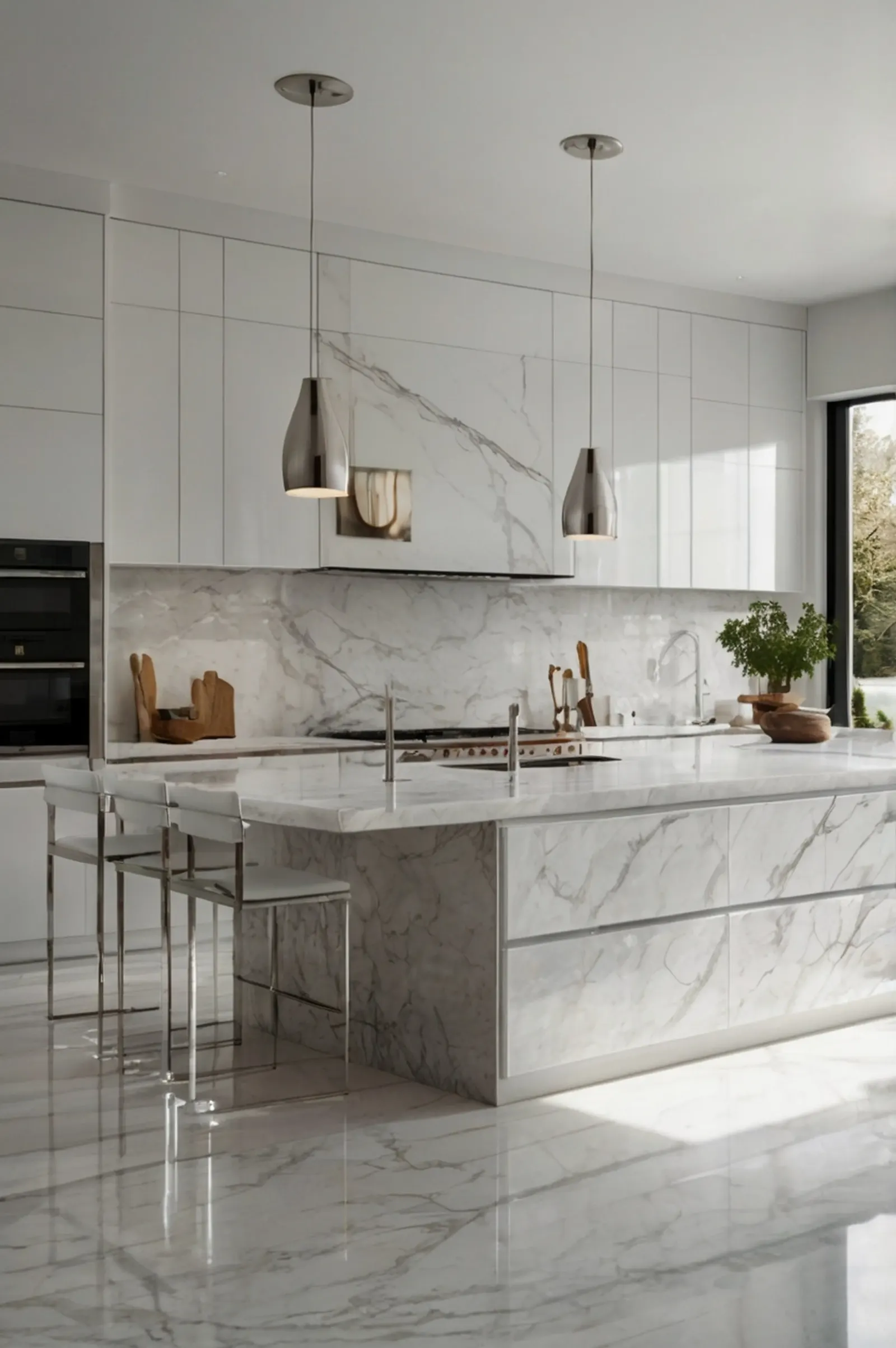
For marble, describe whether the concern is a pale change in reflection, darkening after a spill, or a film that seems to return. These are not interchangeable symptoms. A compatible cleaning scope may differ from surface refinement, and suitable sealing does not restore an etch. Avoid escalating household cleaner strength before the stone and cause are understood.
Consider the finish you want to retain over time, not just how the surface should look immediately after restoration. Room lighting, daily use, and your maintenance routine inform that choice. Exact matching and removal of every material variation are not assumed. Keep installation details and earlier treatment records so the estimate can focus on the observed condition without guessing what has already been applied.