Choosing a finish that fits the room in Beverly Hills
A dramatic marble counter and a large entry floor do not need to be judged by the same standard. In a Beverly Hills estimate, show the surface under the lighting you normally use and explain whether the concern is a single etched mark, broad wear, or a mismatch with an adjoining room. Reflections can make a shallow surface change look larger than it is; a close photograph alone may hide that context. Material identification is more useful than assuming an expensive slab must be polished to the highest possible gloss.
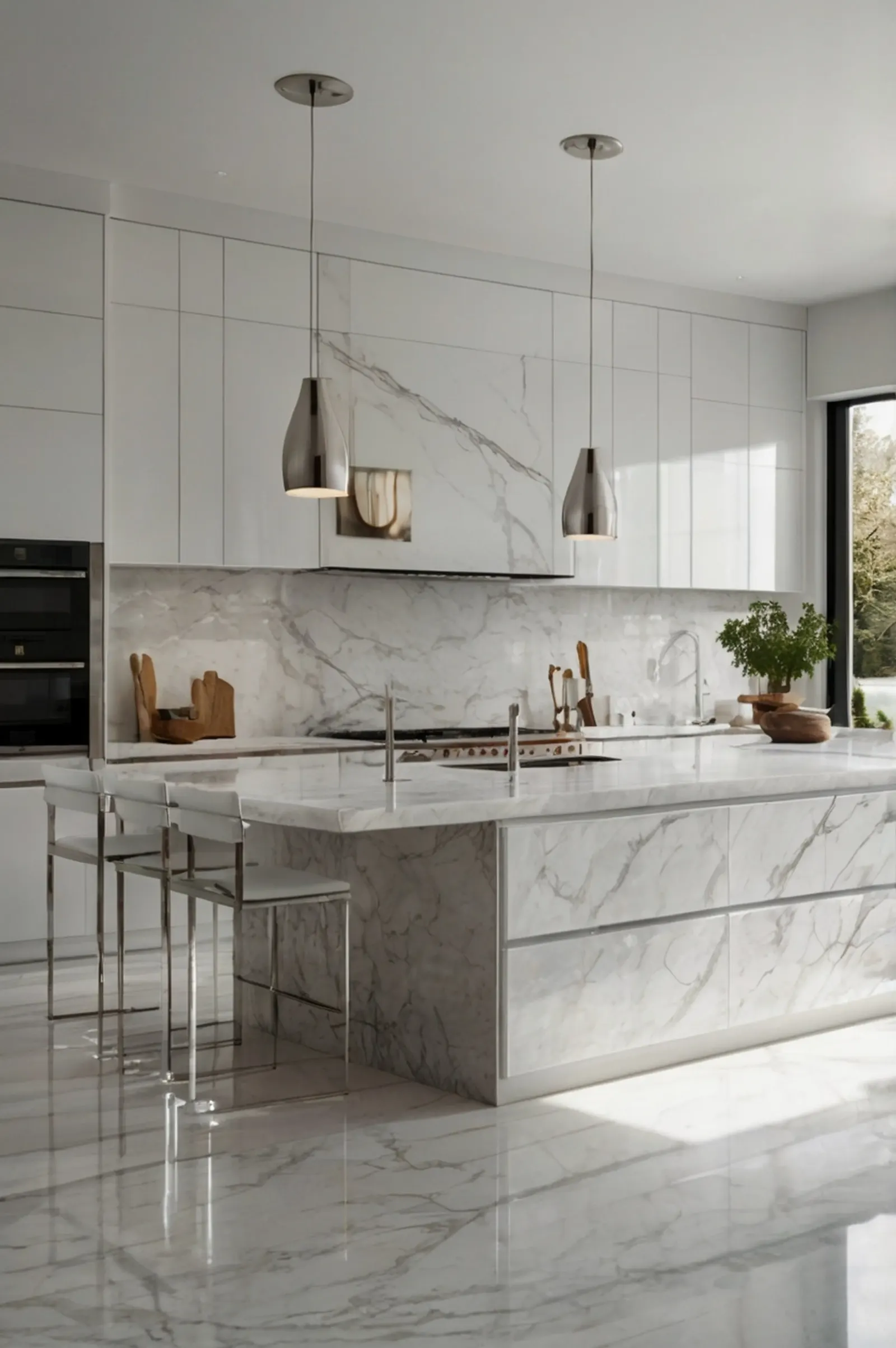
For a kitchen, include the sink edge, backsplash, and any adjoining material in the discussion. Acid contact changes calcium-based stone differently from an absorbed discoloration. A proposed polishing scope should explain which surface is being treated and how the surrounding finish will be considered. An invisible repair, exact color match, or restoration of every vein detail is not something to infer from the stone's appearance in a marketing photograph.
Larger rooms in the Flats or hillside properties can involve furnishings and access routes that are not apparent from surface measurements. Let us know which areas are occupied and whether the floor continues through doorways. Protection and work sequencing are discussed for those actual conditions. A restoration decision should account for daily use after the work, not merely the moment when the surface is photographed without furniture.
Keep any installation and care records you have. The stone name, earlier treatment, and products used at home help distinguish natural variation from a maintenance issue. If a particular honed or reflective look matters to you, show a reference and discuss whether it suits the inspected material. That is a more useful starting point than asking to remove every visible difference in a naturally varied surface.