Planning a Culver City assessment around the building and the stone
A surface estimate in Culver City benefits from two kinds of information: what is happening to the stone and what the property allows. In an apartment or shared building, management rules and access arrangements may affect preparation. In a private home, connected rooms and neighboring flooring may be more important. Describe both without assuming that a small countertop means the project has no logistical requirements.
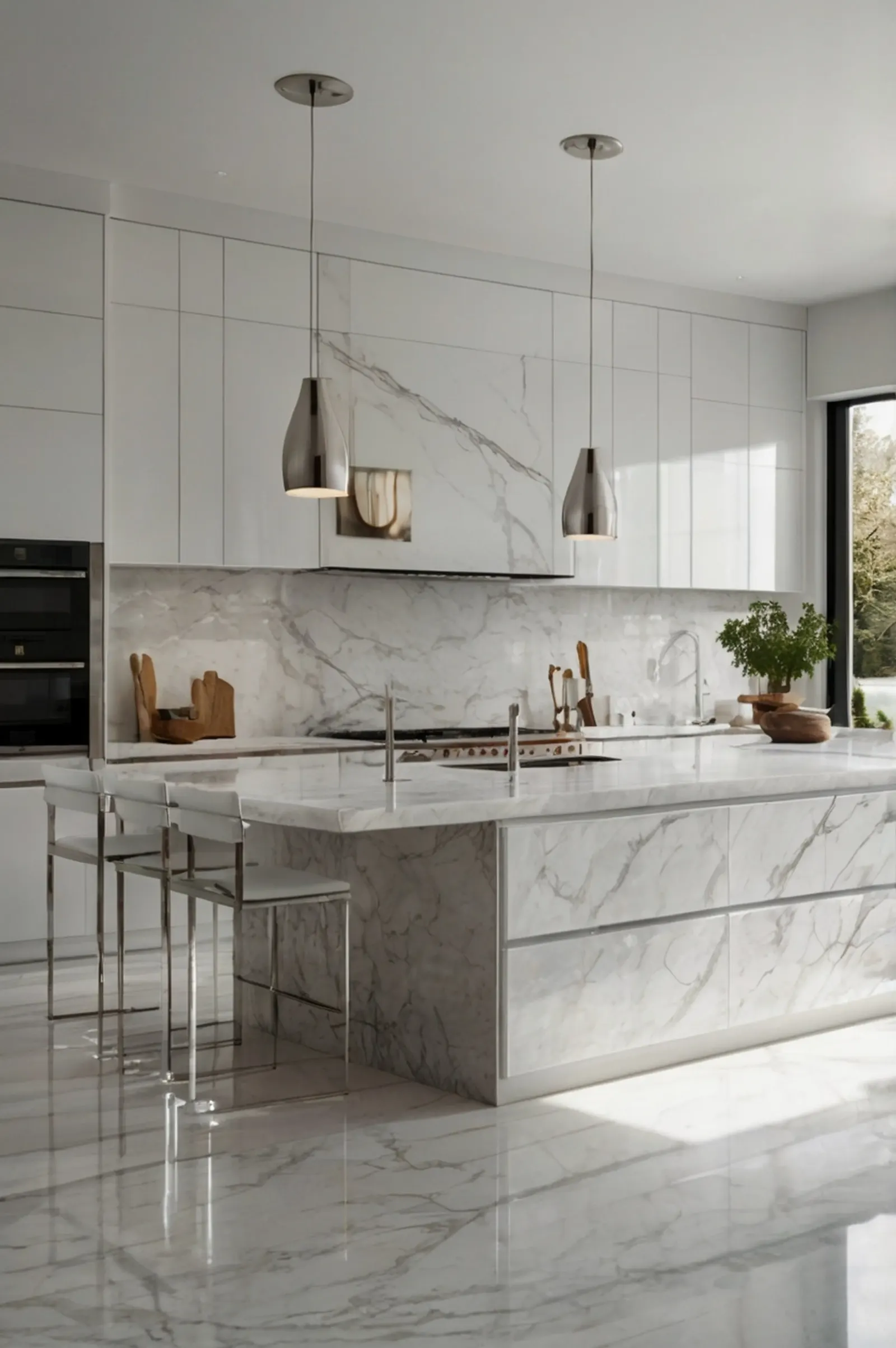
Near Carlson Park, Downtown, or the Arts District, show the material in its everyday setting. A wider photo can reveal a doorway transition or adjoining counter that should be considered with the damaged section. A close image is still useful for an etch or a worn patch, but it cannot establish the whole finish relationship. The assessment aims to distinguish cleaning, mechanical surface work, and conditions outside a cosmetic scope.
If a floor looks cloudy, explain whether the change follows traffic, cleaning, or repeated wetting. An old shine layer and actual stone wear can look alike in a photograph. A stronger cleaner should not become the default simply because routine maintenance has not restored the original appearance. Material identification and product history help avoid introducing a second problem while trying to solve the first.
For a building-managed project, include the person authorized to discuss work and any requirements affecting access to the room. Scope and scheduling are then considered for that property rather than advertised as a neighborhood-wide guarantee. After restoration, retain the proposed care instructions and use products compatible with the stone; an attractive result should be supported by a practical routine, not repeated layers of generic polish.