How do polishing and honing change marble?
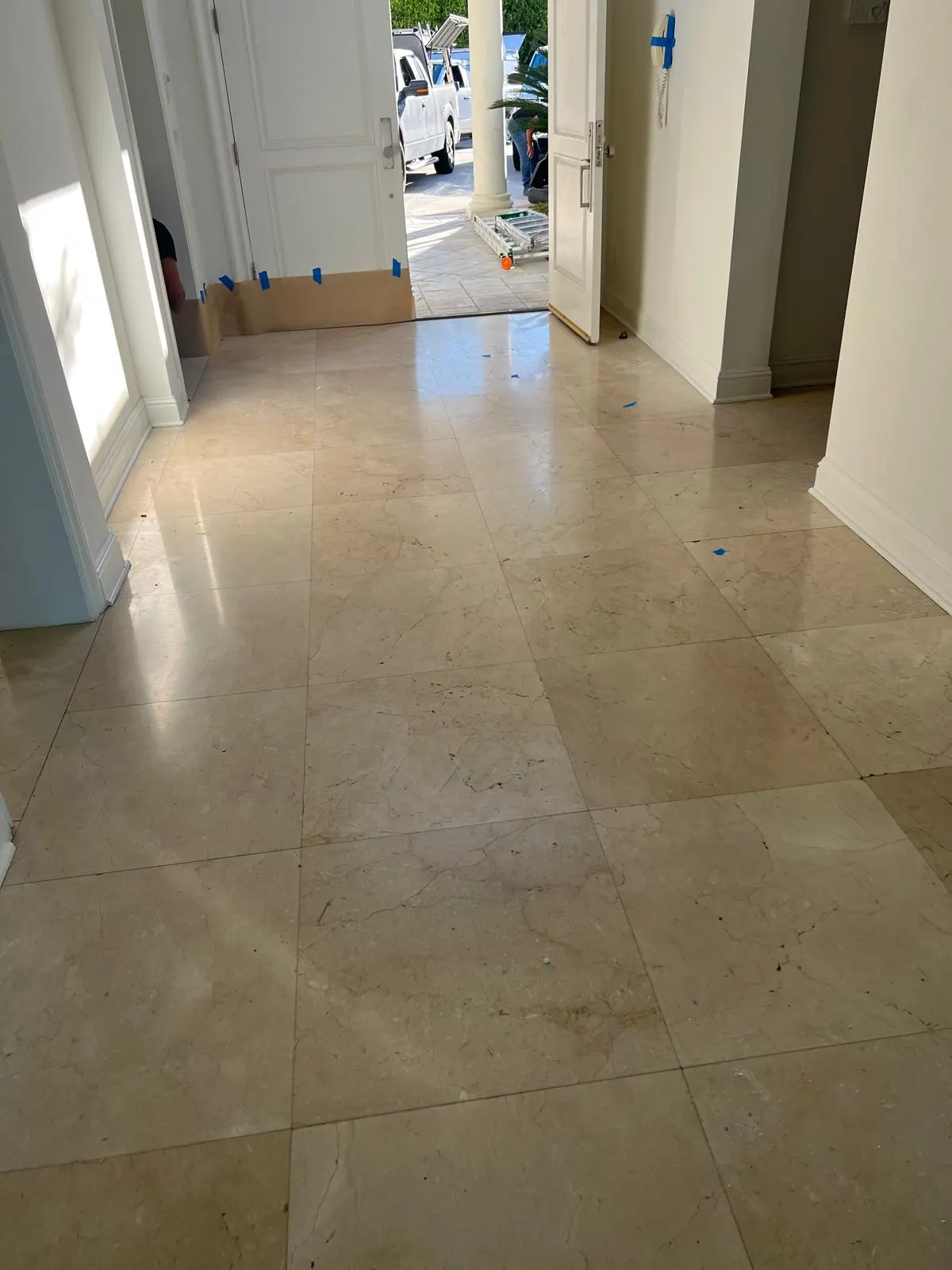
Polishing uses progressively finer abrasives and professional compounds to bring out a reflective, factory-style shine. Honing stops earlier, leaving the surface smooth but satin or matte. Neither finish is automatically better; the right choice depends on the room, the stone, and how you use it.
A polished floor reflects light and emphasizes veining, while a honed surface is more forgiving of everyday footprints and small marks. Countertops, shower walls, and busy entryways each benefit from a slightly different conversation about sheen and maintenance.
How do you choose the right marble finish?
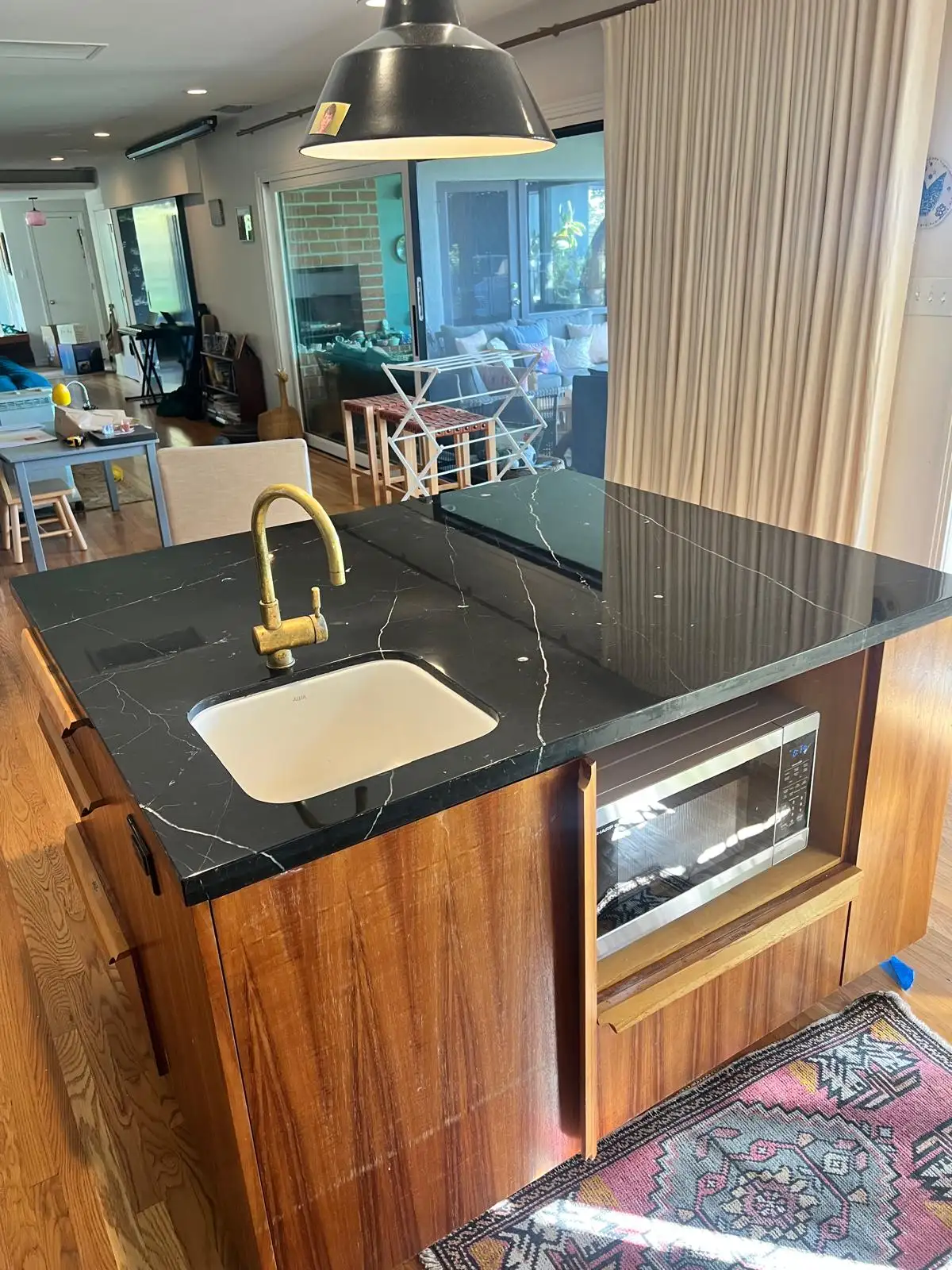
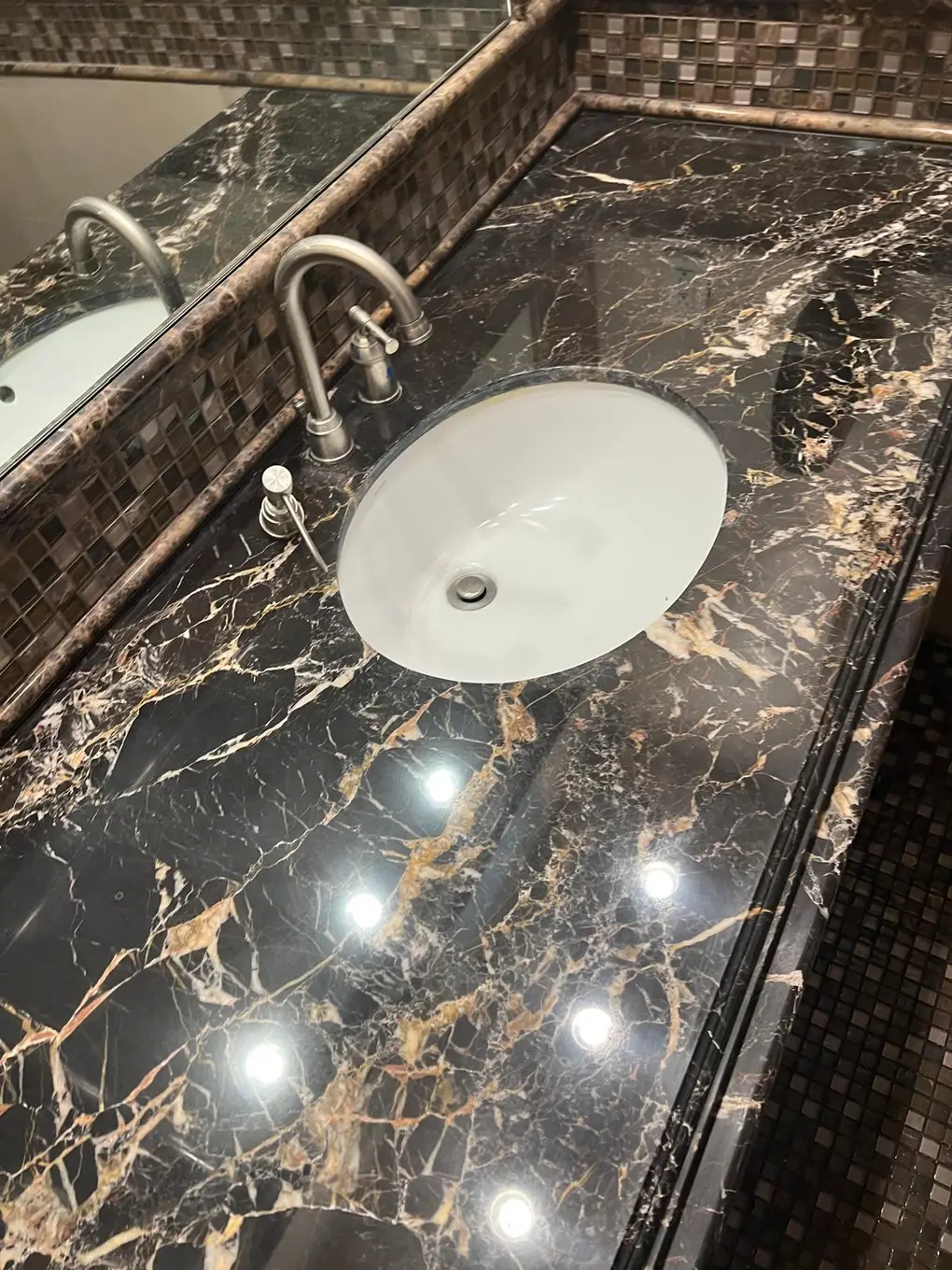
Choose polishing when you want maximum reflection on a formal floor, island, vanity, or tabletop and the stone is sound enough to support that finish. Choose honing when you prefer a quieter look, want to reduce glare, or need to disguise minor wear across a high-traffic surface.
A technician should inspect etching, scratches, lippage, stains, and old coatings before recommending either process. If the surface is badly uneven, grinding may need to come first.
How can you tell dirt from a worn marble finish?
Start by observing what remains after a careful neutral clean, rinse and complete drying. A removable streak is different from a dull patch that interrupts a reflection. Soap residue, oily soil and tracked grit can obscure sound marble; repeated cleaning will not rebuild a surface dissolved by an acidic spill. Check the floor from several angles without adding a gloss product. A photograph taken straight down may miss an etched halo that becomes obvious beside a window. Describe whether the mark changes color, feels raised or simply reflects light differently. Those observations help separate cleaning work from abrasive refinishing without pretending a remote diagnosis is conclusive.
Does a matte finish hide wear better in a busy room?
Honed marble scatters light rather than reflecting a sharp image, so certain fine scratches and footprints may be less noticeable than on a glossy surface. That does not make the stone scratch-proof or immune to etching. A busy entry still needs grit removal, suitable mats and prompt spill care. Color, veining and lighting also affect what people notice. Ask to view a representative sample from the doorway and at standing height, not only while crouching beside it. Consider adjoining rooms as well: a sudden change from glossy hallway tiles to a matte living room should be an intentional design choice rather than an accidental repair boundary.
Can cleaning produce the same result as polishing?
Cleaning can reveal the original shine when residue is the only problem, but it cannot guarantee a new polished finish. Professional polishing works on the stone itself after the necessary preparation. A bottle described as a polish may instead leave a temporary film that changes maintenance and makes later work harder to assess. Before buying another product, ask whether the stone has a wax, coating or previous treatment. If it does, removal and a sample area may be needed before choosing the final sheen. Avoid paying for an appearance change when a careful clean would solve the issue, or expecting cleaning to remove scratches that need mechanical refinement.
What should an assessment compare before work starts?
Compare the condition of the center, perimeter and transition areas rather than assuming one test represents the whole floor. Doorways often hold more grit; edges can retain old product; furniture may conceal an unworn reference area. For counters, include the sink surround, exposed edges and backsplash transitions in the discussion. Ask which defects are included, which remain uncertain and whether grinding is actually necessary. A sample can help define the finish but does not prove that every stain or structural issue will disappear. Request a written description of preparation, selected sheen and aftercare so that both parties are comparing the same result instead of relying on the vague word restoration.
How should you maintain the finish you choose?
Use the Natural Stone Institute's care guidance as a starting point: remove grit, clean with an appropriate neutral product and avoid acidic cleaners on calcareous stone. Follow the specific instructions for the installed stone and any treatment. Rinse away cleaner residue and use clean tools rather than redistributing soil. A penetrating sealer can reduce absorption, but it does not turn a polished surface into an acid-resistant one or a honed surface into a maintenance-free floor. Reassess maintenance when traffic or cleaning products change. Elite Marble Care can discuss cleaning, honing and polishing together during an assessment across its listed Greater Los Angeles service areas.
What if the room contains several kinds of stone?
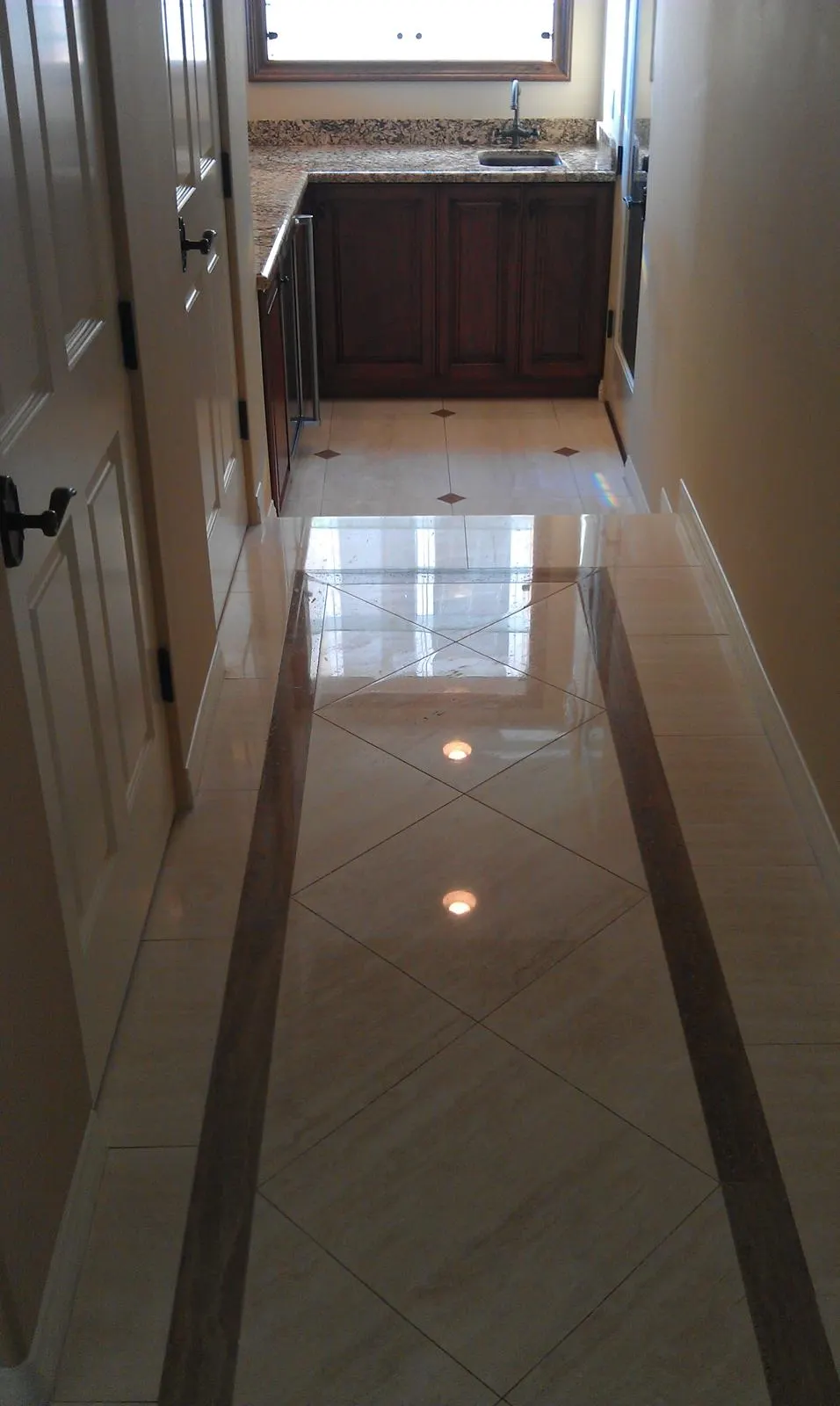
Do not select one abrasive process for a mixed floor without identifying its components. A decorative border, inset or replacement tile may respond differently from the surrounding marble, and grout joints can influence how the finished surface reads. Point out any areas repaired by a previous owner and any pieces whose identity is uncertain. Discuss whether the desired sheen is feasible across all of them or whether a compromise needs to be agreed. A mixed installation is also a reason to keep cleaner instructions specific: a product compatible with one section may be inappropriate for the neighboring material. Resolve those questions before judging the sample as a whole-room specification.
Quick checklist
- Clean a small area with a stone-safe neutral cleaner and allow it to dry.
- Compare reflection, scratches and dull spots under the same light.
- Ask for a honed and polished sample on the actual stone.
- Include edges, thresholds and the maintenance routine in the scope.
Clear answers
Frequently asked questions
How do polishing and honing change marble?
Polishing uses progressively finer abrasives and professional compounds to bring out a reflective, factory-style shine. Honing stops earlier, leaving the surface smooth but satin or matte. Neither finish is automatically better; the right choice depends on the room, the stone, and how you use it.
How do you choose the right marble finish?
Choose polishing when you want maximum reflection on a formal floor, island, vanity, or tabletop and the stone is sound enough to support that finish. Choose honing when you prefer a quieter look, want to reduce glare, or need to disguise minor wear across a high-traffic surface.
What should I include when requesting an assessment for polishing?
Describe the stone, where it is installed, the finish you want to keep or change, and what happened before the problem appeared. Share any previous treatments or cleaner labels. Photographs help explain the concern, but an on-site assessment may still be needed to establish the appropriate scope and limitations.
Sources
Not sure which service your stone needs?
Elite Marble Care can assess the surface in person, explain the restoration sequence, and provide a free on-site estimate across Greater Los Angeles.