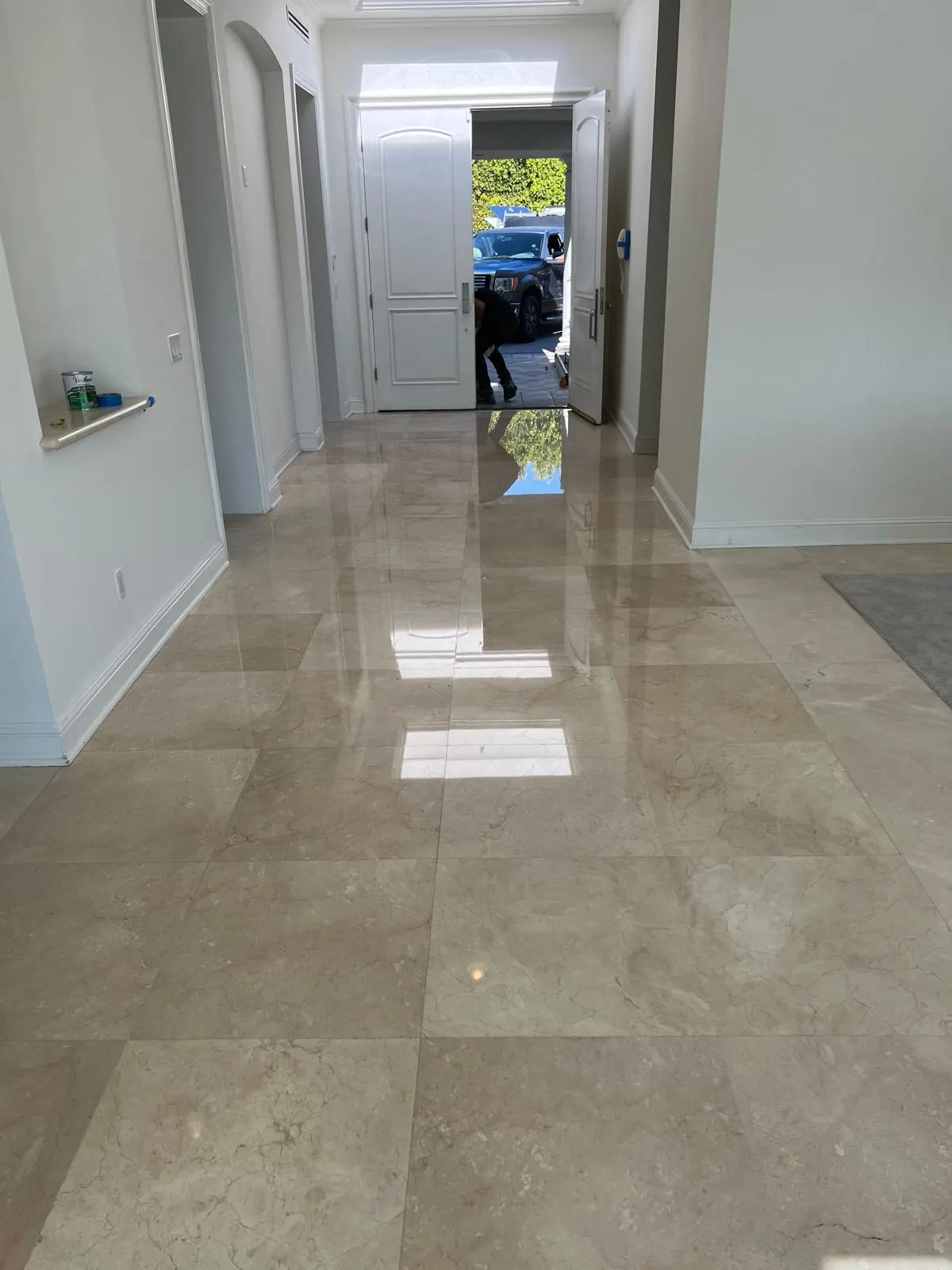
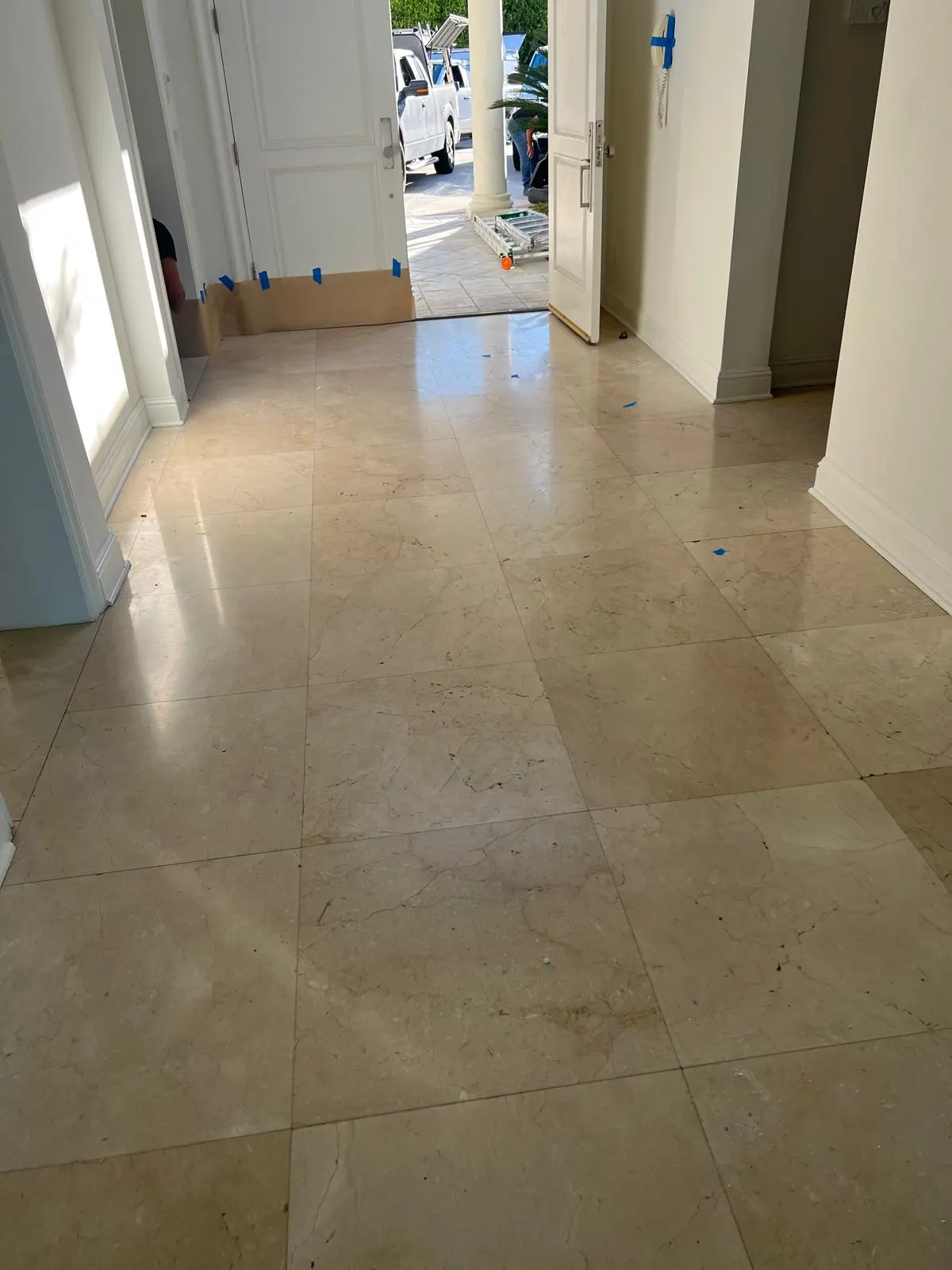
Why can a marble floor look cloudy after remodeling?
A finished room can still have a floor that looks unfinished. Drywall dust, tracked grit, cleaner residue and small particles from nearby work can change how marble reflects light. A cloudy patch is not automatically permanent damage, but it is not proof that a stronger cleaner is needed either. Before treating the whole floor, separate loose contamination from actual changes in the stone's finish.
For a Los Angeles remodel, think about the entire access route: the front entry, hallways used by trades, temporary storage areas and the path to a patio. Those routes may have received more traffic than the room being renovated. Photograph the surface in normal room lighting and note when the haze appeared. Avoid calling every white mark construction dust; persistent powder can also require investigation for moisture-related deposits.
What should happen before any cleaning begins?
Confirm with the contractor that dusty work is finished or properly isolated. Cleaning while sanding continues simply puts new particles onto the surface. Ask what materials were cut, what products were spilled and whether any adhesive, grout or paint contacted the stone. Keep labels and installation records available. Unknown residue should not become an experiment with several household chemicals.
If the dust could involve hazardous material, stop and involve the appropriate qualified contractor. This guide covers routine stone-care decisions, not hazardous-dust cleanup or clearance. Similarly, exposed wiring, active leaks and loose flooring need attention before cosmetic restoration. A stone-care assessment does not establish that the building is safe to occupy after construction.
How do you remove loose grit without scratching marble?
The Natural Stone Institute recommends frequent dust mopping with a clean, non-treated dry dust mop because sand and grit are abrasive. Start with loose material rather than dragging it around in a wet mop. Use clean equipment and gentle passes. Replace or clean a dusty mop head instead of repeatedly moving the same particles across the room.
If using a vacuum suitable for the material being collected, inspect its wheels and attachments first. Worn components can scratch stone. Do not use a dirty brush from an outdoor job on a polished indoor floor. Follow the equipment manufacturer's instructions and the contractor's dust-control plan; a household vacuum is not a substitute for suitable hazardous-dust equipment.
When is damp cleaning appropriate?
Once loose grit is removed and the residue is identified as suitable for routine cleaning, use a neutral stone cleaner according to its label. Work in manageable areas with a clean mop, avoid excess solution, change rinse water frequently and dry the surface. The aim is to remove soil, not leave a new layer of concentrated detergent that creates another haze.
Try the method in a discreet representative area first. Let that area dry fully before judging the result in reflected light. A wet floor often looks darker and more even than it will after drying. Protect adjoining wood, carpet and metal, and keep people away from slippery areas. Do not flood joints or assume an existing stone installation tolerates standing water.
Which cleanup shortcuts can damage natural stone?
Avoid vinegar, acidic cement removers, abrasive powders and rough scrubbing pads on marble. A product promoted for porcelain tile may not be compatible with calcium-based stone. Acid can etch the surface, turning a removable construction residue into a finish-restoration problem. Read the substrate restrictions, not just the words heavy duty or professional on the container.
Paint, adhesive and grout residues need their own assessment. Do not scrape aggressively with a blade or apply a solvent without confirming compatibility with the stone, surrounding finishes and ventilation requirements. Never mix cleaning chemicals. When the material is uncertain, leaving a small residue for a specialist to identify is usually more sensible than enlarging the damaged area.
How do you distinguish residue from scratches or etching?
After a careful cleaning test has dried, compare it with an untreated section. Residue may lift away or change with appropriate cleaning. Scratches often follow traffic or tool paths, while etching changes the reflection of the stone itself. These patterns are useful observations, not a reliable diagnosis from a photograph alone. Tell the assessor which products have already been tried.
If the floor remains dull, the next step may be honing or polishing rather than more detergent. Deep grooves, raised tile edges and damaged joints call for a broader discussion. A restoration proposal should distinguish cleaning from removing surface damage and identify limitations around repairs, borders and adjacent rooms. Sealing alone does not erase scratches or restore a lost polish.
How should Los Angeles homeowners coordinate the final visit?
Schedule the assessment around the remaining trades, not a promised universal restoration duration. Confirm that paint, cabinetry and other work will not immediately re-contaminate the floor. In a condominium, ask management about elevator reservations, work hours, parking and protection of shared corridors. Rules vary by building; do not assume one property's requirements apply throughout Los Angeles.
Describe furniture movement, access to water and power, stairs and transitions before the appointment. Agree who removes temporary protection and who replaces it if more work remains. Tape or coverings should be compatible with the actual stone and finish. Written responsibilities help prevent a newly cleaned surface from becoming the route for another round of construction traffic.
What should you include in a restoration request?
Send a room overview, close photographs of the concern, the approximate area and a short timeline of the work. Include the stone type if known, the desired sheen and the names of cleaners or coatings used. Ask whether the proposed scope includes residue removal, finish correction, edge work and aftercare. Costs and return-to-use guidance should follow the actual assessment.
Elite Marble Care serves Los Angeles and its established surrounding service areas, with the business founded in 1999. Request a stone-cleaning assessment when renovation residue remains, or discuss honing and polishing if the finish itself has changed. The objective is a clean, consistent floor with clear expectations—not a stronger chemical or a guaranteed outcome selected before anyone examines the surface.
Quick checklist
- Confirm dusty work has ended and identify any hazardous-material concerns first.
- Photograph the dry floor and collect cleaner, adhesive and construction-product details.
- Remove loose grit gently before testing a compatible neutral cleaner.
- Review a fully dry test area before treating the whole floor.
- Agree on access, protection, scope and aftercare with the remaining trades.
Clear answers
Frequently asked questions
Can I use grout-haze remover on a marble floor?
Not without confirming compatibility with natural stone and the actual residue. Many residue removers are acidic and can etch marble. Share the grout or construction-product details with a stone specialist rather than testing an unknown chemical across the floor.
Why is the floor still dull after the dust is gone?
The remaining issue may be scratches, etching, cleaner film or an existing coating rather than dust. Let a cleaned test area dry and compare its reflection. An assessment can distinguish additional cleaning from finish restoration.
Does sealing solve construction scratches?
No. A penetrating sealer can help reduce absorption on suitable stone, but it does not remove scratches, correct uneven tiles or recreate a polished finish. Address the condition of the surface before deciding whether sealing is appropriate.
Should I book restoration before the last trades finish?
Discuss timing early, but coordinate final surface work with the remaining contractor activity. New grit and unprotected traffic can affect a finished floor. Building access rules, protection responsibilities and actual return-to-use instructions should be agreed for your project.
Sources
Not sure which service your stone needs?
Elite Marble Care can assess the surface in person, explain the restoration sequence, and provide a free on-site estimate across Greater Los Angeles.