Stone Care ·
Fall Stone Floor Care in Los Angeles: Stop Grit at the Door
Protect marble, travertine, and limestone floors from tracked-in grit this fall. A practical Los Angeles entryway checklist explains cleaning, mat care, and when dull traffic lanes need restoration.
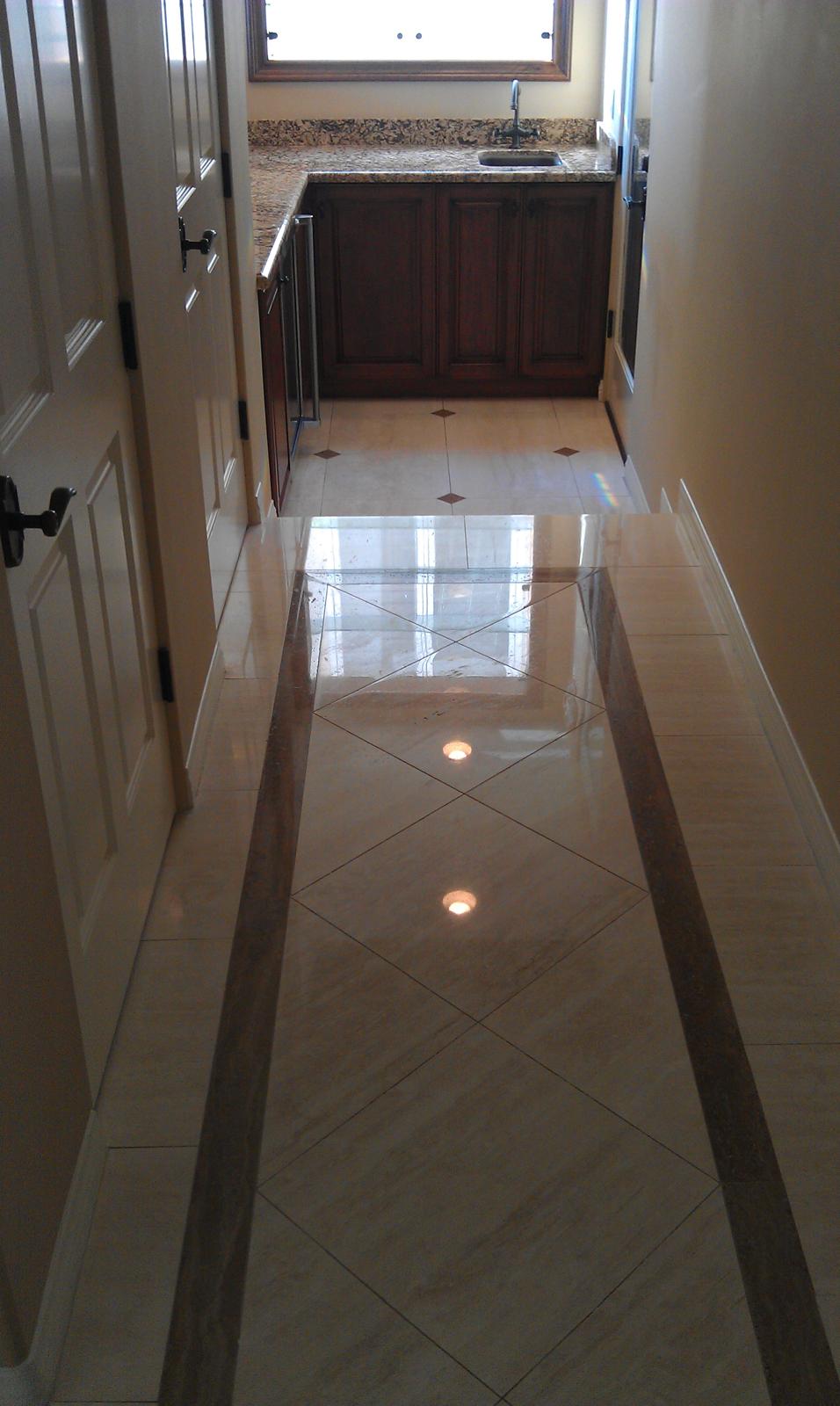
Why the entryway deserves attention before the whole floor
A stone floor can look bright in the center of a room while the doorway and main walking path become dull. Small particles carried in on shoes can move across the finish as people walk, gradually creating fine scratches. More cleaner will not necessarily correct that wear.
In Los Angeles homes, entrances from driveways, gardens, and outdoor living areas are useful places to start a fall maintenance check. A patio door in Woodland Hills or a busy front hall in Sherman Oaks may need more attention than a rarely used room. Base the routine on actual traffic and visible grit rather than assuming every surface needs the same treatment.
Use mats that collect dirt without creating another problem
Place a suitable walk-off mat at busy entrances so dirt is intercepted before it reaches the stone. Check that its backing is compatible with the flooring, that it stays secure, and that the door clears it. A curled edge or a mat that slides can create a safety problem.
Clean the mat regularly and lift it to remove particles underneath. A dirty mat can become a source of grit rather than a barrier. If moisture collects below it, dry the area and investigate the cause instead of leaving the stone covered and damp.
Remove loose grit before wet cleaning
Use a clean, soft dust mop or a vacuum attachment suitable for hard stone floors. Avoid equipment that drags abrasive wheels or a stiff rotating brush across the finish. Check the doorway, beneath furniture edges, and around sliding-door transitions where particles tend to collect.
Follow with a cleaner labeled safe for the identified stone and finish, using its recommended dilution. Keep mop heads and cleaning water clean so you do not spread soil into another room. Do not increase the product concentration to chase a dull area; excess cleaner can leave a film that makes the surface appear worse.
Tell surface residue apart from finish wear
If a patch looks cloudy after mopping, first consider leftover cleaner or another topical product. If a walking lane stays dull after appropriate cleaning and shows fine scratches in angled light, the finish may be worn. Both conditions can exist on the same floor, which is why a test area can be valuable.
Do not add floor wax or a generic gloss coating just to hide the difference. An unsuitable coating can change the appearance, complicate future care, or require stripping before restoration. Photograph the area and note which cleaners or treatments have been used so a technician has a useful starting point.
Treat indoor and outdoor stone as separate surfaces
An outdoor step or patio may look similar to the indoor floor but need a different cleaning method and finish. Outdoor installations also involve drainage, exposure, and traction considerations. Do not assume the polished look inside should be reproduced on an exposed walking surface.
Marble, limestone, and travertine can be damaged by acidic cleaners marketed for general outdoor use. Avoid transferring a patio-cleaning product indoors without checking its suitability. If water repeatedly enters from a threshold or pools on exterior stone, address the source with an appropriate professional rather than relying on sealer to solve it.
Know when the floor needs more than a cleaning visit
Persistent scratches, etching, uneven reflection, or old coatings may call for honing, polishing, or stripping after an assessment. Deep damage or raised tile edges can require a different scope. Cleaning removes soil; restoration changes the damaged surface, and neither substitutes for correcting loose tiles or an installation problem.
For a home or business in the Los Angeles area, share photos of the entire traffic lane as well as close-ups. Discuss the stone type, preferred sheen, adjoining rooms, furniture, and access. A sample area can help distinguish what cleaning can achieve from what would require refinishing.
A practical fall checklist to keep using
Inspect the busy entrances, clean and secure the mats, remove grit before mopping, and keep furniture pads clean and intact. Wipe up spills promptly and keep acidic drinks and cleaning products away from sensitive stone. Adjust cleaning frequency when visible soil or household traffic increases instead of waiting for the whole floor to look dull.
If the entryway still looks worn after appropriate cleaning, Elite Marble Care can evaluate whether deep cleaning or restoration is the better next step. Maintaining the doorway and walking path helps protect the finish without treating an entire home unnecessarily.
Related resources
Related services
- Professional natural stone cleaning
- Natural stone sealing and protection
- Compare all restoration services
Local service areas
More stone care guides
Need help with your stone?
Elite Marble Care provides free on-site estimates across Greater Los Angeles. Request a free estimate or call (818) 903-0970.