What should you inspect on a stone patio before rain?
A patio check before wet weather is mainly about noticing conditions that can become harder to assess once the surface is wet. Look for leaves and soil collecting in corners, drains covered by debris, tiles that rock underfoot, open joints, and areas where water has visibly lingered before. Take clear photos while the surface is dry and note where runoff travels. This simple record helps separate routine cleaning from a drainage or installation concern.
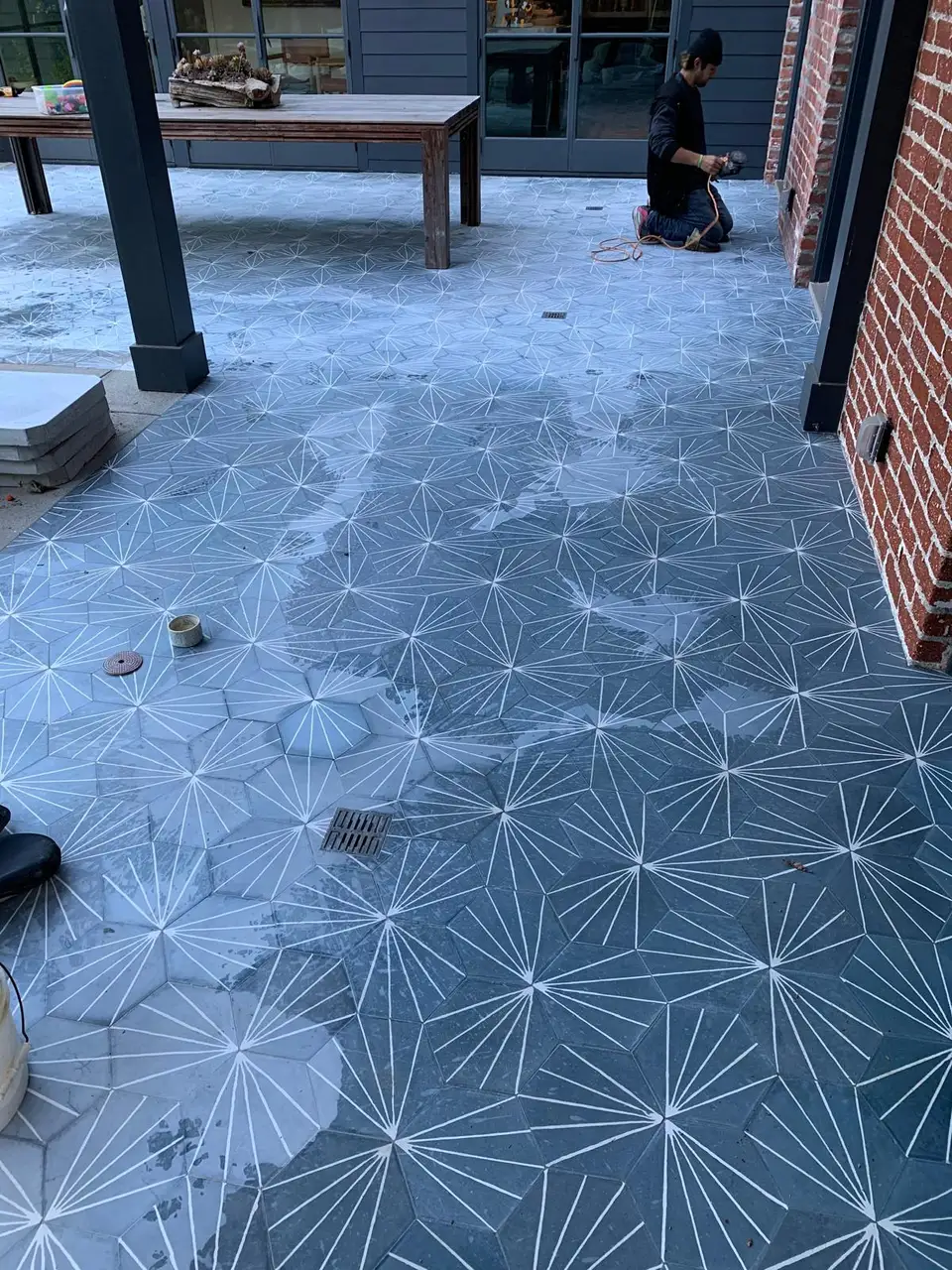
Los Angeles properties vary: a shaded courtyard, an exposed terrace and a poolside walkway do not share the same maintenance needs. Identify the actual stone or tile if you can, but do not guess from color alone. Marble, limestone, travertine and manufactured tile can look similar in photos while responding differently to cleaners and treatments.
How can you clear leaves and loose grit safely?
Remove loose leaves, twigs and soil with a soft broom or a tool appropriate for the surface. Grit is abrasive under shoes and furniture, so clear it before moving planters or outdoor seating. Lift objects rather than dragging them, and check for rough feet, trapped sand or metal that could scratch the finish. Keep debris out of drains and follow local guidance for disposing of yard waste.
Leaves left wet against porous stone can leave organic marks, while decomposing material may be difficult to distinguish from an existing stain afterward. Prompt removal is sensible, but aggressive scrubbing is not. Avoid wire brushes, abrasive pads and strong household cleaners unless the stone and product instructions explicitly allow them. If a mark remains after gentle cleaning, photograph it and identify the material before choosing a treatment.
What does standing water tell you about the patio?
Notice where water gathers after ordinary cleaning or earlier rainfall, and whether it drains toward an outlet or toward a doorway. Pooling can relate to slope, blocked drains, uneven tiles or other site conditions. A penetrating sealer is not a drainage correction, and surface restoration cannot resolve a continuing water source. If water reaches the house, appears near a wall, or repeatedly collects in the same location, consult the appropriate drainage or building professional.
Do not try to diagnose slope by pouring large amounts of water over the patio. That can create a slip hazard or send water into an unwanted area. A few photos of the dry surface, drain locations and affected thresholds are useful context for an assessment. Keep the observation separate from a claim that the stone itself is failing; the cause may be outside the stone surface.
How should you check for loose or uneven tiles?
Look across the patio in low-angle light for edges that sit higher than neighboring pieces, cracks, missing grout or joints that have opened. Pay attention to transitions, steps and paths where a raised edge could catch a toe. Do not pry at tiles or fill a moving joint with a surface product. A loose tile or recurring crack may require evaluation of its setting or substrate before any cosmetic stone work is considered.
A restoration assessment can help distinguish a surface finish issue from a loose installation, but it does not replace a qualified building or waterproofing inspection when movement or moisture is involved. Mark the areas, take photographs from more than one angle and avoid placing furniture over a suspected loose piece. If the surface feels unsafe, limit access until it has been reviewed.
Which patio cleaners should you avoid using before a storm?
Do not assume an outdoor cleaner is safe for every stone. Acidic products can etch marble, limestone and some travertine. Bleach, strong degreasers, abrasive powders and pressure washing can also damage certain finishes, joints or nearby landscaping. Read the label, confirm material compatibility and test only as directed in an inconspicuous area. Never mix cleaning chemicals, and follow the product's safety instructions.
A quick rinse may move contamination into a drain or across another surface without removing it. If you do not know what the patio is made of, start with dry debris removal and seek material-specific guidance before applying a chemical. A professional evaluation may be appropriate for persistent biological growth, old coatings, deep staining or a surface that remains slick after ordinary maintenance.
Does sealing protect an outdoor patio from rain?
Sealing may reduce absorption for some suitable stone, but it does not make every surface waterproof, stop water from pooling, repair joints or prevent acid etching. The right product and preparation depend on the material, prior treatments, finish and exposure. Applying a new layer to a dirty or damp patio can lead to an unsatisfactory result, so confirm the surface is suitable and prepared according to product-specific instructions.
Ask whether the recommendation is for a penetrating sealer, a coating or another treatment, and what appearance or maintenance changes to expect. Request written guidance on curing, foot traffic, furniture and future cleaning. Do not use water beading alone as proof that the whole installation is protected or that drainage is working correctly.
When should you call a stone restoration professional?
Consider an assessment when cleaning leaves a persistent haze, the finish is uneven, stains return, or the patio has worn areas that do not respond to appropriate routine care. A professional can discuss whether cleaning, honing, polishing, repair or sealing is suitable for the specific material. Not every outdoor stone should be polished to a high shine; texture and traction matter on walking surfaces.
If the concern is recurring standing water, movement, a leak or a loose installation, involve a drainage, waterproofing or tile professional as appropriate. Surface care and building repairs are different scopes. Share the photos, note when the issue appears, and ask for a written explanation of what the proposed work can and cannot address.
What belongs on a pre-rain patio checklist?
Clear loose leaves and grit, check that drain openings are unobstructed, photograph any recurring ponding, and note cracks, open joints or tiles that move. Move outdoor furniture carefully and store cushions or loose accessories so they do not hold debris against the stone. Keep walkways clear and use caution whenever the surface is wet. These basic observations do not require a special coating or a full restoration.
For an Elite Marble Care estimate, share your city or ZIP code, the stone or tile type if known, and a few dry-surface photos. Explain whether your concern is staining, dullness, a coating, or a finish issue. The estimate should distinguish stone restoration from drainage or installation work and describe any limitations before treatment begins.
Quick checklist
- Remove loose leaves and grit with a surface-appropriate tool.
- Check drain openings and photograph areas where water has collected.
- Note loose tiles, cracks, open joints and trip-catching edges.
- Avoid unknown cleaners, chemical mixtures and aggressive pressure washing.
- Separate stone-care concerns from drainage, waterproofing and installation repairs.
Clear answers
Frequently asked questions
Can I pressure wash a natural-stone patio before rain?
Do not assume pressure washing is safe. Pressure can damage some stone finishes, joints and surrounding materials. Identify the surface and follow material-specific guidance; use a qualified professional if you are uncertain.
Will sealer stop water from pooling on my patio?
No. Sealer may reduce absorption in suitable stone, but pooling usually needs the drainage or surface condition assessed. A protective treatment is not a substitute for correcting the source of standing water.
Why do leaves leave marks on outdoor stone?
Wet organic debris can leave discoloration on some porous surfaces. Remove leaves and soil promptly using a gentle, compatible method. Persistent marks should be identified before applying stain removers or acidic cleaners.
Should an outdoor patio be polished until it shines?
Not necessarily. Finish choice should account for the stone, use and walking-surface traction. Discuss a representative test area and the intended appearance rather than assuming a high gloss is appropriate outdoors.
Sources
Not sure which service your stone needs?
Elite Marble Care can assess the surface in person, explain the restoration sequence, and provide a free on-site estimate across Greater Los Angeles.