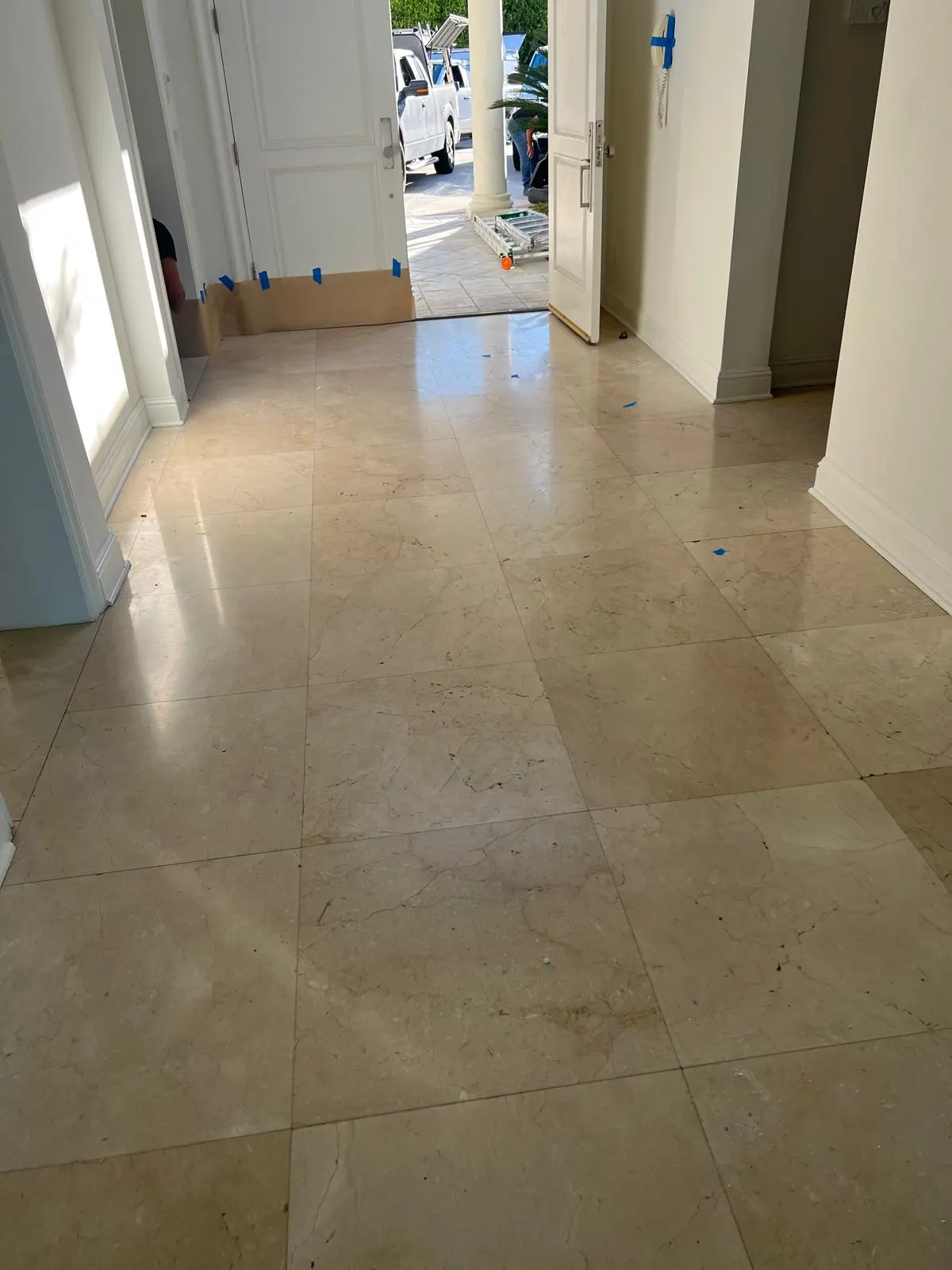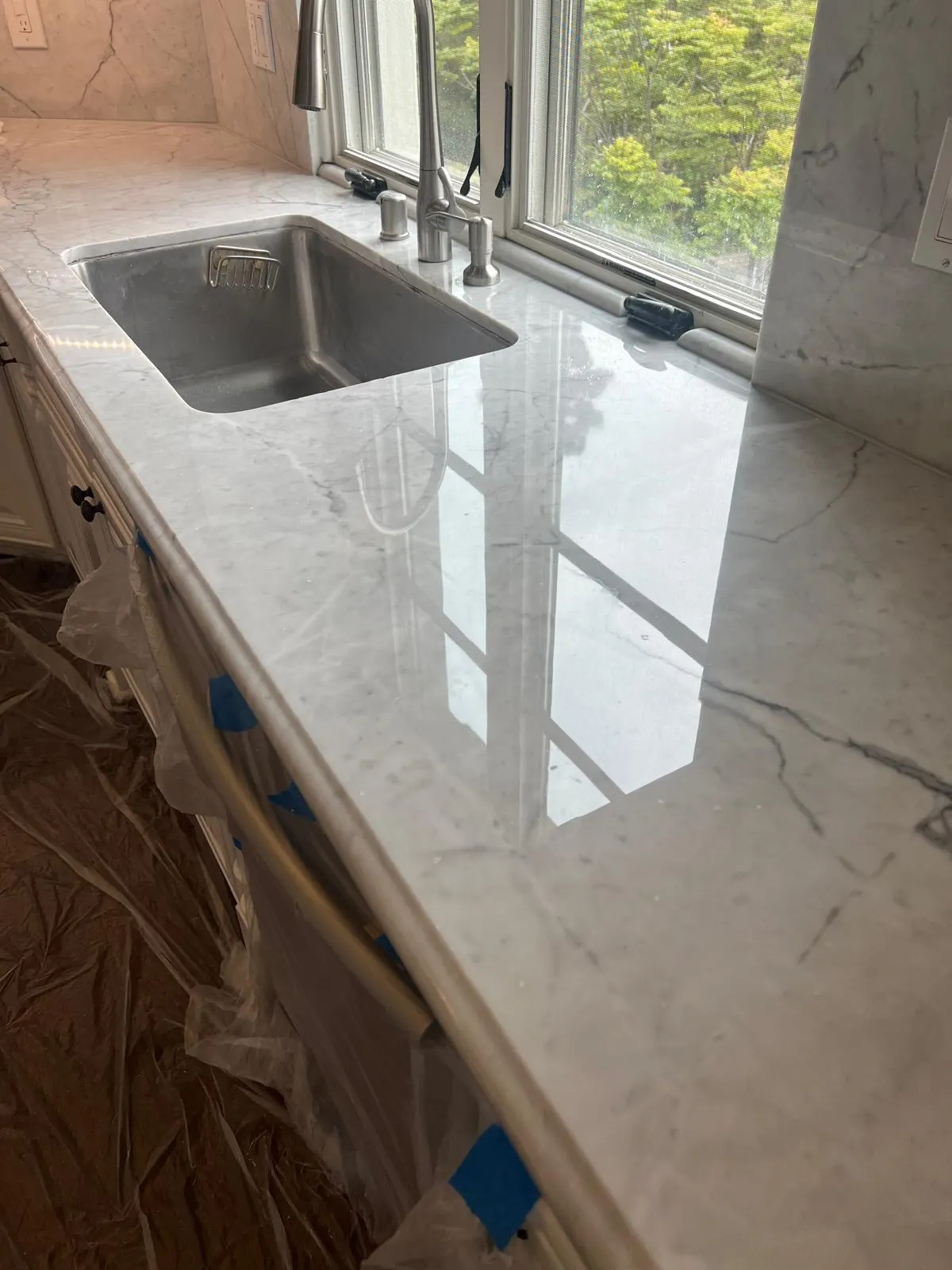
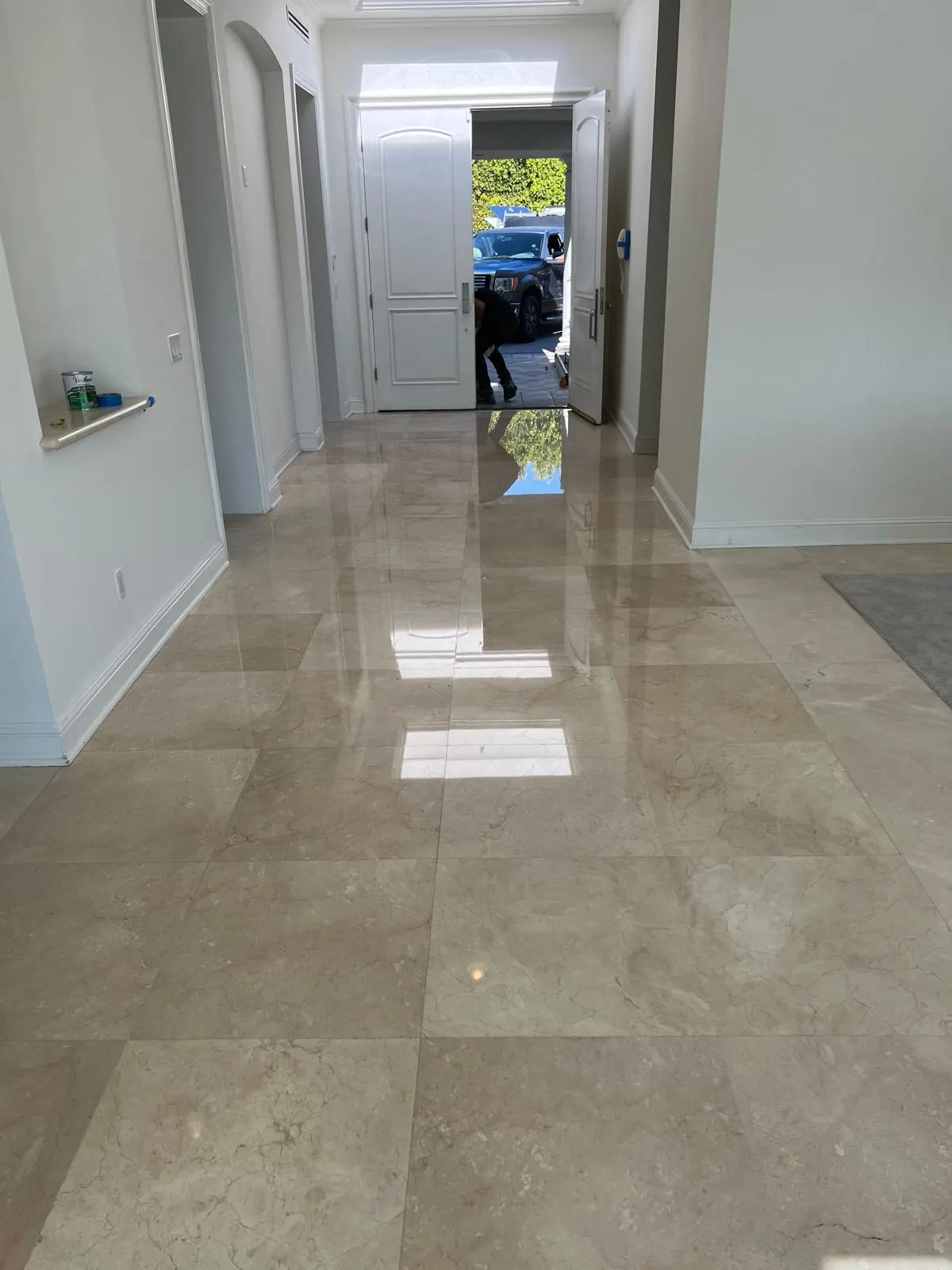
Why does the floor look different when a rug is lifted?
Moving an area rug can reveal a rectangle that looks darker, lighter or less reflective than the surrounding marble. That outline does not identify a single problem. Trapped grit, cleaning residue, moisture, a transferred backing material or uneven wear can produce different symptoms. Sometimes the covered stone simply retains a finish that the exposed walking route has gradually lost.
In a Los Angeles home, compare the entry route, nearby patio doors and the area under the rug before buying a treatment. A bright room can make differences in sheen especially noticeable. Look at the dry floor from several angles and photograph the entire outline as well as individual marks. Do not assume that a darker patch means a stain or that every dull patch needs polishing.
What should you record before cleaning the area?
Note how long the rug has been in place, whether the backing or pad feels sticky, and whether the area was recently wet. Keep the rug and pad labels, especially their floor-compatibility and cleaning instructions. Record any carpet-cleaning products, spot treatments or household cleaners used nearby. These details help distinguish a maintenance issue from a change in the stone or an existing coating.
Lift small rugs carefully rather than dragging gritty backing across the floor. Arrange help for heavy furniture and large rugs. If there is active moisture, a leak, loose flooring or an unexplained odor, address the underlying concern with the appropriate professional before covering it again. Stone restoration is not a substitute for identifying a plumbing or building-moisture problem.
How can you check for loose dirt and cleaner residue?
Start with gentle removal of loose grit using a clean, non-treated dry dust mop. The Natural Stone Institute identifies sand and grit as abrasive and recommends frequent dust mopping. Inspect vacuum wheels and attachments if using equipment suitable for your floor. A dirty brush or hard, worn component can add scratches while you are trying to investigate an existing mark.
Where routine cleaning is appropriate, test a neutral cleaner labeled for the actual stone and follow its directions. Use clean tools, avoid excess liquid, rinse as directed and dry the area. Evaluate the result only after it has dried fully. A temporary improvement while the surface is wet does not show that the original finish has returned or that a stain has been removed.
What if the rug pad has left sticky material behind?
Stop before using an adhesive remover chosen for another surface. Marble, grout, nearby wood and any existing protective treatment may have different compatibility limits. Keep a sample or photograph of the pad and describe the residue to the assessor. Do not scrape it aggressively with a blade, use a rough scouring pad or test several chemicals in quick succession.
The right approach depends on the material that transferred and the condition underneath. A controlled cleaning test may be useful, but removing residue can reveal wear that was already present. Ask whether the proposed work addresses only the transferred material or also includes finish correction. Never mix cleaning products, and follow all safety, ventilation and surface restrictions on any approved product.
Is the difference a stain, etching or uneven wear?
A stain changes the stone's appearance through absorbed material, while etching changes the surface when acid-sensitive stone reacts with an acidic substance. Fine scratches and traffic wear can also reduce reflection. These conditions can overlap. A photograph or a finger test alone cannot reliably establish the cause, particularly when a coating or previous repair affects what you see.
Compare the reflection across the rug boundary after compatible cleaning. If the covered area looks clearer than the walking route, restoring the exposed floor may be more appropriate than treating the covered rectangle. If a localized discoloration remains, ask about stain assessment rather than assuming polishing will remove it. Avoid vinegar and acidic cleaners on marble; an attempted cleanup can create additional etching.
When should cleaning become a restoration assessment?
Arrange an assessment when a dry cleaning test leaves a distinct boundary, the surface has visible scratches, or residue cannot be identified safely. Depending on the findings, the scope might involve professional cleaning, stain treatment, honing or polishing. A sample area can help explain likely improvement and limitations, but it should not be presented as a guarantee of an invisible match throughout the room.
Discuss how the repaired area will meet surrounding stone, thresholds and adjacent rooms. Correcting only the footprint of a rug can leave a different-looking patch if the rest of the floor is worn. Ask whether the estimate includes edges, furniture access, protection and aftercare. Sealing may be considered separately where appropriate; it does not erase scratches or equalize a damaged finish.
How should Los Angeles homeowners choose a replacement rug pad?
Ask the pad supplier for written compatibility with your specific natural stone, finish and any applied protection. A general claim that a pad is suitable for hard floors is not enough to establish compatibility with every stone installation. Avoid assuming that one backing material is always safe or always harmful. Follow both the flooring-care instructions and the rug manufacturer's guidance.
Keep the rug and the floor beneath it clean and dry, and inspect periodically instead of waiting until the next furniture move. Entry mats can help reduce tracked grit, but they need cleaning too. In homes with indoor-outdoor traffic, consider the route from the patio or garden rather than only the room's appearance. Do not place a damp, freshly cleaned rug back over stone.
What should you send when requesting help?
Share an overview of the room, close photographs of the dry mark, the approximate affected area and any pad or cleaner labels. Mention the stone type if known, the preferred finish and whether the mark appeared suddenly or gradually. Tell the assessor about prior sealing, coatings or repairs. Clear information helps identify what needs inspection without promising a diagnosis from photographs alone.
Elite Marble Care serves Los Angeles and its established surrounding service areas. Request an assessment for persistent rug marks and ask which part of the concern is removable contamination versus stone-finish damage. The useful outcome is a material-specific plan with clear limitations, not a universal chemical shortcut. Keep the agreed maintenance instructions so the replacement rug and cleaning routine support the restored surface.
Quick checklist
- Photograph the dry rug outline and the surrounding walking route.
- Keep rug-pad labels and a record of recent cleaning or moisture.
- Remove loose grit before testing a compatible neutral stone cleaner.
- Avoid acidic cleaners, abrasive pads and unverified adhesive removers.
- Ask whether the scope covers residue, stains, finish blending and aftercare.
Clear answers
Frequently asked questions
Does a rectangle under a rug mean the marble is permanently stained?
No. Dirt, residue, moisture or differences in finish wear can create an outline. Evaluate a fully dry, appropriately cleaned test area and have persistent marks assessed before deciding on treatment. Permanent discoloration is possible, but the outline alone does not establish it.
Can polishing remove every rug-pad mark?
No. Polishing addresses the stone's finish, not every absorbed stain, transferred material or moisture source. Cleaning or another treatment may be needed first, and some marks may remain. Ask for an assessment and discuss the limitations of a representative test area.
Which rug pad is safe for a marble floor?
Choose a pad with written supplier guidance confirming compatibility with your particular natural stone, finish and any protective treatment. Keep it clean and dry and follow the rug and floor-care instructions. A generic hard-floor label is not proof of compatibility.
Should I seal over a mark to hide it?
No. A penetrating sealer is not a repair for scratches, residue or an uneven polish. Identify and address the mark first, resolve any moisture source and discuss whether sealing is appropriate for the stone after the surface work.
Sources
Not sure which service your stone needs?
Elite Marble Care can assess the surface in person, explain the restoration sequence, and provide a free on-site estimate across Greater Los Angeles.