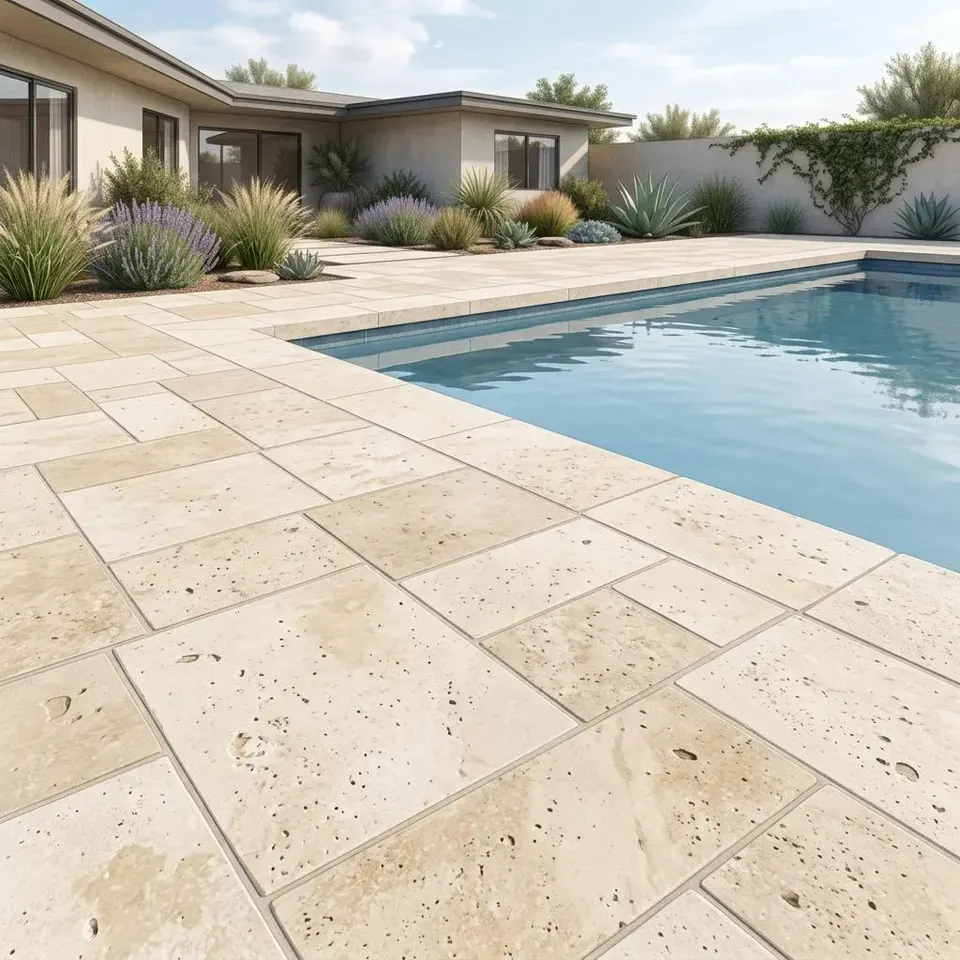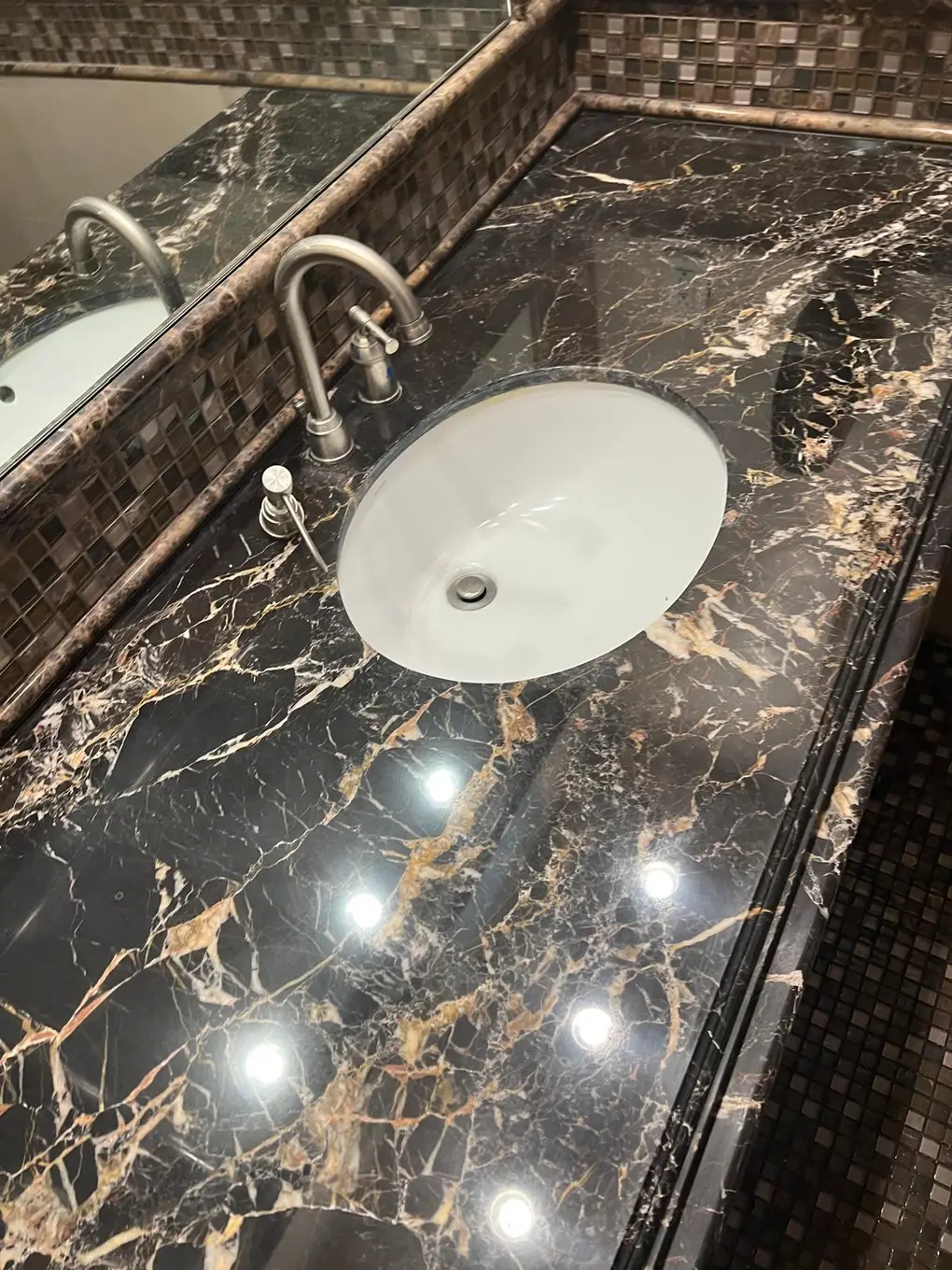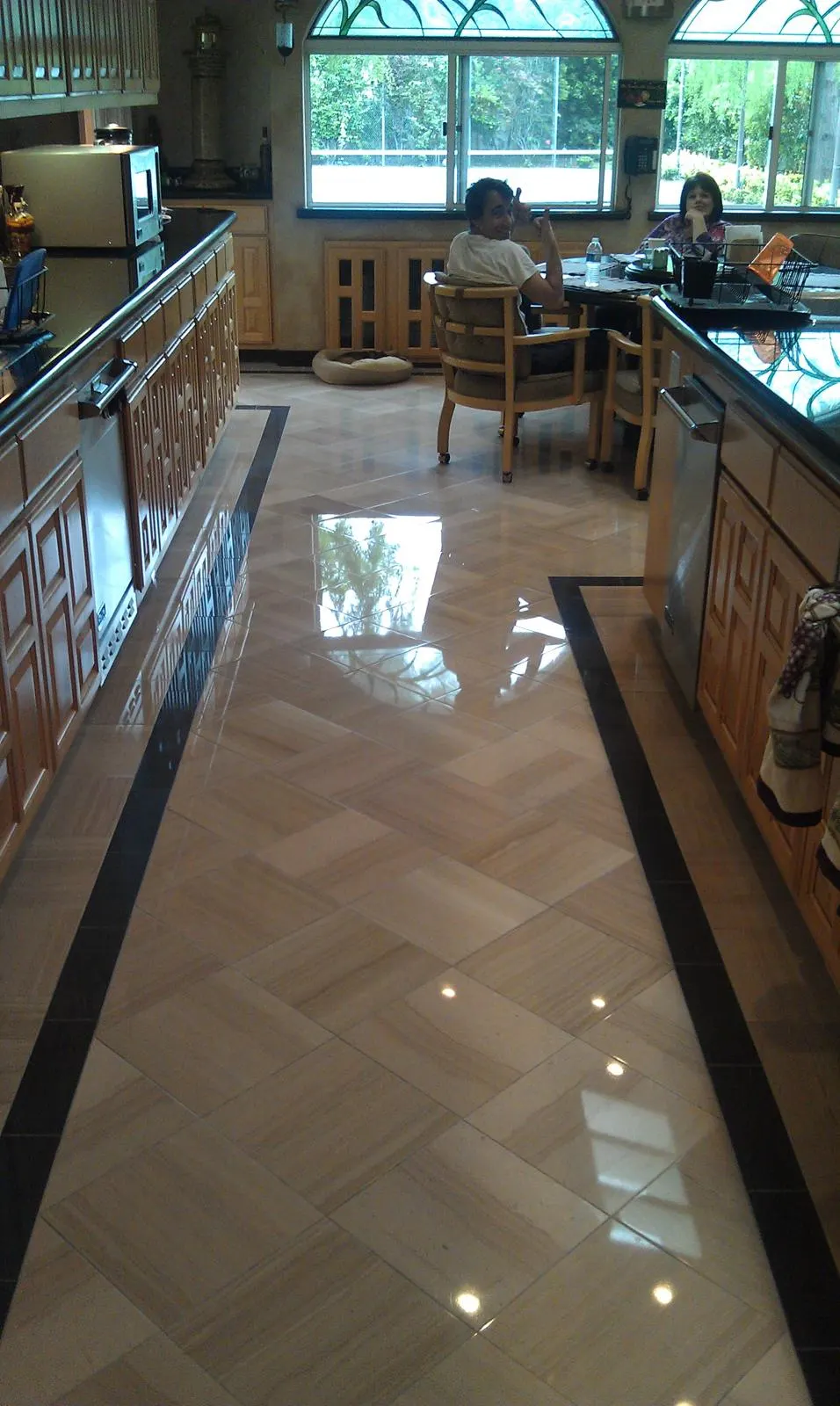
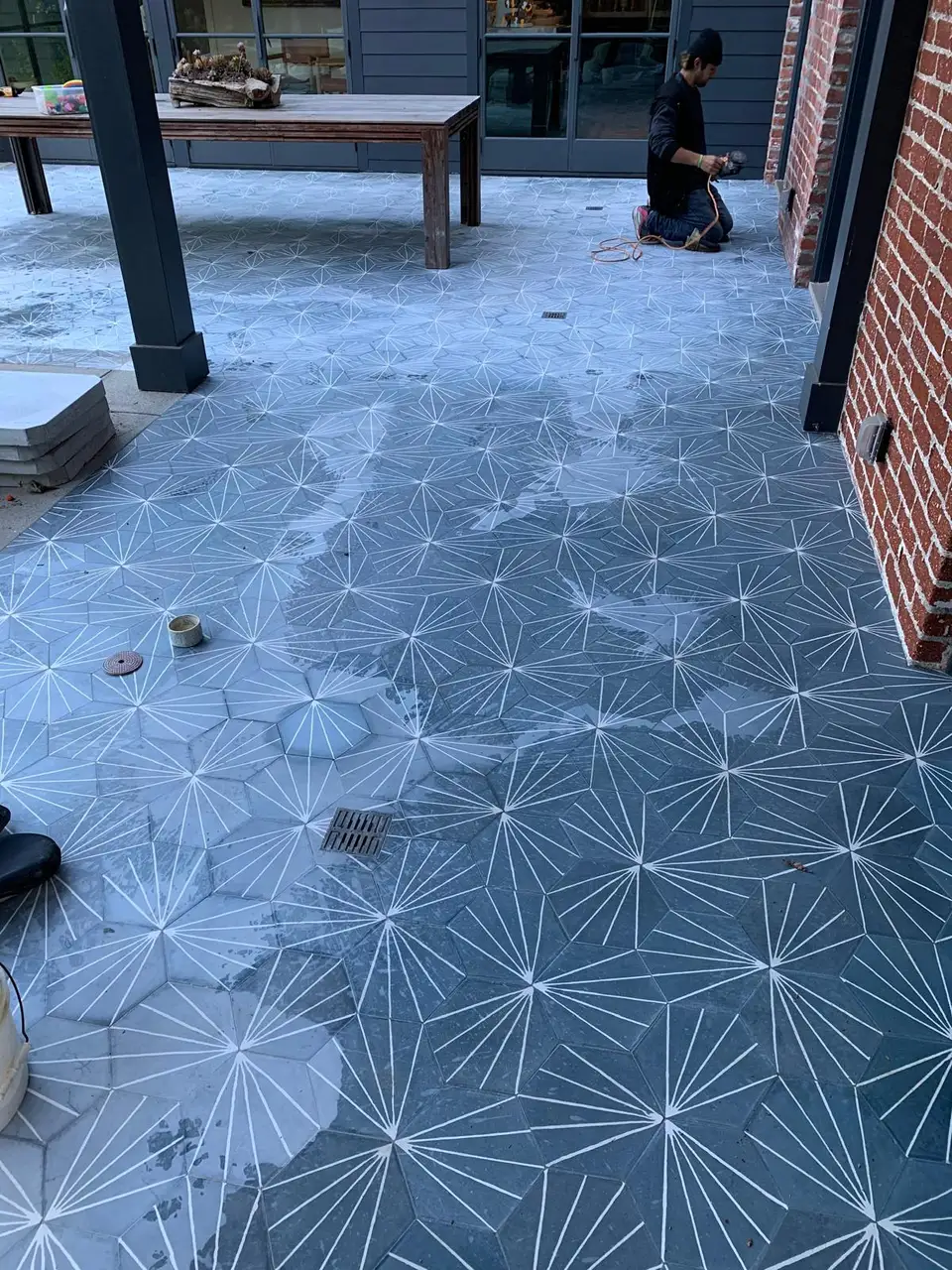
What should you know about outdoor stone needs the right pressure?
Water, grit, and organic material can make an outdoor surface look tired, but aggressive pressure can damage edges, grout, and softer stone. Cleaning should match the material and the type of buildup.
A test area shows how the stone responds before the entire patio is treated. The goal is to remove contamination without erasing texture that provides useful traction.
What should you know about where honing helps?
Honing can smooth inconsistent wear and reduce a rough, patchy appearance on suitable stone and cement-based tile. It is not a substitute for repairing cracked pieces or solving drainage problems.
After cleaning and honing, the patio may benefit from appropriate penetrating protection. Outdoor maintenance also includes keeping leaves, standing water, and harsh chemicals off the surface.
What should you inspect before outdoor cleaning begins?
Walk the patio when it is safe to do so and distinguish loose soil from the condition of the stone itself. Look around planters, shaded corners, furniture feet and transitions to the building. Note open joints, flaking pieces, movement and places where water remains after rain. Include mixed materials such as decorative borders and neighboring concrete in the assessment. A method suitable for a robust field tile may not suit a softer inset or an earlier repair. Those observations help define a cleaning test without turning ordinary outdoor maintenance into a claim that installation defects will be resolved.
How do organic growth and leaf marks differ from wear?
Algae, moss and deposited dirt sit on or within the surface differently from abrasion and weathering. Leaves and other organic material can also cause discoloration that does not vanish with a simple rinse. Removing the source matters, but do not assume every dark patch is the same substance. Describe where the mark occurs and whether it returns in a shaded or persistently damp area. The Natural Stone Institute separates biological and organic staining in its care guidance. Use that distinction to ask better questions, not to mix household chemicals or choose a strong treatment without checking compatibility.
Why should cleaning pressure and products be tested?
Aggressive cleaning can disturb joints, erode vulnerable stone or alter an intentional texture. Pressure is only part of the decision: the product, application method and condition of adjacent materials matter too. Ask for a representative trial that includes a joint and any contrasting border, with results checked after drying. Discuss where rinse water will go and how nearby planting, fixtures and indoor thresholds will be protected. Avoid acidic cleaners on calcareous stone and follow product safety instructions. A patio that looks temporarily darker while wet should not be treated as evidence of a successful permanent color change.
When could honing help an outdoor patio?
Honing may be considered when suitable stone has uneven surface wear and a controlled change in finish is appropriate for its setting. It is not automatically suitable for every textured, cleft or weathered surface. Removing a purposeful texture changes the installation and may not match adjoining steps or borders. Ask what material would be removed, what finish is achievable and how edges would be handled. A sample should be reviewed as a change to the patio's surface, not merely as deeper cleaning. Where the stone is deteriorating or unstable, investigate that condition before planning abrasive refinement.
What do recurring white deposits or damp patches suggest?
A recurring pale powder may involve salts carried by moisture rather than ordinary dirt. The Natural Stone Institute advises investigating persistent efflorescence instead of repeatedly wetting it to make it disappear briefly. Record when the deposit returns and where water collects, but avoid diagnosing the source from color alone. Cleaning and honing do not redirect water or repair the underlying assembly. If drainage, irrigation or building moisture contributes to the symptom, those issues need an appropriate assessment outside a surface-only restoration plan. Applying more sealer without understanding the pattern may leave the actual cause unresolved.
How should care change after the patio is treated?
Remove leaves and abrasive debris regularly with tools compatible with the stone, and keep irrigation from unnecessarily wetting the same area where adjustments are appropriate. Deal with spills and avoid leaving staining objects directly on vulnerable surfaces. Use the agreed cleaner and rinse away residue without sending incompatible runoff into surrounding materials. Discuss penetrating protection according to the stone's absorption and outdoor exposure, rather than assuming every patio needs a coating. Continue monitoring loose pieces, pooling and biological growth. Restoration can improve the surface being treated, but maintenance and unresolved site conditions still influence its appearance and use.
Quick checklist
- Identify patio materials, joints, existing treatments and vulnerable borders.
- Photograph pooling, loose pieces and recurring deposits separately from soil.
- Discuss cleaning runoff, adjacent planting and preservation of texture.
- Review the sample and any unresolved drainage or safety concerns before honing.
Clear answers
Frequently asked questions
Does every dirty patio need honing?
No. If compatible cleaning removes the buildup and leaves an acceptable texture, abrasive work may be unnecessary. Honing changes the surface rather than simply washing it, so the decision should follow cleaning and assessment instead of being included automatically.
Does a honed patio guarantee slip resistance?
No finish description alone establishes traction in actual use. Water, contamination, slope, footwear and the installed material all matter. Raise safety concerns explicitly and seek an appropriate evaluation rather than assuming a matte appearance proves the patio is safe.
Will sealing fix water that pools on the patio?
No. A penetrating treatment may reduce absorption where suitable, but it does not change the patio's slope or repair drainage. Persistent pooling needs investigation of its cause, independently of any proposed cleaning, honing or sealing.
Sources
Not sure which service your stone needs?
Elite Marble Care can assess the surface in person, explain the restoration sequence, and provide a free on-site estimate across Greater Los Angeles.