What should you know about read the surface clues?
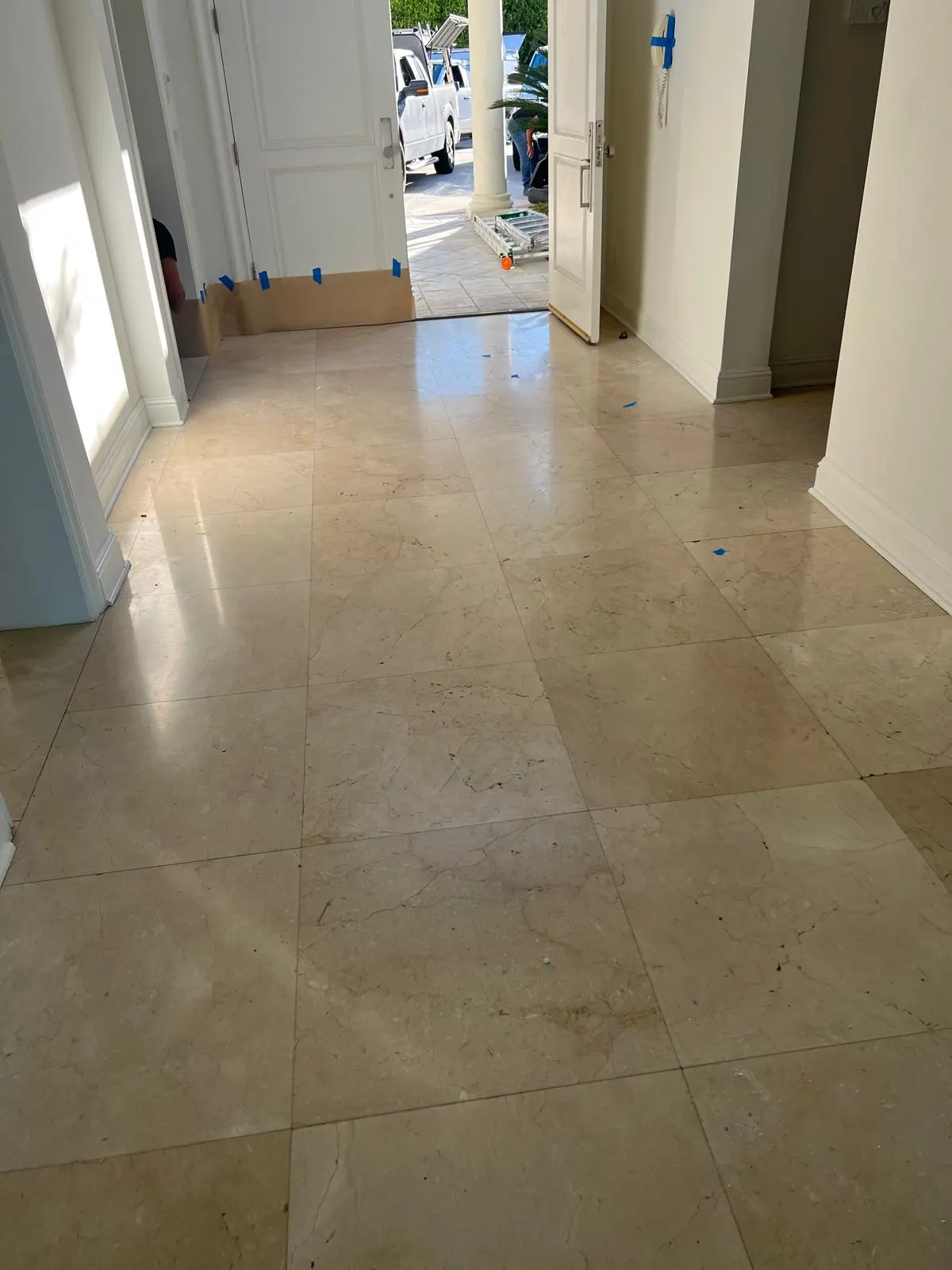
A yellow cast, peeling edges, sticky residue, and dirt embedded in a film suggest a topical coating. A naturally matte, scratched, or etched stone surface without a film points toward honing or polishing.
Some floors have both problems. A coating can hide damage underneath, so the true condition is not visible until the old product is removed.
What should you know about a safer order of operations?
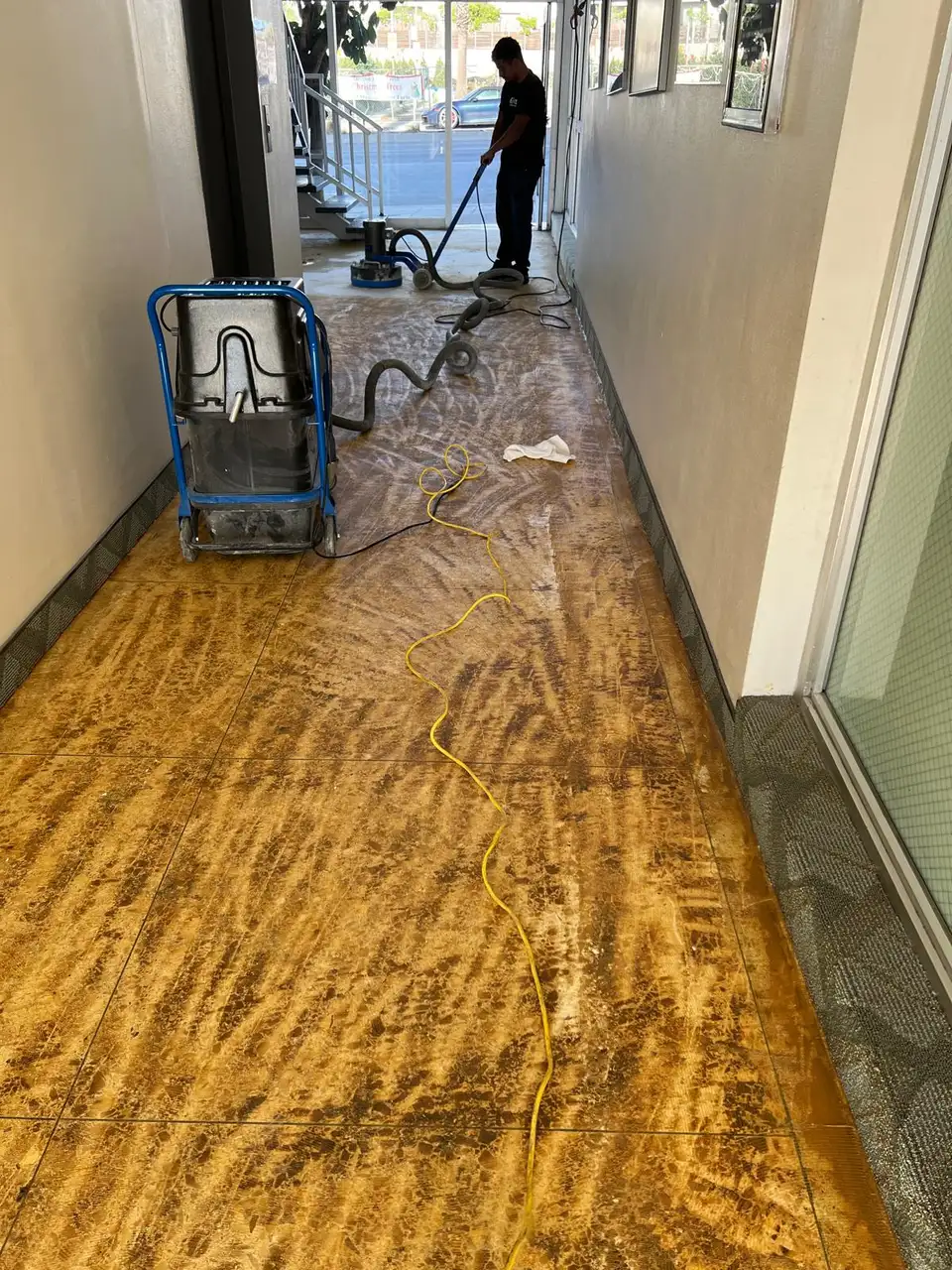
Strip the coating, extract the residue, and inspect the stone. Then choose cleaning, grinding, honing, or polishing based on what remains. A penetrating sealer may be appropriate after the surface is restored.
Layering a new finish over a failing one is usually a short-term cosmetic fix. The right sequence takes longer at first but makes future maintenance more predictable.
Which clues suggest a surface film rather than worn stone?
Look for peeling along edges, a yellowed cast, sticky areas or soil that appears embedded in a layer. Compare the traffic lane with corners where maintenance product may have accumulated. Worn marble can also look hazy without any coating, so these clues should guide an assessment rather than trigger immediate stripping. A smooth reflection beneath a worn-through patch can be informative, but do not scrape the floor to create one. Photograph differences and gather any product labels. What the previous owner called sealer might have been wax or another finish, making the treatment history important.
Why does identifying the floor matter before removal?
Natural stone, cement-based surfaces and manufactured materials can require different removal methods, and a decorative floor may contain several of them. Joints, filled voids, metal trims and earlier repairs introduce additional compatibility questions. A stripping product suitable for one surface can alter another or affect adjoining paint and wood. Do not choose a remover from the coating's appearance alone. The Natural Stone Institute emphasizes knowing the stone and following product directions, and notes that some removal treatments can affect the finish. Ask how the proposed method has been checked against the actual installation before agreeing to wider treatment.
What should a representative coating-removal test establish?
A useful trial assesses whether the suspected film can be removed compatibly, how residue is collected and what condition appears underneath. Include a typical traffic area and an edge or joint where buildup may differ. Review the result after appropriate rinsing and drying because moisture can temporarily deepen color and hide haze. Ask whether remaining streaks are residual product or altered stone. The trial should clarify uncertainties, not serve as a promise that every area is identical. Where the film's identity remains unknown, record that limitation and agree how further findings will affect the work.
When is cleaning enough after the old film is gone?
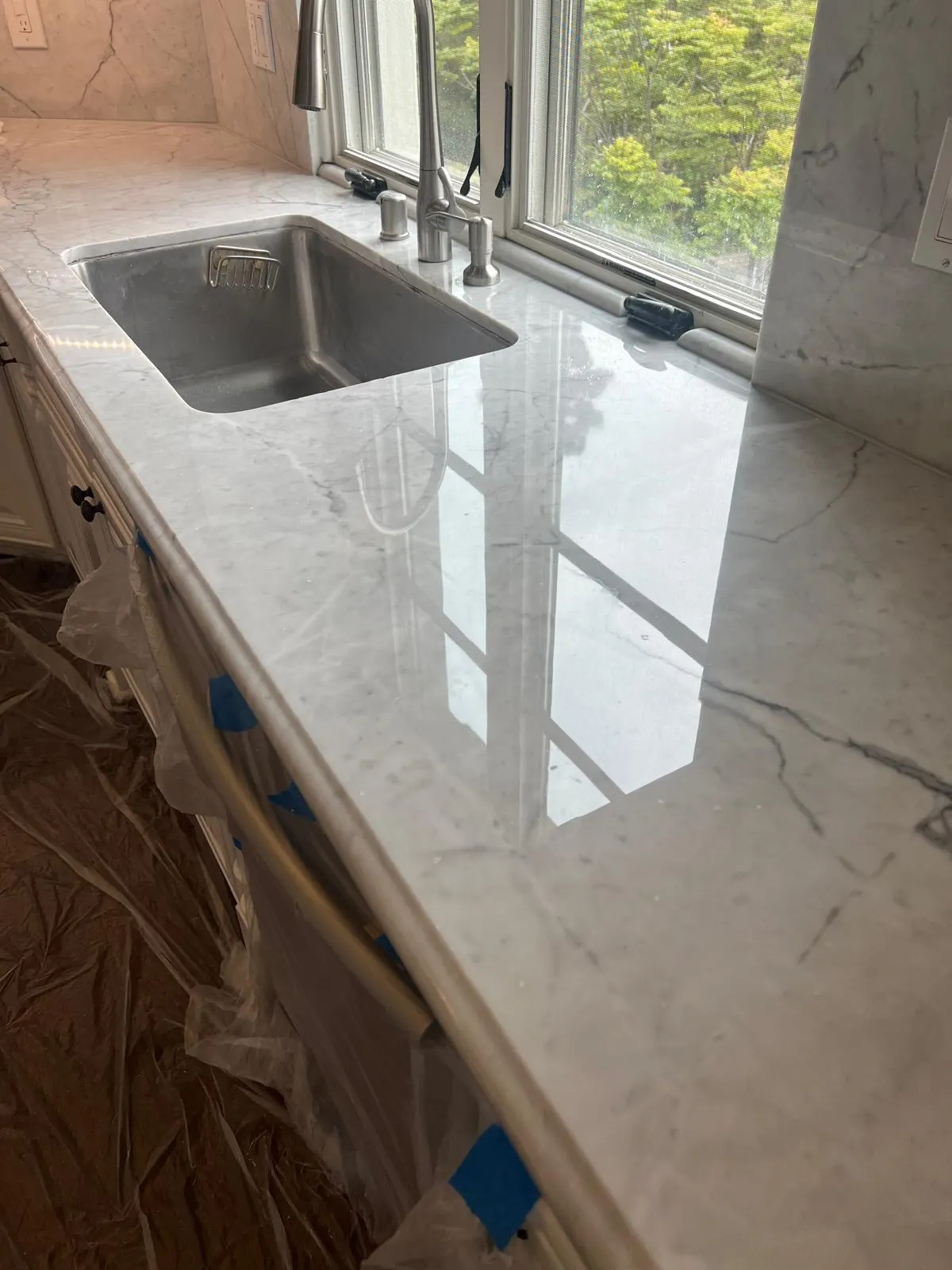
If the uncovered surface is sound and its finish meets the agreed goal, compatible cleaning and residue removal may be sufficient. Avoid automatically adding abrasive work just because stripping was necessary. Inspect for isolated stains, etched patches and scratches separately, since they may require different decisions. A matte original finish is not a failed polish merely because it reflects less light. Discuss whether the goal is returning to the underlying appearance or changing it. Those are distinct scopes, and assessing the clean floor gives both parties a better basis for deciding which is actually wanted.
When does the exposed floor need refinishing?
Refinishing becomes a separate consideration when the stone itself has wear or damage that compatible cleaning cannot remove and when surface correction is appropriate. Honing can establish a more even low-sheen surface; polishing refines a suitably prepared surface for greater reflection. Deeper grooves, unstable pieces or raised edges require their own assessment rather than being folded into a general shine promise. Old repairs may remain visible after a film is removed. Ask for a sample and clear treatment boundaries, especially where only part of a room was previously coated or neighboring rooms will remain untouched.
How can you avoid rebuilding the same maintenance problem?
Keep a record of what was removed and what finish or protection was selected afterward. Use compatible routine cleaning rather than adding a gloss product whenever the floor appears dull. Excess cleaner can leave film, while grit can abrade an otherwise sound surface; those problems need different responses. Discuss impregnating protection according to absorption, remembering that stain resistance is not scratch resistance or a new polished finish. Clean mats and appropriate soft tools support ordinary care. If haze returns, assess the dry surface and product history before assuming another coating is necessary to restore the appearance.
Quick checklist
- Gather labels or records for waxes, coatings and maintenance products.
- Compare exposed traffic lanes with edges and protected areas.
- Agree on a removal test that includes joints and vulnerable transitions.
- Inspect the uncovered dry stone before authorizing the final finish.
Clear answers
Frequently asked questions
Does removing a coating automatically restore shine?
No. Removal may reveal a sound original finish, or it may uncover wear that the film concealed. Judge the dry stone after compatible residue removal before deciding whether further honing or polishing is appropriate.
Are a topical coating and a penetrating sealer interchangeable?
No. A topical coating forms a surface film, while an impregnating treatment is intended to reduce absorption within suitable stone. Their purposes and maintenance differ. Neither should be selected simply because a floor looks dull.
Can the final restoration scope be fixed before a removal test?
Some findings may remain provisional when an unknown film hides the stone. Ask which work is established, what the test is intended to reveal and how any proposed additional refinishing would be explained before it is authorized.
Sources
Not sure which service your stone needs?
Elite Marble Care can assess the surface in person, explain the restoration sequence, and provide a free on-site estimate across Greater Los Angeles.