
Central Los Angeles

Marble & Stone Restoration in Hancock Park

Material-sensitive restoration planning for Hancock Park's period homes and nearby residences.

Hancock Park is a Los Angeles neighborhood known for its established residential streets and significant Period Revival architecture. The City's preservation information describes the subdivision's development in the 1920s and houses in Tudor, Spanish Colonial, Mediterranean and other revival styles. That architectural character calls for care when retained finishes meet later kitchen, bath or floor renovations. Elite Marble Care assesses existing natural stone rather than assuming that every historic home contains original marble. Since the business was established in 1999, its focus has been restoration of installed surfaces, with cleaning, honing, polishing and sealing considered according to condition. We look at adjoining trim, joints and changes between construction phases before discussing a suitable scope. Tell us which areas are believed to be original, which were replaced and whether there are preservation requirements relevant to the work. The notes below distinguish Hancock Park itself from nearby Larchmont Village and Windsor Square, which have their own local identities. They are housing-context guidance, not claims of completed neighborhood projects, approved preservation work or a guaranteed restoration outcome.

Dust-Free Process Free Estimates Fully Insured
Call (818) 903-0970

Free Estimate

Expert restoration is just a message away.

  • Licensed & Insured
  • 25+ years in business
  • 4.9 rating · Yelp and Google
  • Dust-free wet process

Distinguishing retained details from later replacements

The first useful question in a period house is what is actually known about the surface. An owner may have photographs, renovation invoices or spare pieces, while another installation may have no surviving record. Share that distinction openly. A cream-colored tile is not proof of an original 1920s floor. Its mineral composition, thickness, edges and prior treatments need evaluation before a mechanical process is proposed.

Take wider photographs that include the door casing, baseboard, staircase or hearth adjoining the concern. These details help describe where work would occur and where protection would be required. They should not be removed simply to expose more floor before the estimate. If the planned scope affects a regulated feature, consult the appropriate authority; restoration advice from a stone contractor does not substitute for preservation permission.
Historic-room character without a manufactured promise

A highly reflective finish is not automatically the most appropriate appearance for an older interior. Explain whether you prefer a restrained sheen, a previously polished look or continuity with a neighboring room. Where a replacement piece differs from an older installation, the final appearance may retain some variation. That limitation is more honest than promising an undocumented original finish or invisible transitions.

Chips, cracks and uneven joints deserve separate descriptions. Mark their locations on a room sketch and say whether they have changed recently. A cosmetic fill should not be presented as a cure for movement below the surface. Where the cause is uncertain, examination by a building or installation specialist may be the necessary next step rather than additional polishing.

Shared entrances and lived-in Hancock Park homes

For an apartment entrance near Rossmore, discuss how residents reach stairs, elevators and mail while a surface is assessed or maintained. Identify the person who can authorize work in a common area. A private owner's kitchen request and a building-managed lobby request involve different responsibilities even if both surfaces are marble. Access details should be agreed before a work area is established.

In a lived-in house, list furniture, textiles and delicate adjoining finishes that must be considered. Explain any other trades working in the same rooms and the sequence of their activities. Keeping those details visible makes the proposed scope more practical. Routine aftercare should identify compatible cleaning methods and distinguish a retained natural-stone floor from newer ceramic, engineered or wood surfaces nearby.

Stone Types We Restore in Hancock Park

Stone types: Marble, travertine, granite, limestone, slate, terrazzo, porcelain, and Saltillo.

Serving Hancock Park's Neighborhoods

  • Hancock Park HPOZThe Hancock Park historic district contains significant Period Revival residences. Retained stone, later replacement pieces and delicate surrounding finishes should be identified separately. Ask the relevant preservation authority about regulated alterations; a surface assessment is not an approval to modify a historic feature.
  • Rossmore Avenue corridorRossmore Avenue borders varied residential settings, including larger homes and apartment buildings nearby. Explain whether the surface is a private room or shared circulation space; building access rules and uninterrupted resident routes can matter as much as the visible floor condition.
  • Larchmont Village nearbyLarchmont Village is a neighboring community, not another name for the Hancock Park historic district. Its residential streets and commercial corridor provide a different housing context. Describe the actual address area and the installation rather than assuming a historic-house treatment suits a shop or apartment.
  • Windsor Square nearbyWindsor Square is an adjacent neighborhood with its own historic preservation district. Houses may have retained finishes alongside remodeled interiors. Clarify the neighborhood and any applicable requirements before discussing changes; geographic proximity does not make the two preservation districts interchangeable.

Why Hancock Park Residents Choose Elite Marble Care

  • Retained period-house details and later replacement stone are identified separately rather than treated as identical installations.
  • Shared apartment entrances, hillside access and delicate adjoining finishes are considered before a work area is planned.
  • Finish advice does not substitute for preservation approval or structural investigation where either is needed.

Plan your restoration

A clear next step for your stone

Tell us what surface you have and what you are seeing. We can discuss the right assessment for your Hancock Park home.

Ready to restore your stone in Hancock Park?

Call (818) 903-0970

Local details

Service information for Hancock Park

ZIP areas

90004 · 90020

Nearby neighborhoods

  • Hancock Park HPOZ
  • Rossmore Avenue corridor
  • Larchmont Village nearby
  • Windsor Square nearby

Response timing

Contact us to confirm current response time and appointment availability.

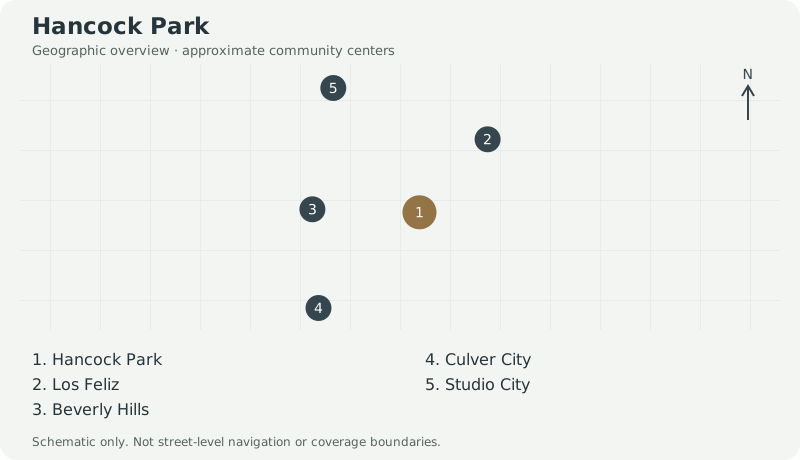
Geographic service-area overview around Hancock Park; no business address is shown
Approximate community centers, not street addresses or coverage boundaries. ZIP areas can cross community borders; confirm availability for your location.

Frequently Asked Questions About Hancock Park Stone Restoration

Which stone restoration treatments are available?

Cleaning, honing, polishing, grinding, coating removal, and suitable sealing are considered after identifying the stone and its condition. Not every surface needs every operation.

Does sealing prevent marble from etching?

No. A suitable sealer can reduce absorption into porous stone, but it does not make marble acid-proof or repair an existing etch.

How do I request an estimate?

Call (818) 903-0970 or use the free-estimate form. Include your city, the affected surfaces, and photographs if available; the proposed scope follows assessment.

Can work be planned around an occupied property?

Discuss room access, furnishings, pets, and building requirements when requesting an estimate. Preparation, response timing, and scheduling are confirmed for the actual project.

Can stone restoration in Hancock Park replace historic-preservation approval?

No. An assessment identifies the surface and discusses an appropriate scope; it does not authorize regulated changes. Explain whether a feature is retained and consult the applicable preservation authority when required. Hancock Park and neighboring Windsor Square have separate historic districts, so do not assume that one neighborhood's requirements apply unchanged to the other.

Free Estimate in Hancock Park

Share the stone type, affected area, and photos for a free estimate.

Call Us Directly

Confirm scope and appointment availability.

(818) 903-0970

Serving Hancock Park & Surrounding Areas

Hancock Park is a Los Angeles neighborhood known for its established residential streets and significant Period Revival architecture. The City's preservation information describes the subdivision's development in the 1920s and houses in Tudor, Spanish Colonial, Mediterranean and other revival styles. That architectural character calls for care when retained finishes meet later kitchen, bath or floor renovations. Elite Marble Care assesses existing natural stone rather than assuming that every historic home contains original marble. Since the business was established in 1999, its focus has been restoration of installed surfaces, with cleaning, honing, polishing and sealing considered according to condition. We look at adjoining trim, joints and changes between construction phases before discussing a suitable scope. Tell us which areas are believed to be original, which were replaced and whether there are preservation requirements relevant to the work. The notes below distinguish Hancock Park itself from nearby Larchmont Village and Windsor Square, which have their own local identities. They are housing-context guidance, not claims of completed neighborhood projects, approved preservation work or a guaranteed restoration outcome.

Free Estimate

Send your project details; contact us to confirm current response timing.

Last updated