What should you know about the problem areas?
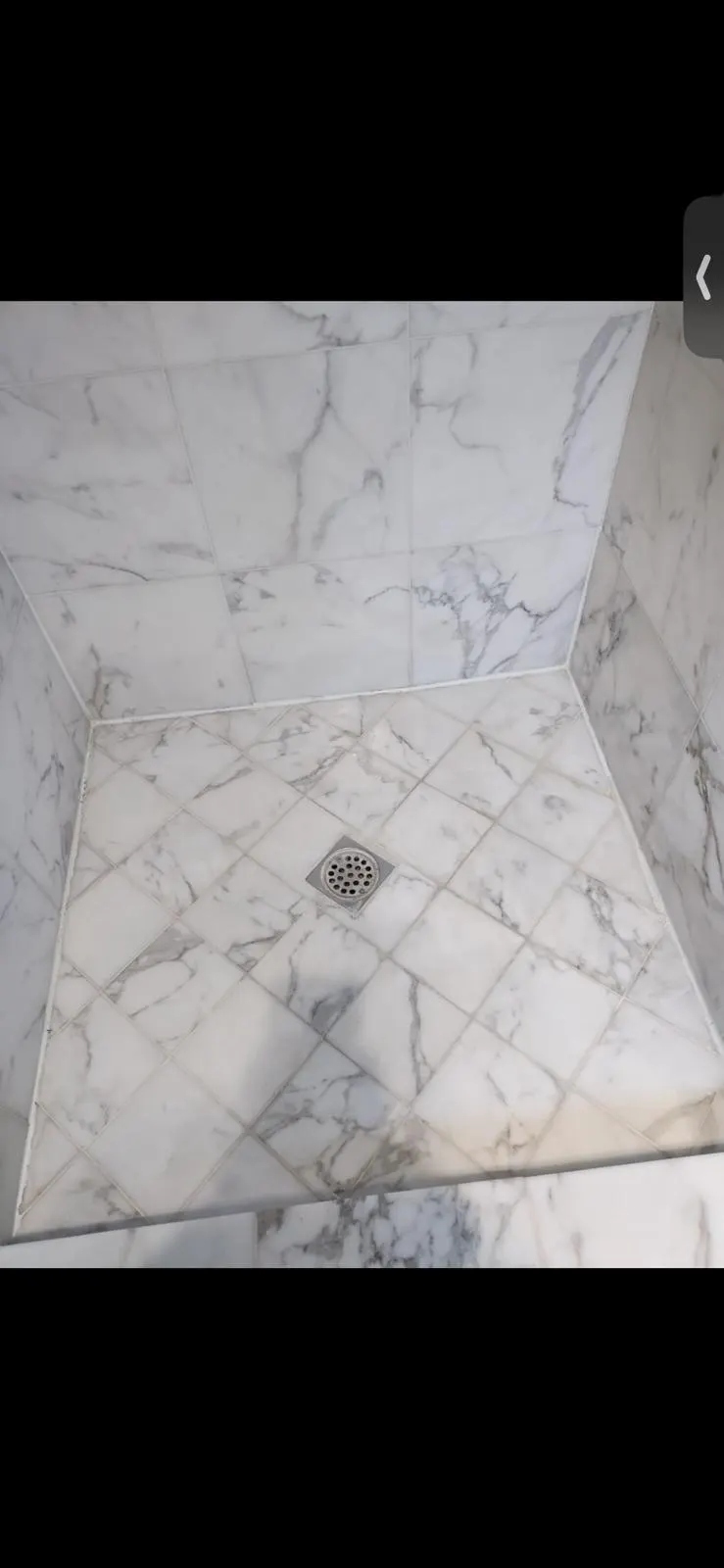
Grout lines and caulk seams hold soap, body oils, minerals, and moisture. On marble, aggressive descalers can etch the surrounding tile while leaving the underlying maintenance problem unresolved.
Professional cleaning uses controlled agitation and stone-safe solutions, with special attention to corners, drains, and transitions where buildup stays wet the longest.
What should you know about after the cleaning?
Let the shower dry fully and improve ventilation so moisture does not remain trapped. A penetrating sealer may help porous stone and grout, but it will not replace regular squeegeeing and prompt drying.
If caulk is cracked or separated, cleaning alone cannot make the joint watertight. That repair should be handled separately after the surfaces are clean.
Why should stone, grout and caulk be assessed separately?
Marble, cement-based grout and flexible sealant perform different roles and may respond differently to the same product. Other grout types or earlier repairs can complicate identification further. A method that brightens a joint could still damage the neighboring stone or leave a change in sheen. Point out which joints are soft, cracked, missing or discolored rather than describing the whole shower as dirty. Ask which surfaces the proposed cleaning includes and what happens where the material is no longer sound. A clear material map prevents cosmetic cleaning from being mistaken for repair of the shower assembly.
How do soap residue, mineral buildup and etching differ?
Soap film can leave a smeared appearance; mineral buildup may feel raised; etching changes marble's surface itself. These clues overlap, so do not scrape deposits or use vinegar as a diagnostic test. A dull patch remaining after compatible residue removal may need a separate finish assessment. The Natural Stone Institute recommends non-acidic care for calcareous stone and warns that excess cleaner can leave film. Keep product labels and explain which products touched the shower, including sprays used on glass. Knowing the sequence of cleaning attempts can be more useful than guessing whether every pale mark is hard water.
What does recurring discoloration around a joint require?
Note whether the change appears only after use, remains through a period without use or spreads beyond the original joint. Surface soil and biological staining are not the same as moisture beneath the finish, and a photograph cannot reliably distinguish them all. Avoid promising that stronger cleaning will stop recurrence. If sealant has detached or grout repeatedly cracks, describe that separately from color. Where hidden moisture or a leak is suspected, seek an appropriate building or plumbing assessment. Surface cleaning should not be offered as proof that the source of a recurring wet-area problem has been corrected.
When is caulk replacement a separate conversation?
A joint that is split, missing or no longer adhering cannot regain its intended function through whitening. Whether replacement is appropriate depends on the joint, adjacent surfaces and the cause of failure. Ask what any proposed joint work covers rather than assuming it is part of a cleaning visit. Removing old material without damaging marble and choosing a compatible replacement require care, but this guide is not a prescription for rebuilding a shower. Persistent failures may indicate a wider issue. Keep any replacement decision distinct from a promise to repair waterproofing concealed behind or beneath the stone.
What should safe professional preparation cover?
Discuss the stone, grout, existing sealant, fixtures and adjacent finishes before treatment. A representative test should show how compatible cleaning affects appearance after rinsing and drying, not only while the surface is wet. Ask how residues and runoff will be managed and what limitations remain around delicate repairs. Do not mix cleaning chemicals; the Natural Stone Institute specifically warns against combining bleach and ammonia. Follow the selected product's safety instructions rather than adapting a recipe intended for another material. Agree whether the work is residue removal alone or whether a later finish or joint assessment is also needed.
How can daily care support the cleaned shower?
Where safe and practical, gently remove excess surface water with a suitable squeegee or soft cloth and keep ventilation working as intended. Use a stone-compatible cleaner at its specified dilution and rinse residue instead of adding successive product layers. Keep personal-care containers from leaving concentrated residue on ledges. Report drips and watch for renewed gaps rather than covering them with a cosmetic product. A penetrating sealer may support stain resistance where appropriate, but it does not prevent acid etching or make the shower waterproof. Ask for aftercare that distinguishes maintaining the visible stone from maintaining the installation's joints and systems.
Quick checklist
- List the shower materials and products used on stone, glass and fittings.
- Record whether marks occur on the surface, in grout or beneath caulk.
- Point out gaps, recurring darkening, loose pieces and suspected leaks.
- Separate cleaning, any joint work and moisture investigation in the scope.
Clear answers
Frequently asked questions
Can cleaning repair caulk that has split or detached?
No. Cleaning removes compatible surface contamination; it does not reconnect failed sealant or restore its joint function. Ask whether replacement needs a separate assessment, and do not assume the shower is watertight because the joint looks cleaner.
Can a cleaner safe for glass damage nearby marble?
Yes. Products intended for glass or metal may be incompatible with stone, and overspray or runoff can reach it. Check all affected materials before use. An acid-based bathroom cleaner can etch marble even when the main target is a fixture.
Does dark grout prove there is a hidden leak?
No. Residue, moisture and discoloration can look similar. Record the pattern and how it changes between uses. Persistent dampness, loose materials or repeated joint failure warrants further assessment, but appearance alone does not identify the cause.
Sources
Not sure which service your stone needs?
Elite Marble Care can assess the surface in person, explain the restoration sequence, and provide a free on-site estimate across Greater Los Angeles.