What should you know about why spot repairs can be tricky?
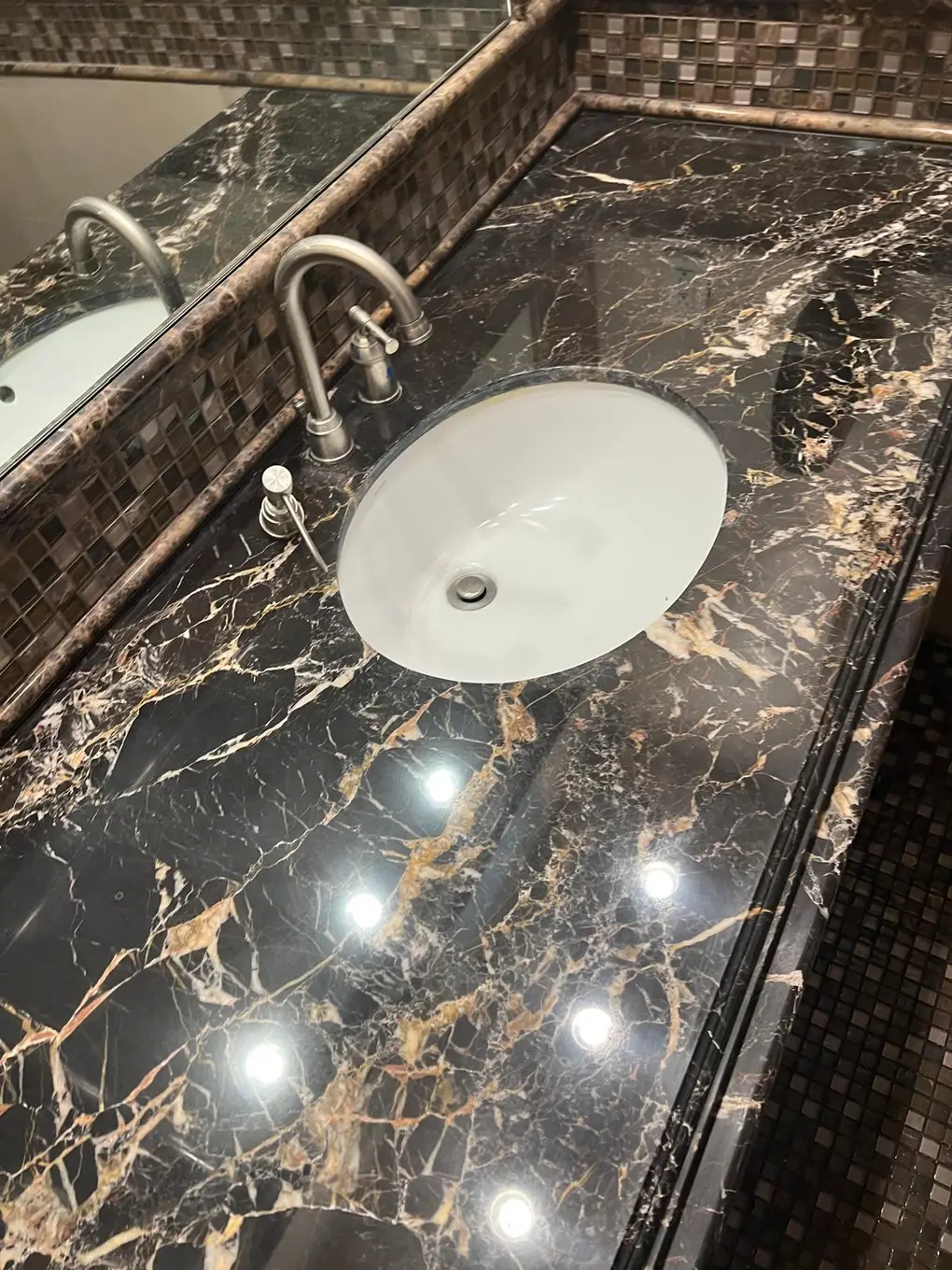
A small acid mark may be shallow, but polishing only the center can leave a visible halo if the surrounding sheen is not blended. Dark or highly reflective stones make differences in finish especially easy to see.
The technician assesses the edge profile, veining, existing polish, and nearby damage before choosing the abrasive sequence. This helps avoid creating a brighter patch in an already uneven surface.
What should you know about the finish is rebuilt gradually?
Fine diamond abrasives and professional polishing compounds remove the altered surface and rebuild reflection. The work is controlled so the repair follows the existing finish instead of changing the countertop's shape.
Once the surface is clean and dry, a penetrating sealer can reduce staining risk. Daily care still needs to address acidic foods and abrasive grit.
How do you distinguish an etch mark from a stain?
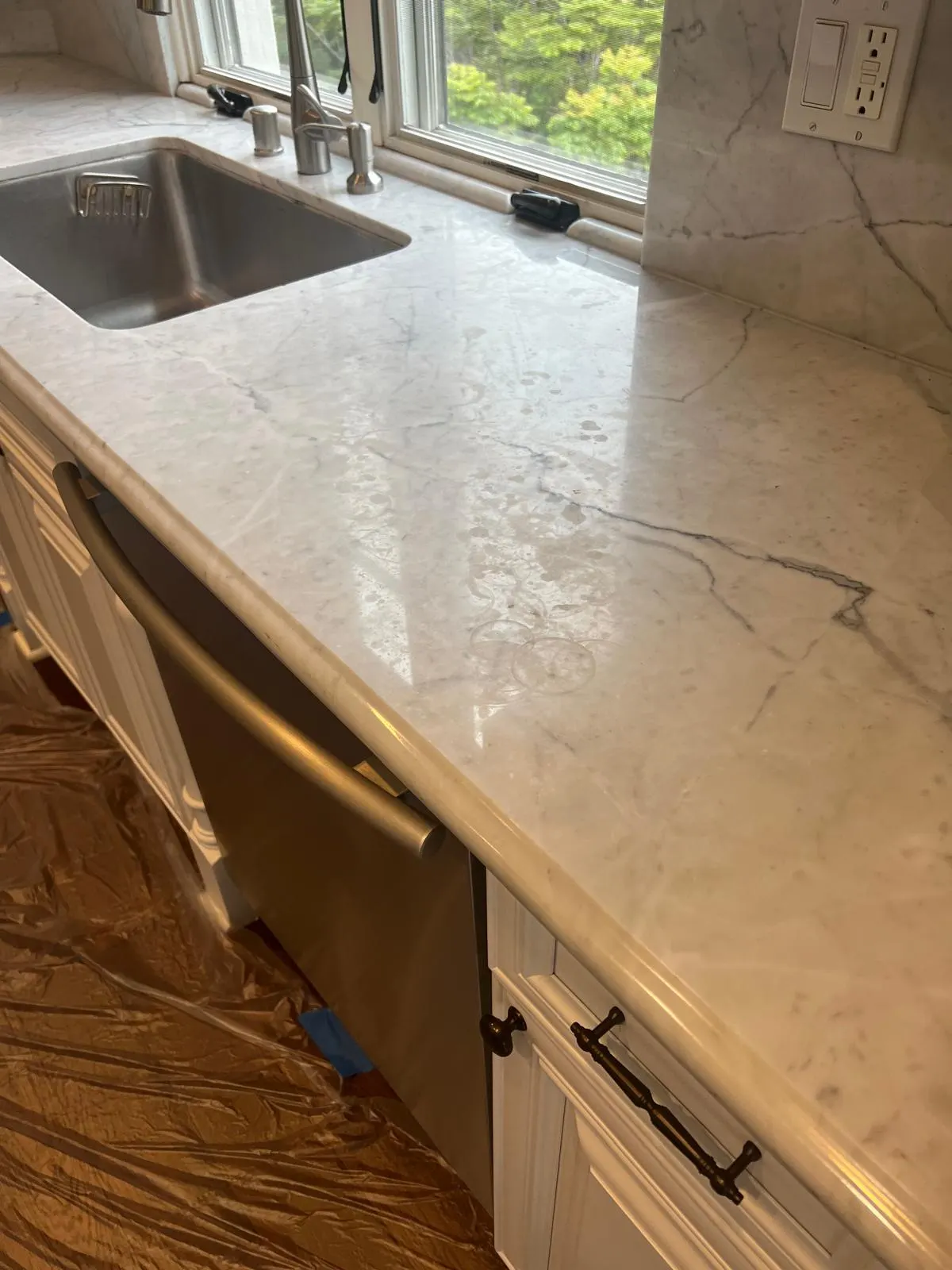
Look at the affected area from the side in reflected light after a gentle clean and drying. Etching often breaks up a reflection while leaving the underlying color broadly similar. A stain changes color because material has entered the stone, although surface deposits and moisture can complicate that distinction. Wine or another acidic colored liquid can cause both problems in one place. Do not assume a dark ring always needs a poultice or a pale ring always needs a stronger cleaner. Tell the assessor what touched the counter, how long it remained and what you tried afterward. That history helps avoid treating the wrong mechanism.
Why do lemon, wine and some cleaners damage marble?
Marble commonly contains calcium carbonate, which is sensitive to acidic substances. The reaction changes the exposed surface rather than merely leaving a removable film on it. The Natural Stone Institute specifically warns that lemon, vinegar and other acids can dull or etch calcareous stone. A product sold for bathroom limescale may therefore be inappropriate for a marble vanity or shower. Read the intended substrate and use instructions, not just the promise to remove a household stain. Do not test an acid in a hidden corner to prove the diagnosis. An intentional test can create another repair and still leave uncertainty about the original mark.
What happens during professional etch removal?
The restorer first identifies the material, existing finish, repair history and limits of the affected area. Honing or polishing can then refine the altered surface, with the sequence selected for the required sheen. A honed counter should not receive a conspicuous glossy patch just because the mark is small. A polished top may need work over a wider visual area so that reflection reads consistently. Edges, cutouts, backsplashes and nearby metal or wood require protection. Results depend on depth, stone variation and previous treatments; a sample and clear scope are more useful than a promise that every defect will vanish after one universal application.
Will sealer or a protective treatment stop etching?
An ordinary penetrating sealer primarily addresses absorption and staining, not the acid reaction in marble. Keep that distinction clear when comparing maintenance options. A specialized anti-etch treatment is a different discussion with its own compatibility, appearance and care requirements; it is not interchangeable with a routine resealing visit. Ask to see the proposed treatment on the actual stone and review what is and is not covered by its technical documentation. Neither a product name nor a glossy sample establishes that every surface, edge or damaged area is suitable. Elite Marble Care can assess Raku No-Etch where appropriate without representing standard sealer as equivalent protection.
How can you reduce future countertop etching?
Use coasters and suitable trays beneath drinks, cosmetics and acidic ingredients, and prepare food on a cutting board rather than directly on the marble. Blot spills promptly, rinse with an appropriate stone-safe cleaning method and dry the surface. Keep incompatible cleaners away from the counter so that a guest or cleaner does not use them by mistake. A honed finish can make some marks less conspicuous, but it does not remove the underlying acid sensitivity. If you want to change sheen during restoration, compare the whole counter in normal lighting. The practical goal is an informed combination of finish choice, suitable protection and manageable daily habits.
When should a small etch mark be left alone?
The decision depends on how noticeable the mark is, the surrounding finish and the household's expectations. A minor mark may be acceptable as normal wear, particularly on a deliberately low-sheen surface. Professional refinishing is an option, not a requirement to keep every counter visually perfect. Avoid repeatedly treating one spot with an abrasive household remedy while hoping to remove a barely visible ring: that can enlarge the affected area and change its sheen. If the mark bothers you, compare the likely scope and finish match before deciding. Clear expectations can prevent unnecessary work just as effectively as they help define a needed restoration.
Quick checklist
- Blot a spill and clean safely; do not scrub the mark with abrasive powder.
- Observe whether the defect is a color change, reflection change or both.
- Record the likely spill and any cleaner already used.
- Approve a finish sample and discuss edges before refinishing.
Clear answers
Frequently asked questions
What should you know about why spot repairs can be tricky?
A small acid mark may be shallow, but polishing only the center can leave a visible halo if the surrounding sheen is not blended. Dark or highly reflective stones make differences in finish especially easy to see.
What should you know about the finish is rebuilt gradually?
Fine diamond abrasives and professional polishing compounds remove the altered surface and rebuild reflection. The work is controlled so the repair follows the existing finish instead of changing the countertop's shape.
What should I include when requesting an assessment for polishing?
Describe the stone, where it is installed, the finish you want to keep or change, and what happened before the problem appeared. Share any previous treatments or cleaner labels. Photographs help explain the concern, but an on-site assessment may still be needed to establish the appropriate scope and limitations.
Sources
Not sure which service your stone needs?
Elite Marble Care can assess the surface in person, explain the restoration sequence, and provide a free on-site estimate across Greater Los Angeles.