What should you know about start with a surface assessment?
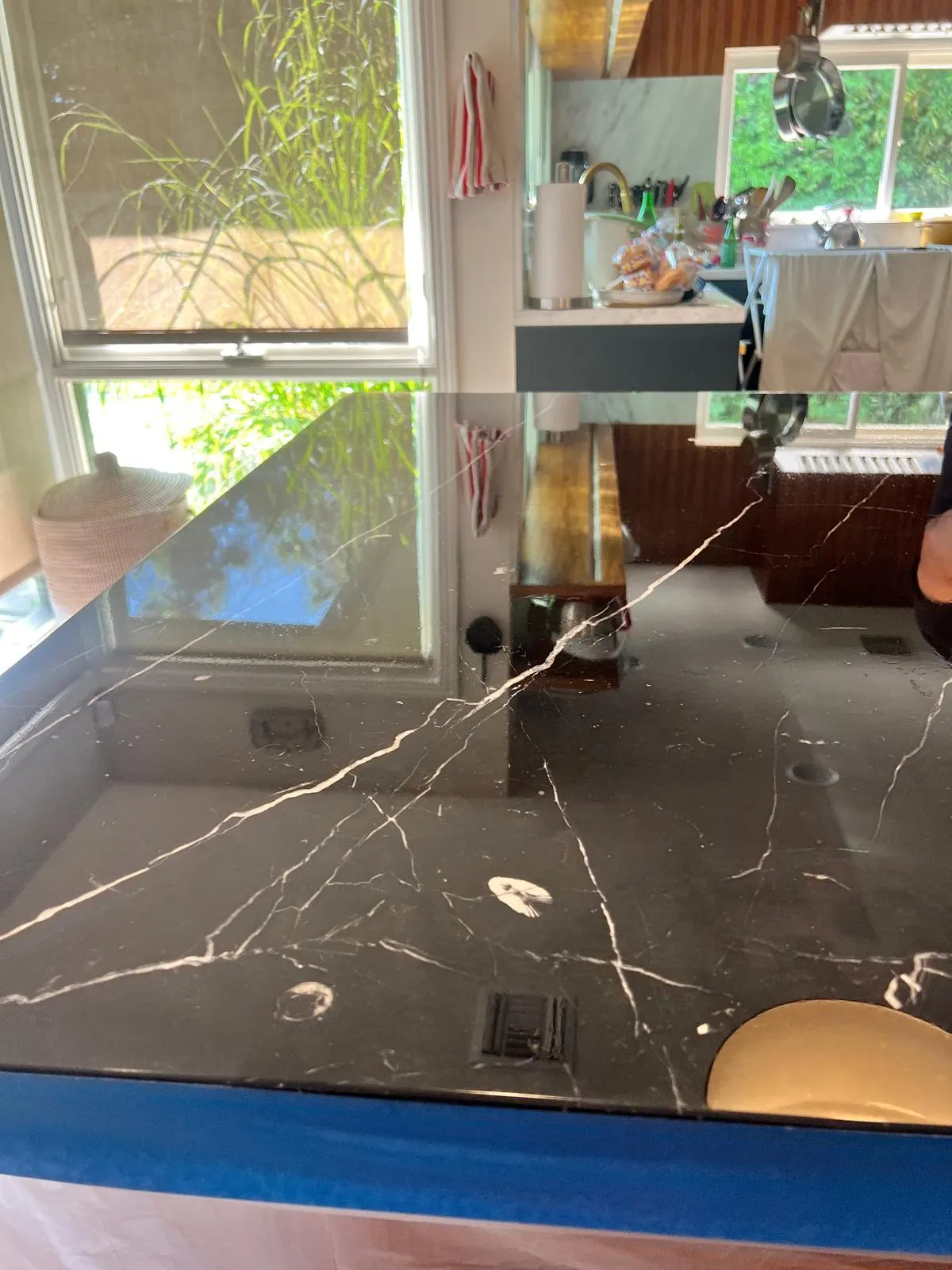
A countertop may look dirty when the real problem is etching or loss of polish around the sink and prep area. The technician checks the stone type, edge profile, stains, scratches, previous coatings, and the difference between damaged and undamaged areas.
That inspection determines whether the island needs cleaning, honing, polishing, stain treatment, or a combination. Applying wax over etching only hides the problem temporarily.
What should you know about refinish, then protect?
Professional polishing works through the damaged finish using diamond abrasives and appropriate compounds. The goal is a consistent sheen that follows the stone's natural veining instead of a patchwork of bright and dull spots.
Once the surface is clean and fully dry, a penetrating sealer can reduce absorption. Use cutting boards, trivets, and stone-safe cleaner afterward to preserve the result.
Why do kitchen islands develop several kinds of damage?
A single island can serve as a preparation area, dining table and storage surface, so its marks may have different causes. Citrus can etch; colored or oily spills may stain; grit under an object can scratch; and a wet container may leave residue. These mechanisms can overlap in one spot. Before ordering a complete refinish, record which defects change reflection and which change color. Include information about prior sealers, coatings and repairs. A suitable inspection can then distinguish surface wear from a seam, crack or support issue. Repeated cleaning without that distinction may waste effort and make the stone's condition harder to read.
Should the whole island receive the same finish?
A small repair must be considered in the context of the whole slab. Reflection may reveal a treated patch even when its color looks similar from above. Ask how the restorer will blend the result across the working surface and handle edges, profiles or a waterfall end. Honed and polished options should be evaluated under the kitchen's normal daylight and artificial lighting. A lower sheen may suit the way you use the space, but it will not make marble acid-proof. Discuss adjacent countertops as well so that a change on the island does not create a surprise contrast that was never part of the decision.
What needs protection around a kitchen restoration?
Cabinet finishes, appliances, electrical outlets, wood floors and nearby materials require a practical protection plan. Ask how equipment, water and residue will be controlled and which items must be removed beforehand. Keep food preparation separate from the work area and follow the contractor's instructions about access. An overhang or sink cutout may restrict what can be reached with normal equipment; exposed edges need specific discussion rather than an assumption that they are automatically included. The goal is a clear scope for the actual island, not a generic square-foot description that overlooks the surrounding kitchen and the household's ability to use it during the work.
When should cracks and stains be assessed separately?
A crack is not simply an exaggerated scratch, and a structural concern should not be covered by cosmetic polishing. Note whether a line is changing, whether it crosses a cutout and whether movement is visible without applying pressure. Stains also deserve their own diagnosis because absorbed material and acid damage may need different methods. Ask whether any proposed stain treatment is a trial and what limitations remain. There is no responsible promise that every discoloration or repaired edge will become invisible. Agree on the likely improvement, the finish standard and any work that requires another professional before treating restoration as the answer to every defect.
How should you care for the island after refinishing?
Follow the written instructions for cleaning and for any product applied during the work, including its return-to-use conditions. Use suitable boards, trivets and coasters so that acids, heat and rough objects are not placed directly on the stone. Blot spills promptly and avoid acidic household sprays on the marble or adjacent fixtures where they could run onto it. A penetrating sealer may improve stain resistance, but it does not remove the surface's acid sensitivity. If you are considering a specialized protective treatment, compare its appearance and care requirements separately. Elite Marble Care can discuss countertop restoration without promising a maintenance-free kitchen.
What should you compare when reviewing island estimates?
Compare like-for-like scope rather than a headline price. One proposal may address the top only while another includes profiles, a sink surround and a waterfall end. Ask whether stain trials, repair, honing, polishing and protection are included or optional, and how any hidden coating will be handled. A meaningful estimate should describe the intended finish and any uncertainty that remains after inspection. Discuss who moves appliances or countertop items and what access is needed around the cabinetry. Avoid assuming that a larger work area automatically means a simpler job: geometry, damage and the desired finish can matter more than the visible size of the island.
Quick checklist
- Photograph the top, edges, sink cutout and damaged spots in normal light.
- List previous treatments and the likely cause of each mark.
- Approve the sheen on a representative area of the actual island.
- Confirm access, cabinet protection and return-to-use instructions.
Clear answers
Frequently asked questions
What should you know about start with a surface assessment?
A countertop may look dirty when the real problem is etching or loss of polish around the sink and prep area. The technician checks the stone type, edge profile, stains, scratches, previous coatings, and the difference between damaged and undamaged areas.
What should you know about refinish, then protect?
Professional polishing works through the damaged finish using diamond abrasives and appropriate compounds. The goal is a consistent sheen that follows the stone's natural veining instead of a patchwork of bright and dull spots.
What should I include when requesting an assessment for polishing?
Describe the stone, where it is installed, the finish you want to keep or change, and what happened before the problem appeared. Share any previous treatments or cleaner labels. Photographs help explain the concern, but an on-site assessment may still be needed to establish the appropriate scope and limitations.
Sources
Not sure which service your stone needs?
Elite Marble Care can assess the surface in person, explain the restoration sequence, and provide a free on-site estimate across Greater Los Angeles.