What should you know about why common descalers are risky?
Hard-water deposits contain minerals, so acidic products seem like an obvious solution. On calcium-based stone, the same acidity can dissolve or dull the surface beneath the deposit.
Never assume a shower cleaner is safe because it works on glass or ceramic tile. Test the product and the material separately before treating a large area.
What should you know about a controlled approach?
A professional can mechanically and chemically address deposits while protecting the surrounding stone. If the surface is already etched, cleaning may need to be followed by honing or polishing to even out the sheen.
Prevent buildup by drying the shower, improving ventilation, and using a stone-safe maintenance cleaner.
Why are white marks not always hard-water deposits?
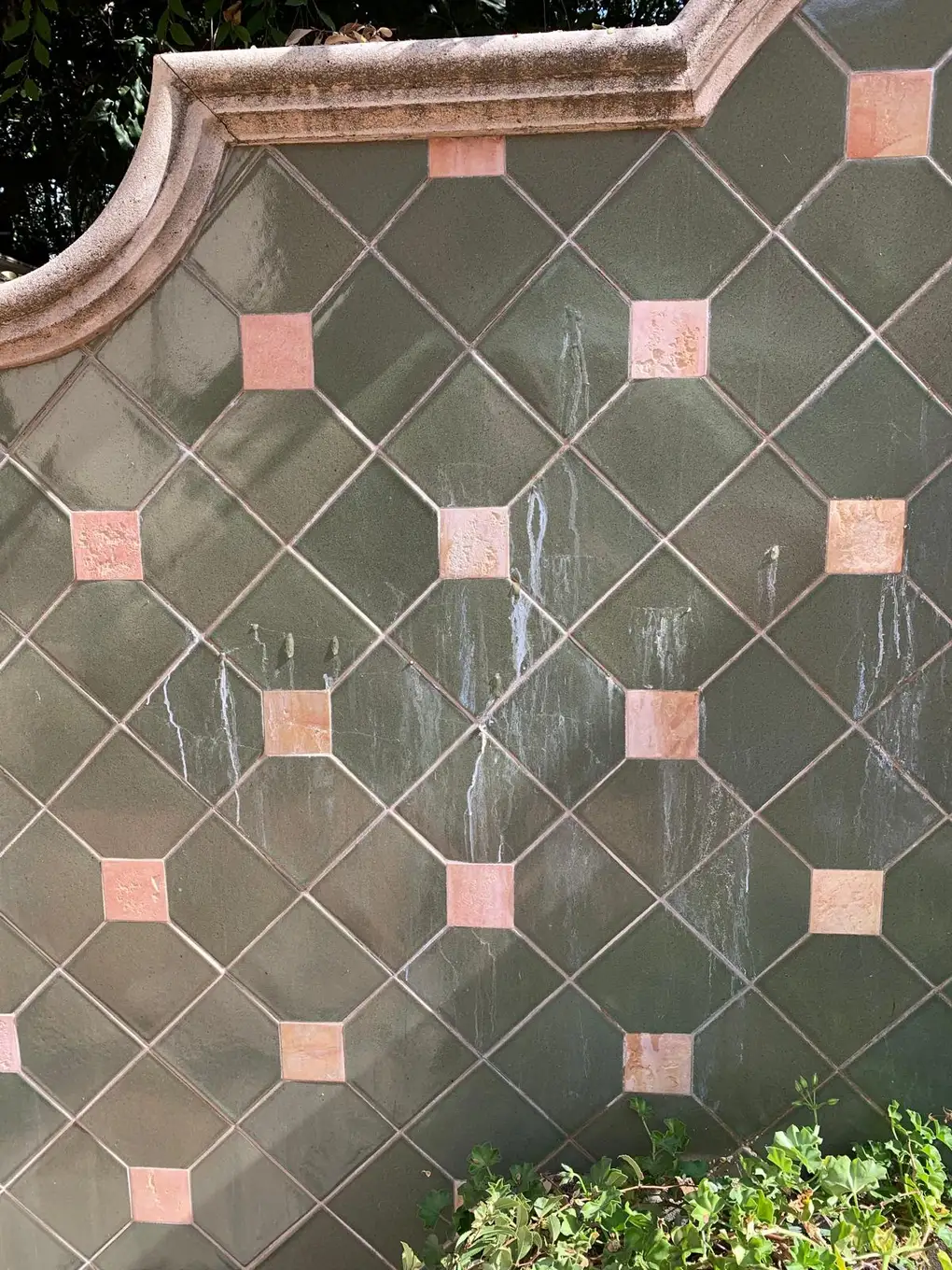
A white or pale area may be mineral buildup, cleaner residue, an etched finish or another condition such as salt deposits associated with moisture. Color alone does not identify the cause. Look at the pattern: a splash beside a tap, a ring beneath a bottle and a powdery deposit near a wet joint suggest different questions. Avoid scratching or acid testing the spot. Document when it appears and whether it disappears while wet or after drying. An assessment can use those observations alongside the stone's composition and maintenance history. Treating every pale mark as removable limescale can turn a manageable deposit into permanent surface damage.
Why can ordinary limescale remover make marble worse?
Many descaling products rely on acids, which can react with calcium-carbonate stone as well as the deposit you want to remove. Marble, travertine and limestone therefore need particular care. A cleaner suitable for a faucet or shower door may still damage the surrounding stone through overspray or runoff. Read the label for substrate compatibility and follow the product instructions; do not assume diluted vinegar becomes harmless. The Natural Stone Institute warns that acidic products can dull or etch calcareous surfaces. Once the stone itself has been altered, removing a deposit is no longer the only task: the finish may need restoration too.
What information helps a professional assess recurring marks?
Explain how often the area gets wet, where the water travels and what happens during drying. Include the product names used for routine cleaning and any previous descaling attempts. Photographs in reflected light can help show a dull area that a straight-on image misses, although they cannot establish a complete diagnosis. Note whether the deposit is raised and whether darkening extends beyond the visible ring. Recurrence can involve ongoing splash patterns, residue or moisture problems, so a one-time cleaning is not necessarily the whole solution. Avoid claiming a particular local water composition without a relevant water-quality source for the property.
How are cleaning and refinishing decisions separated?
If a compatible method removes the deposit and leaves a sound finish, further abrasive work may not be needed. If an etched or scratched area remains, honing or polishing becomes a separate discussion. A technician should evaluate a representative spot and explain what improvement is realistic without damaging adjacent stone or fixtures. Sealer is not a deposit remover and should not be applied over unresolved residue as a shortcut. Where persistent moisture or failing joints are involved, those issues may need attention outside a surface restoration scope. Ask for a plan that distinguishes removal, finish correction and prevention instead of assuming one chemical performs all three.
How can you reduce buildup without unsafe cleaning?
Reduce prolonged surface water where practical by gently drying accessible areas and keeping wet containers off stone ledges. Maintain fixtures and report leaks rather than allowing continuous drips to feed the same mark. Use a cleaner approved for the stone, rinse residue and keep soft cleaning tools free of grit. These habits can reduce accumulation but do not guarantee that mineral deposits will never return. If you are considering changes to water treatment, consult an appropriate specialist rather than treating a countertop service as plumbing advice. Elite Marble Care can assess the stone's existing condition and separate compatible cleaning from any necessary finish restoration.
What should you do after an acidic descaler has already been used?
Stop using the incompatible product and keep its label so that the assessor can identify what touched the stone. Follow the product's safety instructions for any immediate cleanup; do not try to neutralize it by mixing in another household chemical. After the surface is safe and dry, document the visible change and the area exposed to runoff. A new dull patch may be finish damage rather than remaining mineral buildup, so further descaling may make it worse. Describe the sequence honestly when requesting help. That information allows the restoration discussion to address both the original deposit and any additional alteration of the surface.
Quick checklist
- Identify the stone rather than assuming a bathroom cleaner is compatible.
- Note whether the mark is raised, dull, colored or temporarily dark.
- Track recurring deposits near fixtures and persistent damp areas.
- Keep acidic descalers off sensitive stone and prevent overspray.
Clear answers
Frequently asked questions
What should you know about why common descalers are risky?
Hard-water deposits contain minerals, so acidic products seem like an obvious solution. On calcium-based stone, the same acidity can dissolve or dull the surface beneath the deposit.
What should you know about a controlled approach?
A professional can mechanically and chemically address deposits while protecting the surrounding stone. If the surface is already etched, cleaning may need to be followed by honing or polishing to even out the sheen.
What should I include when requesting an assessment for cleaning?
Describe the stone, where it is installed, the finish you want to keep or change, and what happened before the problem appeared. Share any previous treatments or cleaner labels. Photographs help explain the concern, but an on-site assessment may still be needed to establish the appropriate scope and limitations.
Sources
Not sure which service your stone needs?
Elite Marble Care can assess the surface in person, explain the restoration sequence, and provide a free on-site estimate across Greater Los Angeles.