What should a marble polishing assessment identify?
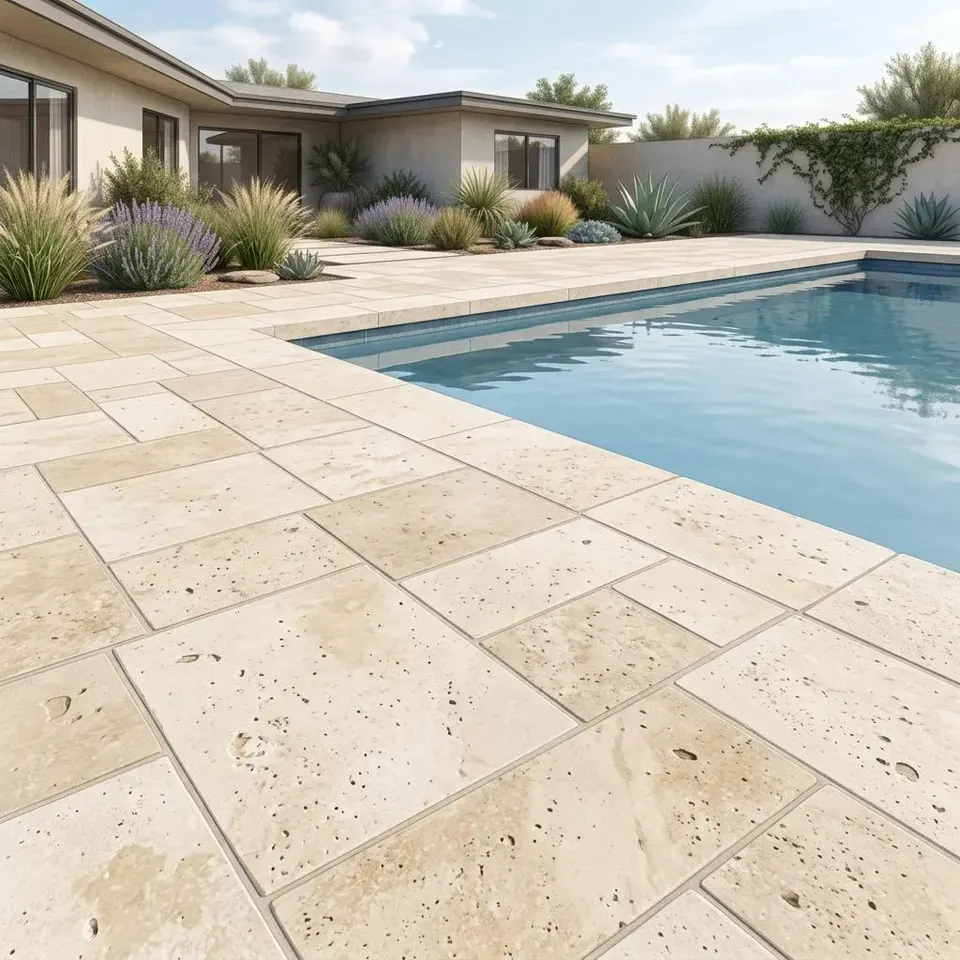
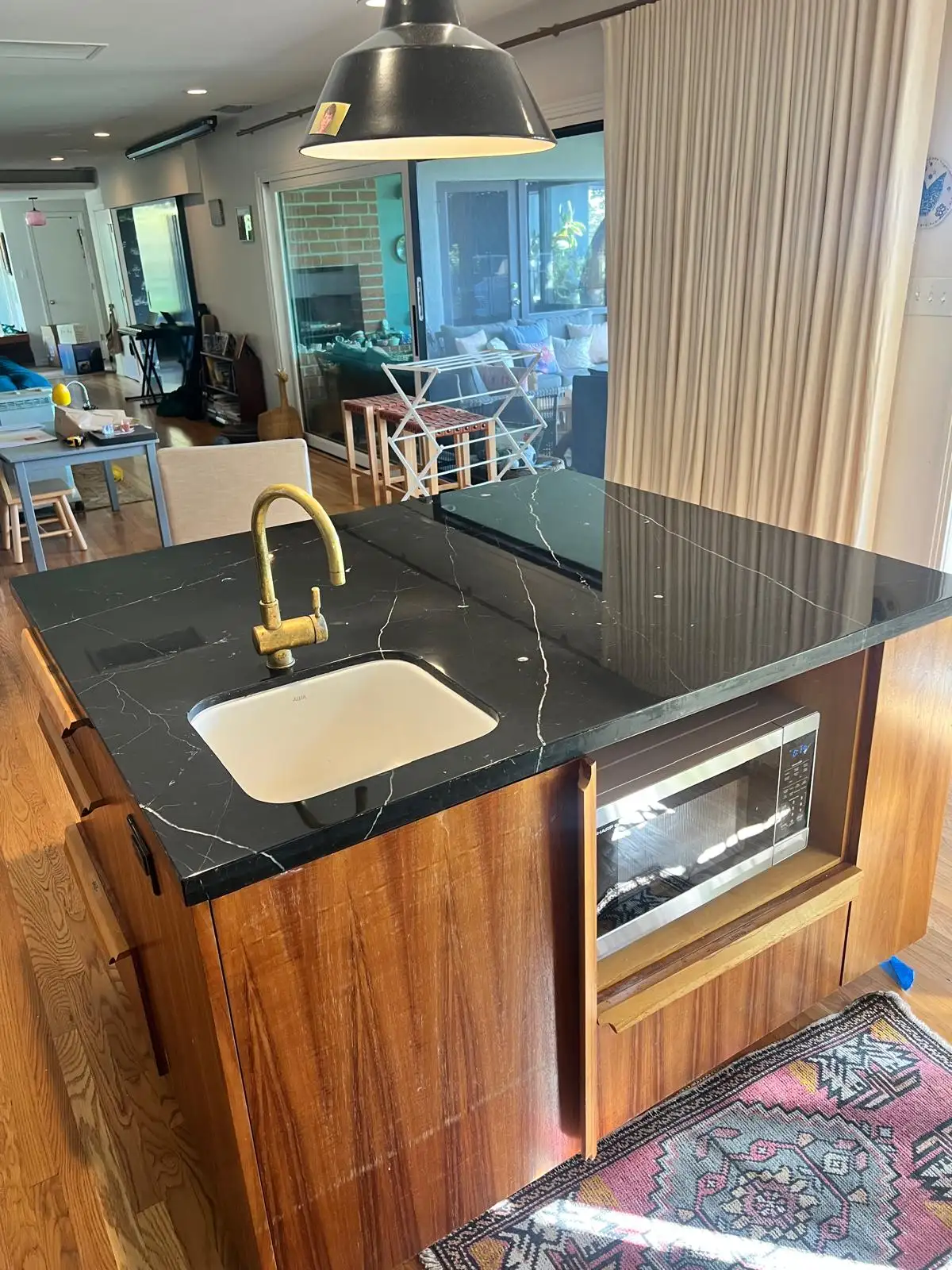
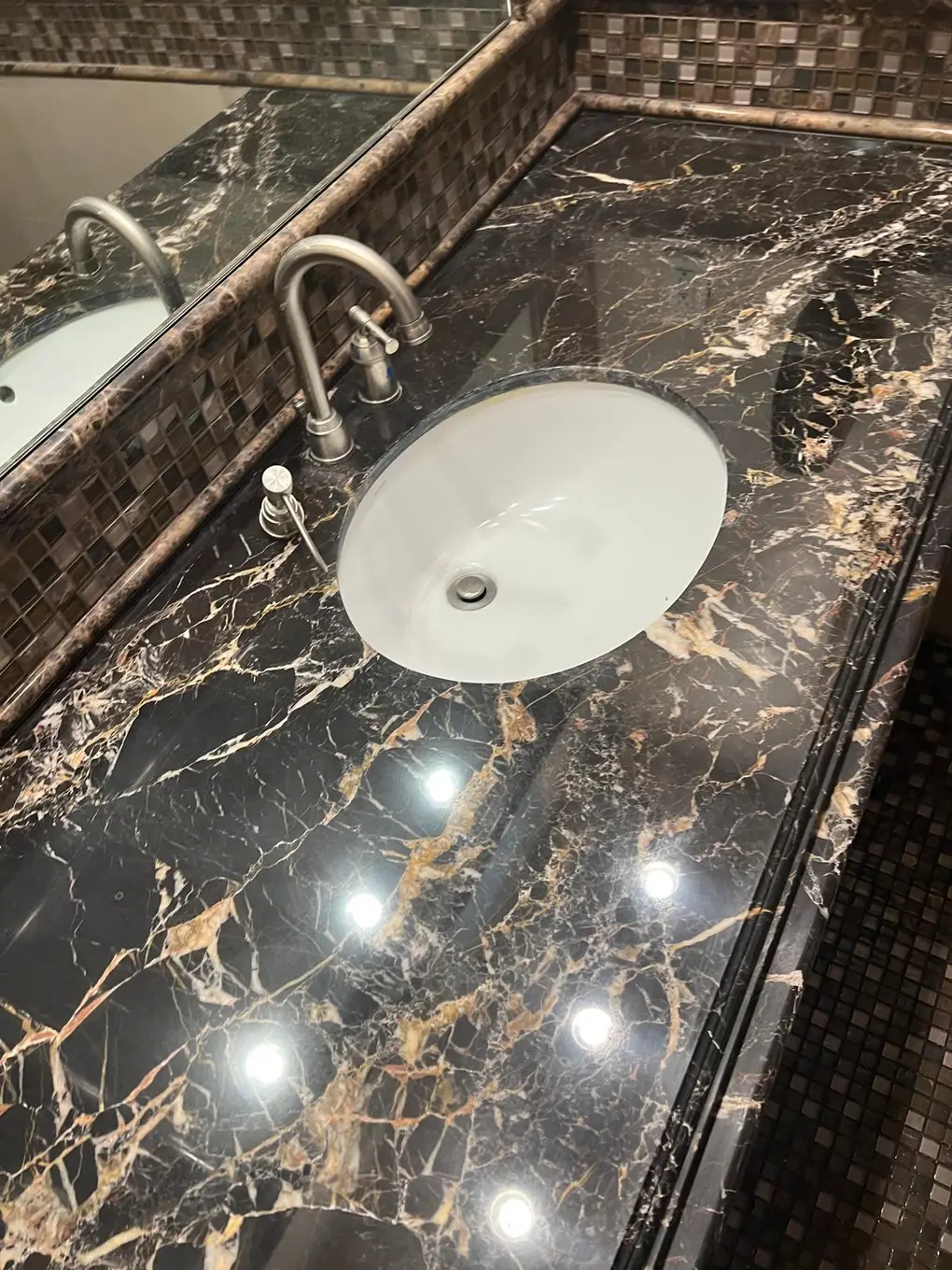
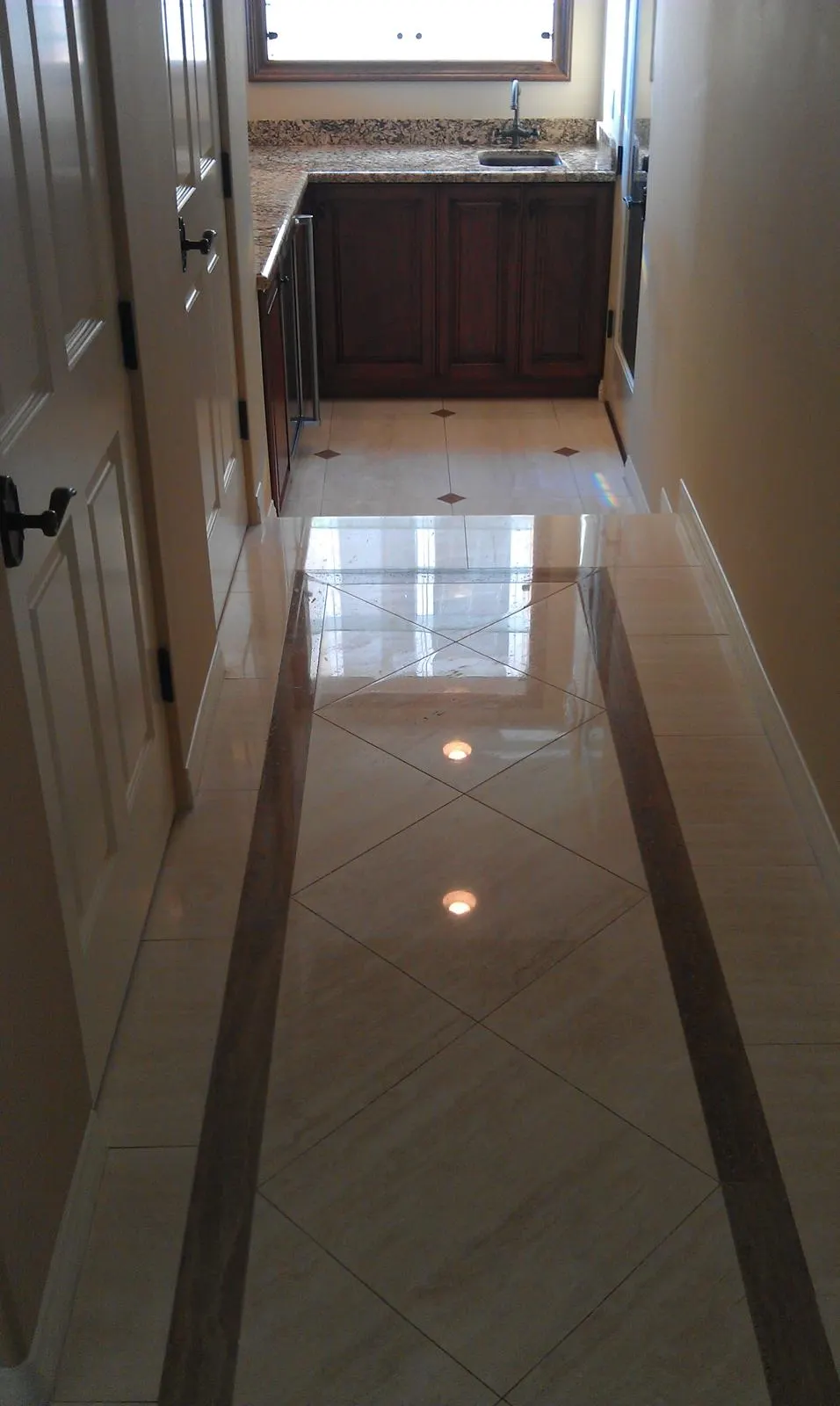
Start by describing what you see, rather than choosing a treatment from a photo. A dull strip in a walking path, pale marks near a sink, a dark patch and visible scratches are not interchangeable symptoms. The cause could be soil or residue, acid etching, wear, scratches, a previous coating, or a combination. A photograph can show the pattern, but it cannot confirm the stone, the depth of a mark or the right treatment.
Ask the technician to identify the surface and explain what supports the recommendation. Marble, limestone and travertine can look similar in photographs but may need different care. Acid-sensitive stone can etch, and a cleaner does not rebuild a changed finish. Identify the material and existing treatment before agreeing to polish or apply a product.
How should you describe the finish you want?
Use concrete terms when discussing the result: do you want a reflective polished finish, a lower-sheen honed appearance, or simply a cleaner surface with the current finish retained? Polishing is not the only way to improve stone, and a high gloss is not automatically the right choice for every room. Ask how the proposed finish relates to the stone and the condition that was assessed.
Look at any sample when it is dry and under ordinary room lighting, not only under a work light or while wet. Mention areas that meet other flooring, thresholds, stairs and adjoining rooms. A small treated patch may look different from a larger continuous floor, so agree on the intended boundaries and appearance before the work begins.
What belongs in a written polishing estimate?
The written scope should identify the rooms or surfaces included, the finish being targeted, the preparation and surface work proposed, and any repairs or exclusions. Ask whether edges, stairs, thresholds, grout lines, furniture moving and protection of nearby finishes are included. If a separate cleaning, coating removal, stain treatment, repair or sealing step may be needed, ask for it to be listed separately rather than assumed.
For a Los Angeles home, also confirm practical access details that apply to your property: parking, building entry, elevator use, work-hour rules and which rooms need to remain clear. These arrangements vary by house, condominium and managed building. A clear scope helps you compare estimates on the same work rather than comparing only a total price.
How is polishing different from cleaning, honing and grinding?
Cleaning removes soil and residue; it does not correct every scratch or restore a surface changed by etching. Honing refines the surface to a more subdued finish, while polishing aims for greater reflection. Grinding is a more substantial surface-correction process that may be considered for issues such as uneven edges, but its suitability depends on the stone and installation. Ask the provider to explain which step addresses the condition they observed.
One floor can have more than one issue, and a recommendation may involve a sequence of work rather than polishing alone. Ask what would remain after the proposed treatment and whether a separate specialist is needed for loose tiles, movement, moisture or structural concerns. Surface restoration should not be presented as a repair for an underlying building problem.
What can a test area tell you?
A representative test area can help show how the stone responds and what finish is realistic. Ask where the sample will be placed, which steps it includes and whether it will be viewed after it is dry. Compare it with nearby stone at more than one angle. A test is useful for discussing scope and appearance, but it is not a guarantee that every mark will disappear or that every room will match exactly.
If the test reveals a coating, deep scratch, stain or different stone than expected, pause and review the estimate. Ask whether the proposed method, time and price need to change. Agree on any revised scope before the rest of the floor is treated, and keep a record of the finish you approved.
What should you ask about preparation and access?
Ask what needs to be moved, how adjacent surfaces will be protected, and whether residents or pets must stay out of the work area. Confirm whether the process uses water, what access to electricity is needed, and how dust or slurry will be managed. The answers depend on the method and the property; avoid relying on broad promises such as completely dust-free work without a clear explanation of the controls.
For a condominium or managed property, check access, parking and work-hour rules with management before scheduling. Keep children and pets away from active work and follow the technician's site-specific safety instructions. Do not disconnect appliances or move heavy furniture unless the scope and your own safety arrangements have been agreed.
What aftercare should be included?
Ask for written care instructions that match the finished surface and any products used. Confirm which routine cleaner is compatible, how to handle spills, when normal foot traffic can resume, and whether rugs or furniture need special handling. Timing depends on the actual process and materials, so request job-specific guidance instead of assuming every floor is ready the same day.
Sealing is a separate decision from polishing. A suitable penetrating sealer may reduce absorption in some stone, but it does not make marble acid-proof or repair etching and scratches. Ask what product is proposed, why it is suitable, and what it cannot prevent. Do not treat water beading as proof that a floor is stain-proof.
What information should you send when requesting an estimate?
Share the city or ZIP code, a wide photo of the room, close-ups of the affected areas, the stone type if known, and the finish you prefer. Note whether the surface is indoors or outdoors and whether it has been sealed, coated, repaired or cleaned with a particular product. Include a photo in reflected light if the main concern is dullness, and say whether the surface was wet or dry.
Elite Marble Care offers stone-restoration assessments in the Los Angeles area. Use the consultation to clarify what the surface needs, what the proposed polishing includes and what limitations should be expected. The goal is a suitable written plan for the actual stone—not a promise based on a single photograph or a one-size-fits-all polishing package.
Quick checklist
- Describe the symptoms and identify the stone and any previous treatments if known.
- Agree on the finish, rooms, edges and transitions included in the written scope.
- Ask what a representative test area can show and what it cannot guarantee.
- Confirm preparation, access, protection and job-specific aftercare.
- Keep surface restoration separate from repairs to leaks, movement or loose tiles.
Clear answers
Frequently asked questions
How do I know whether marble needs polishing or cleaning?
Cleaning can remove compatible soil or residue, while polishing changes the surface finish to increase reflection. Etching, scratches, coatings and stains can look similar in photos, so ask for the stone and condition to be assessed before selecting a treatment.
Will marble polishing remove stains and etching?
Not necessarily. Etching changes the surface, while a stain involves discoloration within or on the stone; each may need a different approach. Ask which condition is visible, what the proposed work can improve and what may remain.
Can only one small area of a marble floor be polished?
A limited area may be considered, but the match depends on the stone, existing finish, lighting and boundary. Ask to review a dry, representative test area and discuss whether a larger continuous section would give a more consistent appearance.
How long does marble floor polishing take?
There is no reliable time that applies to every floor. The area, condition, access, preparation and selected process all affect the schedule. Ask for a job-specific estimate and confirm when the floor can return to normal use.
What should I send for a marble polishing estimate in Los Angeles?
Share your city or ZIP code, wide and close-up photos, the stone type if known, the finish you want and any previous treatments or cleaners. Photos help explain the concern but do not replace an assessment of the actual surface.
Sources
Not sure which service your stone needs?
Elite Marble Care can assess the surface in person, explain the restoration sequence, and provide a free on-site estimate across Greater Los Angeles.