Assessing exposed entries and protected interiors in El Segundo
El Segundo's coastal setting is relevant to a stone-care conversation, but it does not diagnose a particular mark. An exposed entry, sheltered kitchen, and bathroom vanity receive different use even in one home. Show where the surface sits and describe what reaches it. Salt-related residue, ordinary grit, food acids, and cleaning products should not be combined into one general explanation for a loss of clarity.
At a doorway, take photographs of both sides of the transition and the nearby floor. If a stain or film recurs after cleaning, explain whether it follows moisture, outdoor exposure, or a traffic path. The condition of joints and adjacent materials also matters. Cosmetic treatment is not a substitute for discussing persistent wetting or an installation problem that keeps affecting the same area.
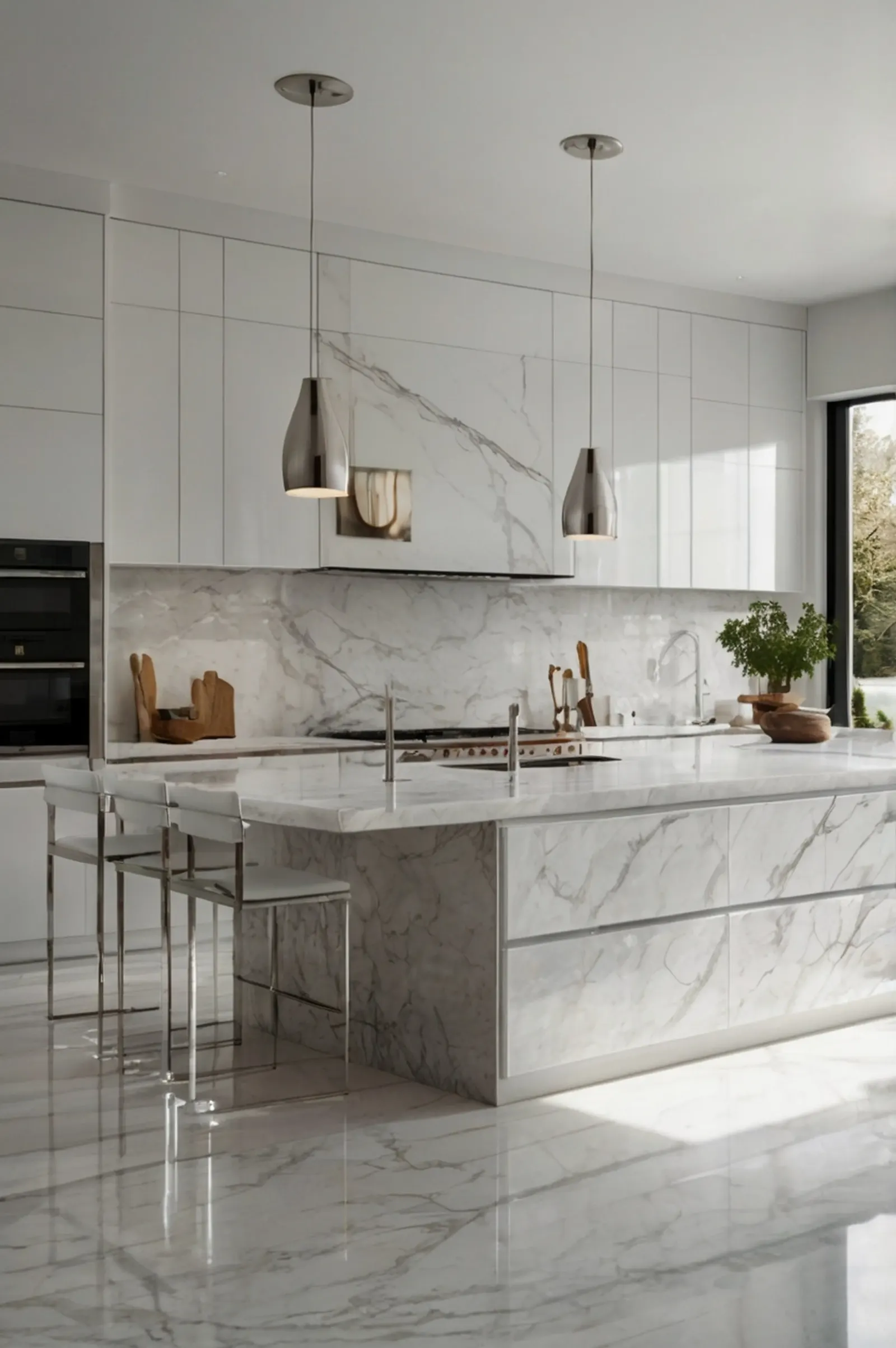
For interior marble, a pale dull spot may be a surface reaction rather than a discoloration held inside the stone. The difference influences whether cleaning, honing, or another process is considered. Do not assume a household product made for removing deposits from glass is compatible with calcium-based stone. Suitable sealing may address absorption but does not make the material acid-proof or restore an existing etch.
When contacting us, identify whether the property is residential, shared, or business premises and note any access requirements. Include the finish you want to retain, not just the finish you want removed. An estimate should connect the inspected surface to a realistic scope, preparation, and maintenance plan. It should not promise a uniform outcome or a response deadline based solely on proximity to the coast.